Get Full Government Meeting Transcripts, Videos, & Alerts Forever!
Get email alerts on the Public Defense Appellate topic
No spam. Unsubscribe anytime.
State Appellate Public Defender requests deputy attorney position to cut contracting costs
Summary
The Office of the State Appellate Public Defender told the Joint Finance-Appropriations Committee it seeks funding for a deputy appellate public defender, saying hiring in-house would be cheaper than continuing to contract overflow cases.
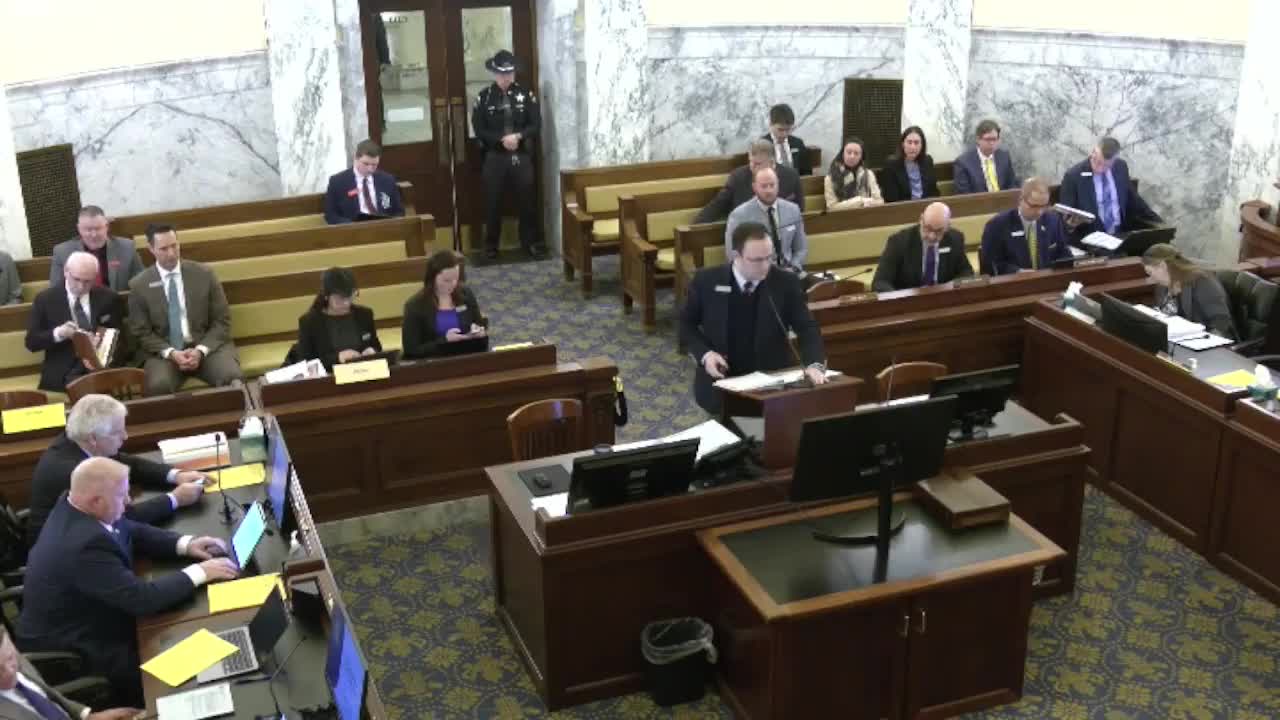
Christopher Lahoset, a budget and policy analyst with the Legislative Services Office, told the Joint Finance-Appropriations Committee that the State Appellate Public Defender is requesting funding for an additional deputy position to handle noncapital appeals. Lahoset said the office estimates “continuing to contract out overflow cases would generate a bill from contracted firms attorneys of about $254,000 per year,” while hiring an in‑state attorney at a $140,000 salary would be less expensive.
Eric Leightonen, State Appellate Public Defender, said the appellate unit has 13 attorneys and distributes caseloads by experience; he told the committee the office expects to handle roughly 650 cases in the current fiscal year and that a new position would take a share of those cases. Leightonen also described recent turnover tied in part to staff departures to the newly created State Public Defender and said the office was temporarily fully staffed but expected another departure (office administrator Rachel Murray).
Committee members asked about current contracting and overflow handling. Leightonen said the office must contract for conflict cases and has a designated appropriation—about $200,000 annually—for conflicts; in addition, the office has contracted out roughly 14 overflow cases in the last 18 months and has used one‑time reappropriated funds to cover some overflow work. He told the panel that contracting is “more expensive to contract cases out than to handle them in house,” and that contracting also complicates multiyear accounting because those contracts can cross fiscal years.
Lahoset noted the office has authorized 26 full‑time positions (26 FTP) and, as of mid‑December, no vacancies; he also reported a five‑year personnel appropriation average just under $2.8 million, with about 95% of personnel appropriation used on personnel costs. Lahoset closed by saying the agency requests reappropriation authority for remaining one‑time funds from fiscal 2023 (about $1,259,000 as of the presentation), which the office may continue to draw down.
The committee took no formal action during the presentation; Leightonen stood for but did not receive a roll call vote on the request during the hearing.