Get Full Government Meeting Transcripts, Videos, & Alerts Forever!
Get email alerts on the Agriculture Budget topic
No spam. Unsubscribe anytime.
Agriculture requests funding for quagga mussel response, investigator pay and equipment replacements
Summary
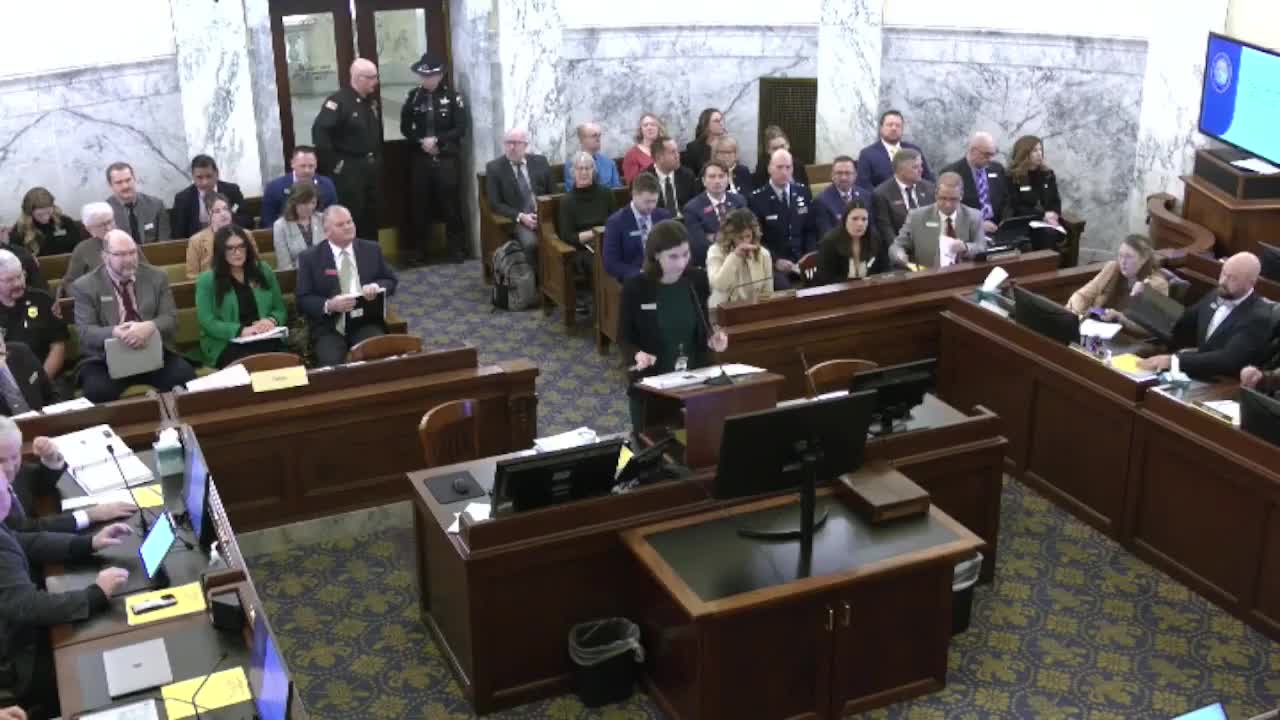
The Idaho Department of Agriculture told the Joint Finance-Appropriations Committee it needs one-time and ongoing funding for quagga mussel response, to create a pay structure for agricultural investigators, and to replace vehicles and IT hardware.
Frances Lippett, budget and policy analyst with the Legislative Services Office, told the Joint Finance-Appropriations Committee the Department of Agriculture seeks both one-time and ongoing funding for invasive species response and staff retention.
The request centers on funding for quagga mussel detection and response and personnel costs for the department’s investigative and inspection workforce. "The department guarantees the quality of agricultural products and ensures they comply with state and federal law," Lippett said, summarizing the agency’s statutory responsibilities.
The nut graf: the department asked for a mix of general fund and dedicated-fund spending to respond to a recent increase in invasive-species work while also proposing pay and staffing changes intended to reduce turnover and sustain inspections.
Lippett reviewed the department’s budget structure and personnel trends, saying the department is organized into eight budgeted programs and that plant industries and animal industries are the largest programs by full-time equivalents. She told the committee the department has an authorized 231 full-time equivalent positions and has maintained a roughly 91% staffing rate in recent years. She also described how many of the department’s dedicated funds are appropriated at a higher level than typical revenue to smooth services when fee income rises.
Director Chanel Tewell, Idaho State Department of Agriculture, described operational changes made after the Snake River detection and the department’s expanded sampling and inspection program. "By every measure, that work has increased," Tewell told the committee, saying the state doubled sampling statewide, added watercraft inspection stations and inspected nearly twice as many watercraft last year as the previous year.
Tewell confirmed the department received an ongoing general-fund appropriation of $1.5 million for staffing and additional watercraft inspection stations and noted an earlier one-time infusion of $5 million to the invasive species fund for quagga mussel response. Lippett explained the appropriation entries and cash-transfer accounting: when a cash transfer is made from the general fund into a dedicated fund, both sides of the transfer are shown as appropriations so the net state cost is clear.
On personnel, the department requested funding to create a pay structure for its 53 agricultural investigators. Lippett said 23 of the investigator positions have been occupied less than two years, and only nine investigators have 10 or more years of service; the requested funding would create a career ladder intended to improve retention.
The department also requested replacement funding for vehicles and IT hardware. When Representative Mitchell asked for the number of vehicles to be replaced, Tewell responded the list would be provided to the committee and said she believed the department would replace about 17 vehicles, primarily pickup trucks and a few SUVs.
Lippett outlined other line items in the request, including a $610,000 resilient food systems grant and a deficiency-warrant request related to exotic species response estimated at $1,724,300. She said the governor recommended most of the department’s enhancements with minor adjustments to align compensation requests to statewide recommendations.
Ending: Committee members asked staff follow-ups on vehicle lists and fund accounting. Tewell and Lippett said they would provide requested lists and clarifications to the committee. The committee then moved to its next agenda item.