Get Full Government Meeting Transcripts, Videos, & Alerts Forever!
Get email alerts on the Isda Rulemaking topic
No spam. Unsubscribe anytime.
House committee approves ISDA rule dockets; members focus questions on chemigation licensing and incorporation-by-reference
Summary
The House Agricultural Affairs Committee approved multiple ISDA administrative rule dockets, including a new, separate chemigation license and updates to weights-and-measures and produce-safety standards.
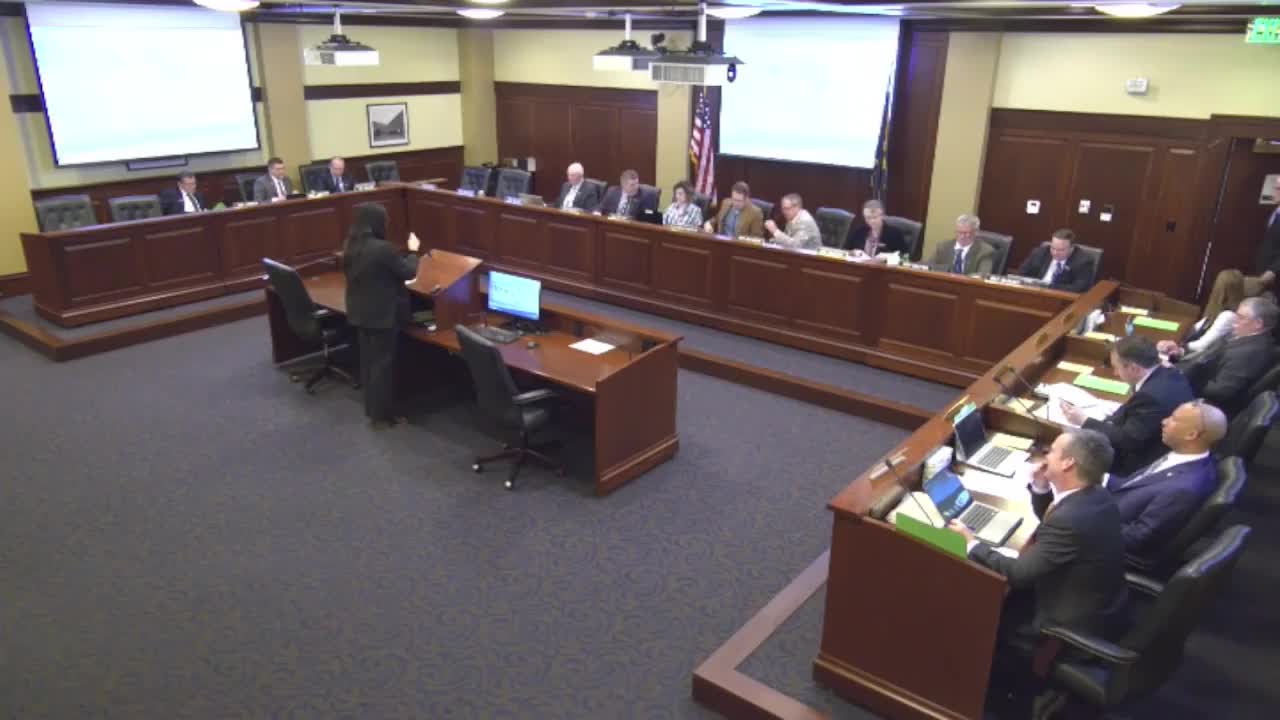
The Idaho State Department of Agriculture (ISDA) presented the final seven items of its 14‑rule packet to the House Agricultural Affairs Committee. Director Chanel Tewalt and division staff outlined several incorporation‑by‑reference updates and temporary rule changes; the committee approved each docket by voice vote.
ISDA Director Chanel Tewalt told the committee the department uses incorporation by reference (IBR) when federal or industry standards are the practical reference point, and framed rulemaking as a customer‑service exercise rather than "too bad, that's the law." Tewalt said ISDA is trying to simplify processes where statute allows and highlighted House Bill 549 (2024) as an example that untethered chemigation licensing from some federal pesticide licensing requirements.
Jared Stewart, administrator for ISDA's Agricultural Inspections Division, presented several dockets: bonded warehouse/seed and commodity buyer licensing (a ZBR review removing duplicative enforcement language from rule text), an update to incorporate NIST Handbook 44 for weights and measures (updated to the 2024 edition), and the produce‑safety rule reflecting the Food Safety Modernization Act (FSMA) incorporation. Brian Slabaugh (division administrator for Ag Resources) presented pesticide management plans and groundwater‑protection rule edits and the temporary and permanent chemigation licensing rule change that implements House Bill 549.
Committee members asked for details about chemigation licensing outreach and enforcement. Slabaugh said the chemigation changes create a distinct chemigator license category, offer multiple pathways to licensure (traditional exam, a 2021 University of Idaho training module, in‑person trainings, or verification via on‑site inspection), and aim to simplify compliance. Slabaugh said a negotiated rulemaking meeting on July 11, 2024, drew eight public attendees. Deputy Director Lloyd Knight reported ISDA sent an email notice to more than 5,000 license holders on June 5 and said the department publishes protocols and guidance on its website; committee members were told those protocols will be referenced in the rule but maintained as department documents.
On enforcement and protocols, Knight said ISDA focuses on the outcome — that pesticides and chemigation equipment are used safely and according to label instructions — and that department protocols and training are intended as guidance and inspection standards rather than rigid text that must be updated through rule each time technology changes.
The committee approved all presented dockets by voice vote. Several members asked staff to provide additional supporting materials at the hearing stage, including lists of stakeholders contacted, minutes from negotiated rulemaking, and where department protocols will be posted for practitioner access.
Ending: The committee approved the set of ISDA dockets; staff and sponsors were asked to provide clarifying materials for the record and for any upcoming public hearings.