Get Full Government Meeting Transcripts, Videos, & Alerts Forever!
Get email alerts on the Psychiatric Hospitals topic
No spam. Unsubscribe anytime.
Accreditation brought billing changes but state hospitals face rising civil-commitment costs, officials say
Summary
Analysts and the Department of Health and Welfare described how accreditation at state hospitals changed billing and receipts, noted one-time supplemental requests tied to civil-commitment costs after 2022 statutory changes, and reported increases in restoration-to-competency admissions that are filling hospital capacity.
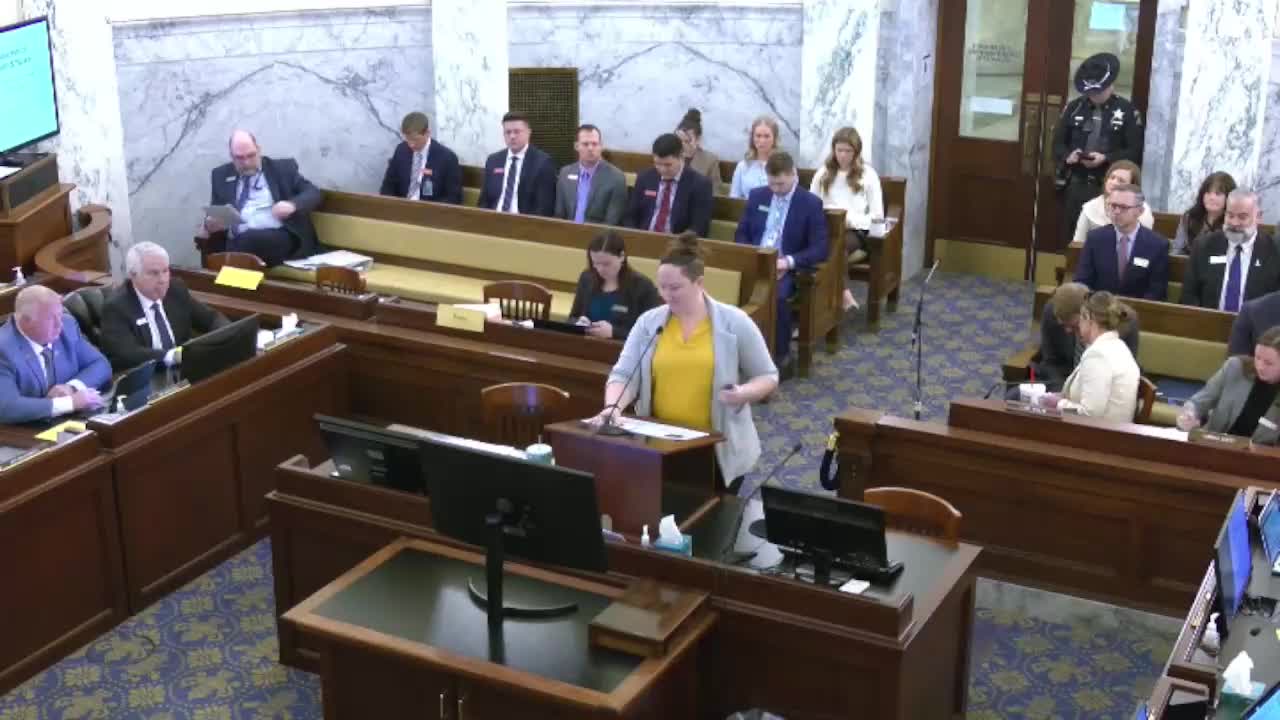
BOISE — The Joint Finance-Appropriations Committee reviewed the psychiatric hospitalization budget Friday and heard the department explain how accreditation, billing changes and growing commitment caseloads are affecting state hospital finances.
Alex Williamson, budget and policy analyst with the Legislative Services Office, said psychiatric hospitalization comprises three state hospitals (North in Orofino, South in Blackfoot and West in Nampa) plus a community hospitalization program and that the division is authorized at 467 full-time positions. Williamson said accreditation delays in prior years forced shifts from federal funds to general funds and that fiscal year 2025 included a $6 million request for receipt authority and additional staff tied to billing changes.
Alex Adams, director of the Department of Health and Welfare, told the committee that all three facilities are now accredited. Accreditation allows the hospitals to bill Medicaid for eligible patients and appears to be producing receipts: “State Hospital West … has so far billed $1,600,000, they've received $1,300,000,” Adams said, which he characterized as general-fund savings because federal receipts offset state costs.
Committee members asked about a department request for a $2.6 million one-time supplemental to cover civil-commitment expenditures. Williamson said the request follows costs that rose after Senate Bill 1327 (2022) shifted responsibility for payment of mental holds and commitment-related expenditures to the state. The department described the resulting cost as an entitlement tied to the number of holds: once a health-care provider or law enforcement officer places a person on a hold under statute, the state becomes responsible for costs regardless of volume.
Adams explained the department had a choice when costs outpaced the appropriation: seek supplemental funding or take internal actions to live within the budget. He said earlier this year the agency temporarily suspended some children’s mental-health services because the department lacked transfer authority available to other agencies; that restriction forced budget actions rather than simple transfers between object classes.
Committee members pressed on the 60-day Medicaid billing rule. Adams said federal policy lets Medicaid cover in-patient stays of 60 days or less; stays longer than 60 days do not draw Medicaid reimbursement, so longer stays shift costs to the state. The department reported an increase in admissions exceeding that 60-day threshold — rising from about 17% to 37% of admissions — which reduces federal billing receipts and raises general fund need.
Ross Edmonds, division administrator for behavioral health, said the hospitals are seeing a large increase in “restoration to competency” commitments — court-ordered evaluations and treatment for people judged not competent to stand trial. He said those cases have increased by roughly 600% over the last decade and now occupy a large share of hospital beds: “State Hospital North right now, we have about 75% of the beds are filled with restoration to competency cases not civil commitments.” Edmonds said most restoration cases are restorable: “Nearly all of them … I'd say it's probably 5% or less that are not restorable.”
No formal budget decisions were made at the hearing. Department staff said they will provide additional data to the committee, including ongoing billing receipts and details on the distribution between federal, dedicated and general funds.
Ending — The committee indicated follow-up requests for detailed receipts, the split of funds after accreditation, and more granular data on bed occupancy and waitlists for each state hospital. The psychiatric hospitalization budget remains under review as the committee prepares the behavioral health appropriation bill next week.