Get Full Government Meeting Transcripts, Videos, & Alerts Forever!
Get email alerts on the Behavioral Health topic
No spam. Unsubscribe anytime.
State officials cite delays, legal challenges and budget gaps in Idaho Behavioral Health Plan funding request
Summary
Analysts and the Department of Health and Welfare described delays in implementing the Idaho Behavioral Health Plan, asked for federal grant authority and an exemption to state transfer limits to cover unforeseen mental-health costs; director said legal challenges and contract size slowed the rollout.
BOISE — The Joint Finance-Appropriations Committee heard detailed budget requests and explanations Friday about the Idaho Behavioral Health Plan (IBHP), including a one-time federal grant request and a departmental ask to be exempted from statutory limits on program transfers.
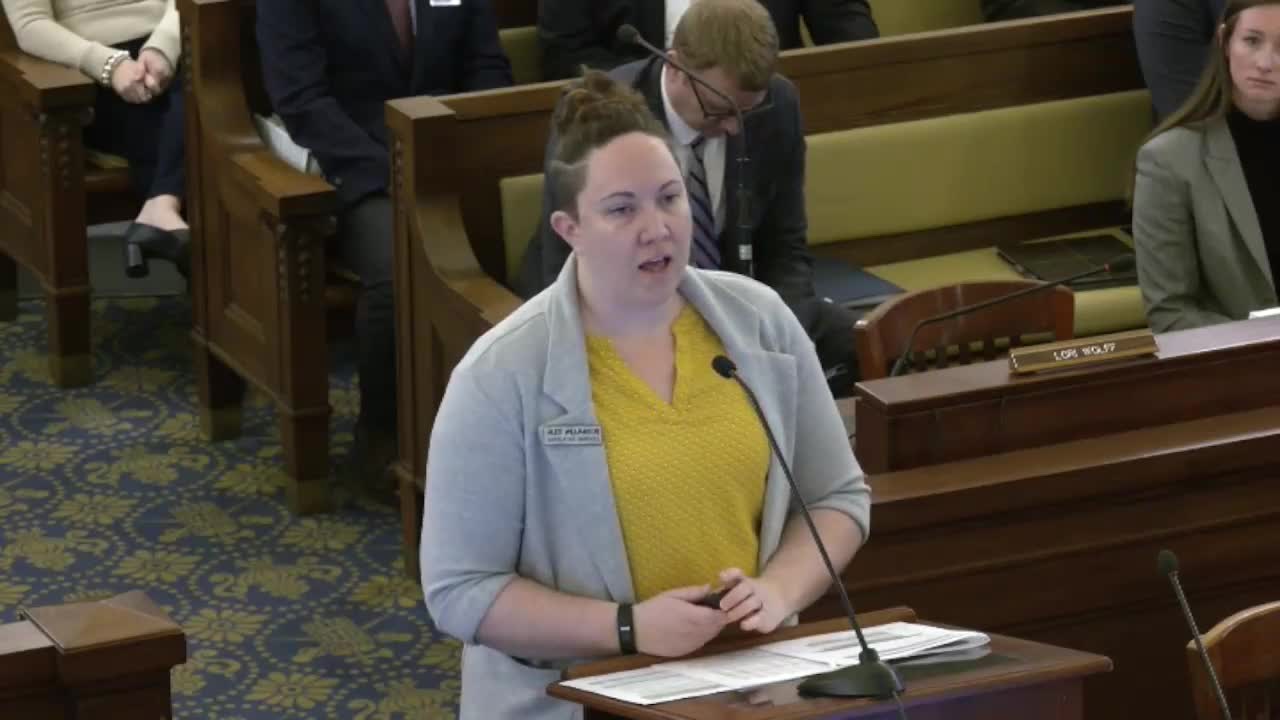
Alex Williamson, budget and policy analyst with the Legislative Services Office, told the committee the department requests a $6.7 million one-time federal appropriation for the first year of the Idaho Behavioral Health Plan and a $261,400 ongoing federal operating increase tied to Substance Abuse and Mental Health Services Administration grants. Williamson said the agency needs legislative authority to access federal grants issued around the plan’s July 2024 launch because the appropriation was originally dated to 2022 and is no longer usable without new authority.
“The reason for this request … the appropriation was for 2022 and is no longer usable by the agency, so they are asking for an appropriation now in order to give them the authority to access those federal funds that are still sitting there,” Williamson said.
The Department of Health and Welfare also asked for an exemption from the 10% program transfer limitations in Idaho Code 67-3511, Williamson said. That exemption would permit intra-department transfers to adult and children’s mental health to cover unforeseen expenditures in fiscal year 2025 and allow broader flexibility in 2026.
Alex Adams, director of the Department of Health and Welfare, told the committee the IBHP contracting and implementation process was unusually large and attracted legal challenges. “I believe this was the largest contract in the history of the state,” Adams said. He added there were roughly a year of legal challenges that delayed awarding and implementation and that, once resolved, the department chose to proceed cautiously: “I do think it is wise and prudent for the Department to do it right versus to do it quickly.”
Senators pressed on cost overruns and timing. Senator Cindy Wintrow asked what had gone well and what challenges stakeholders reported; Adams said budget forecasting was the biggest challenge and that initial estimates for IBHP were “off by a factor of about 60 percent,” which will affect Medicaid discussions later in the session.
Adams explained why the transfer exemption was requested: Medicaid is an entitlement that grows when demand rises, but some behavioral health appropriations are not entitlements and the department lacks authority that other agencies have to move funds across object classes. As a result, Adams said, the department previously had to “temporarily suspend some of the services that are available to children's mental health” to live within the appropriation.
Committee members and the director discussed the 988 crisis line contractor arrangements. Adams said the department is “agnostic as to who the contractor is,” describing the relationship as between the department and Magellan (the Medicaid contractor), with Magellan subcontracting to a vendor to provide 988 services.
The committee did not take formal action on the exemption or the IBHP supplemental during the hearing; staff and the department indicated they would return with additional budget material and answers to follow-up questions as the Medicaid budget is scheduled for a later hearing.
Ending — The committee scheduled further consideration of behavioral-health budget items at upcoming hearings, including the behavioral health enhancement appropriation bill set for Jan. 31. The department will provide supplemental information about IBHP grants and the requested transfer authority as requested by members.