Get Full Government Meeting Transcripts, Videos, & Alerts Forever!
Get email alerts on the Depredation Compensation topic
No spam. Unsubscribe anytime.
Committee approves temporary rule to implement grizzly and wolf depredation compensation
Summary
The committee approved a temporary rule implementing House Bill 592 to provide compensation for livestock losses from wolves and grizzly bears; the rule sets a claim process, references Office of Species Conservation reimbursement practices and anticipates negotiated rulemaking next year.
The committee approved a temporary rule (docket 0201082401) to implement compensation for livestock losses caused by wolves and grizzly bears under House Bill 592.
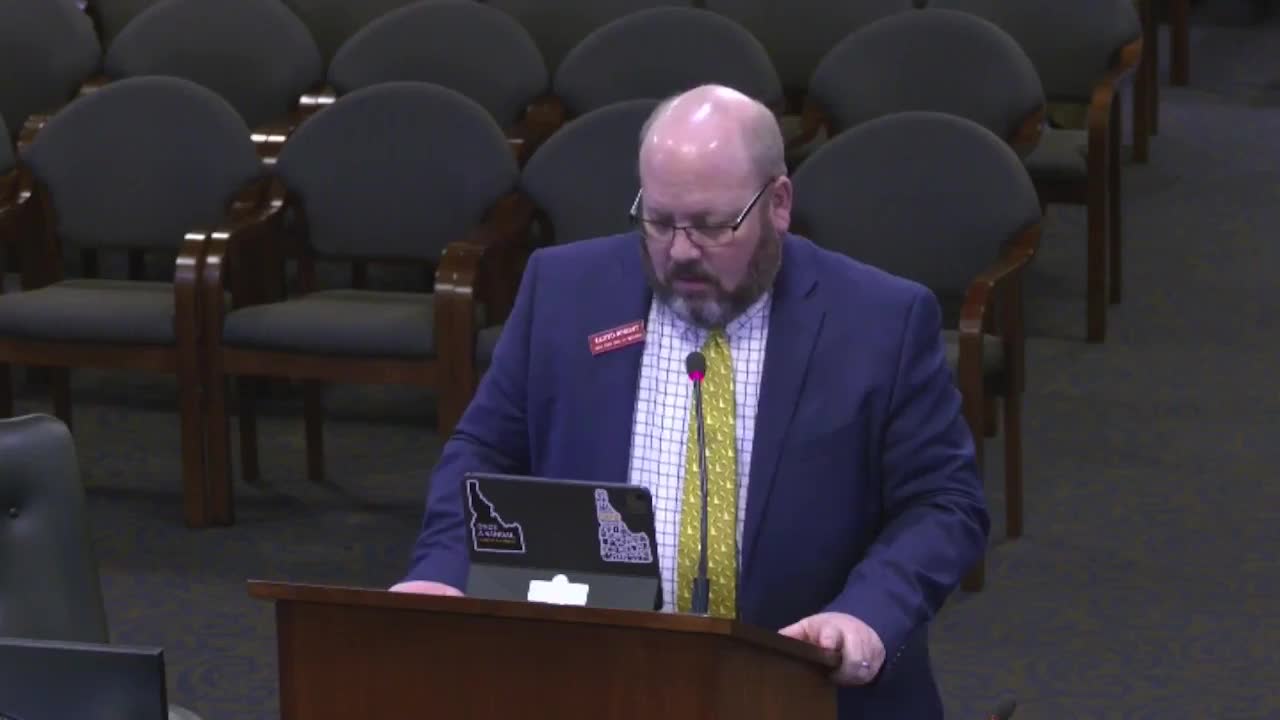
Lloyd Knight presented the temporary framework the department developed with the Idaho Office of Species Conservation (OSC) and Idaho Department of Fish and Game to process claims. The rule includes definitions, a claim submission process and reimbursement guidance; Knight said OSC's standard practice of paying up to 70 percent of market-rate veterinary care informed the proposed reimbursement approach. The agencies plan negotiated rulemaking next year to refine standards and involve more stakeholders.
Knight said claims submitted before a December 31 deadline will be reviewed by the three agencies and paid out shortly after agreement. Committee members asked about response times for investigations; Knight said agencies strive to be on-site within 24 hours but response time can vary due to remoteness and workload. He said the state is discussing options to enable local agencies (including county sheriffs) to assist while maintaining consistent investigative standards.
Representative Andrus moved to approve docket 0201082401; the committee approved the motion by voice vote. Officials said the temporary rule allows compensation to begin this winter while more comprehensive negotiated rulemaking follows.