Get Full Government Meeting Transcripts, Videos, & Alerts Forever!
Get email alerts on the Aging Services topic
No spam. Unsubscribe anytime.
Administrator for Idaho Commission on Aging hears questions from committee as reappointment is considered
Summary
Judy Bicknell Taylor, administrator of the Idaho Commission on Aging, described programs for older Idahoans, one-time pandemic funding uses, and ongoing funding increases while the Senate State Affairs Committee considered her reappointment; a vote was deferred.
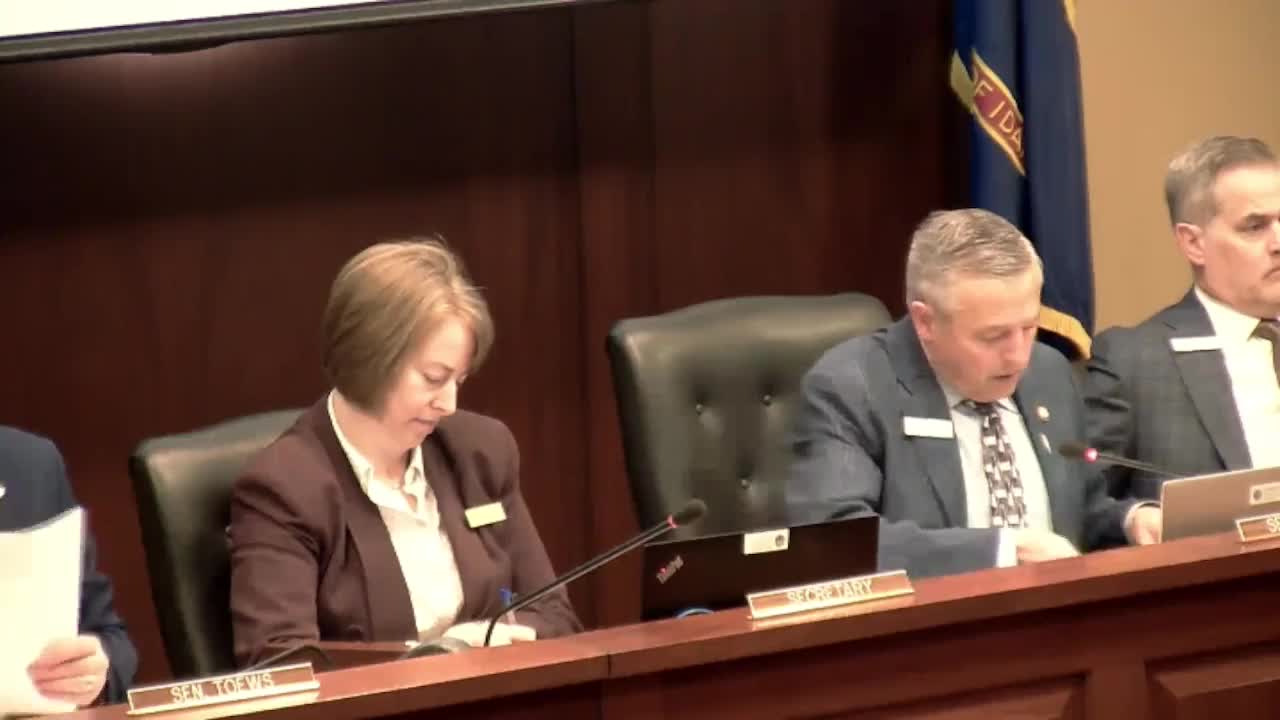
Judy Bicknell Taylor, administrator of the Idaho Commission on Aging, appeared before the Senate State Affairs Committee as part of consideration for her reappointment and described the commission's mission and key programs that serve older Idahoans.
"The mission of the Commission on Aging is to prevent early or unneeded institutionalization of our older Idahoans and to keep them living in their communities of choice with safety, dignity, and health for as long as possible," Taylor said, adding she approaches the role as a registered nurse and views public policy as part of nursing practice.
Taylor summarized the commission's primary services: congregate meal programs at senior centers (which she said provide about one-third of daily nutritional requirements for regular attendees), home-delivered meals (Meals on Wheels), homemaker services for people who cannot perform household tasks, and caregiver support programs. She recounted the agency's pandemic response, saying the commission did not miss a single day of home-delivered meal service and pivoted some congregate sites to drive-through meal distribution. Taylor said one-time federal and state pandemic funding was used for sanitation supplies, temporary bonuses, and infrastructure grants (including about $10,000 "Meal GRAMA" grants used for freezers, stoves, flooring and ramps).
Taylor said the commission received ongoing funding increases from the Legislature: roughly $500,000 (described in testimony as "half a $1,000,000") in additional ongoing funds for nutrition programs and a prior ongoing appropriation of $700,000 to support caregivers caring for family members with dementia or Alzheimer's. She said that as of July 1, 2024 the commission increased reimbursement rates for both home-delivered and congregate meals by $0.25 per meal and is holding reserves to address short wait lists for home-delivered meal programs.
Committee members asked about the sufficiency of the rate increase and the variability among senior centers. Taylor said differences in local rent, staffing and fundraising capacity drive disparities between thriving and struggling centers. Senator Harris and others asked whether the 25-cent increase covered rising meal costs; Taylor said reimbursement covers about half of meal cost based on the code formula and that centers vary in their financial position.
Senator Acdi asked about rising Alzheimer's cases and the commission's response. Taylor described a state caregiver support program serving two prioritized categories: caregivers referred by adult protective services as high-risk, and caregivers of persons with dementia or memory problems. She said the program started as a pilot and links families to assessments and case management.
Ending: The committee did not take a recorded vote on the reappointment during the transcript; the chair said the appointment will be voted on at a future meeting.