Get Full Government Meeting Transcripts, Videos, & Alerts Forever!
Get email alerts on the Chronic Wasting Disease topic
No spam. Unsubscribe anytime.
Committee adopts temporary rule aligning chronic wasting disease procedures with recent statute
Summary
The House Agricultural Affairs Committee approved temporary rules clarifying CWD testing procedures and aligning rule language with House Bill 591 after the department confirmed two domestic CWD cases in eastern Idaho.
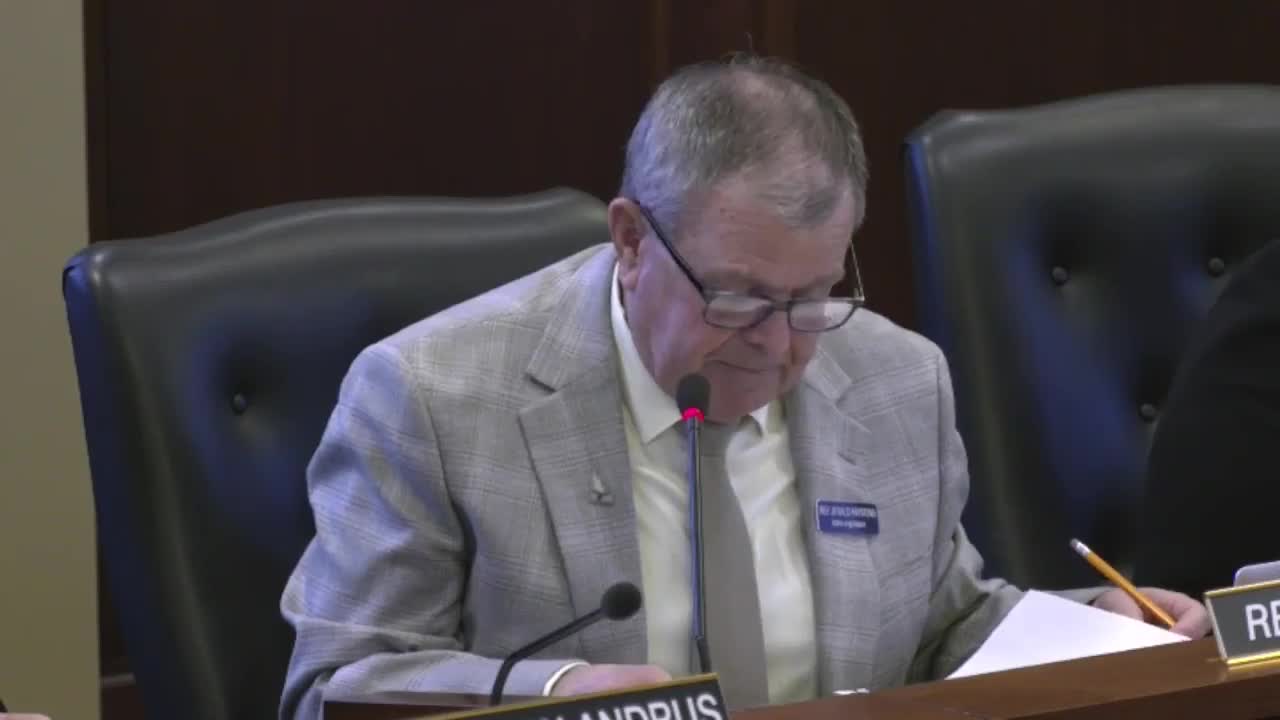
The House Agricultural Affairs Committee approved a temporary rule package (docket 0204192401) that clarifies chronic wasting disease (CWD) testing procedures, defines "animal health emergency" in rule, and implements consistency with House Bill 591.
Dr. Scott Lively told the committee that the rule clarifies that an official CWD test for domestic cervids requires both the brain stem (obex) and a lymph node specimen, reflecting current diagnostic practice. "We needed to collect both of those lymph node and the obex ... to identify any affected animals," he said. The rule also removes duplicated definitions already added to statute by HB 591 and explains reporting timelines (reportable = immediate; notifiable = within seven days).
Lively reported that Idaho recently identified its first two confirmed CWD cases in domestic herds in eastern Idaho; he said investigations suggest transmission most likely occurred from another domestic ranch rather than wildlife. He described statutory changes from HB 591 that provide producers options, including allowing movement of exposed animals between facilities under common ownership while under quarantine, and noted there is currently no validated live diagnostic test for CWD.
Committee members asked whether testing percentages or mandatory testing requirements should be set in statute; Lively said HB 591 did not set testing frequency and that expectations for sampling and testing would be addressed in herd management plans developed with affected producers. Representative McGregor moved to approve the temporary rule; the committee approved the motion by voice vote.
The department said the rule changes are intended to give producers management flexibility after a positive confirmation and to align rule language with recent statutory changes.