Get Full Government Meeting Transcripts, Videos, & Alerts Forever!
Get email alerts on the Vehicle Safety Utv topic
No spam. Unsubscribe anytime.
Committee advances bill exempting some UTV riders from helmet rule, agrees to consider seat-belt amendment
Summary
The Senate Transportation Committee voted to send House Bill 13 to the 14th order for possible amendment after debate over exempting UTVs with roll cages and seat belts from Idaho’s helmet law and whether the bill should require seat-belt use for young passengers.
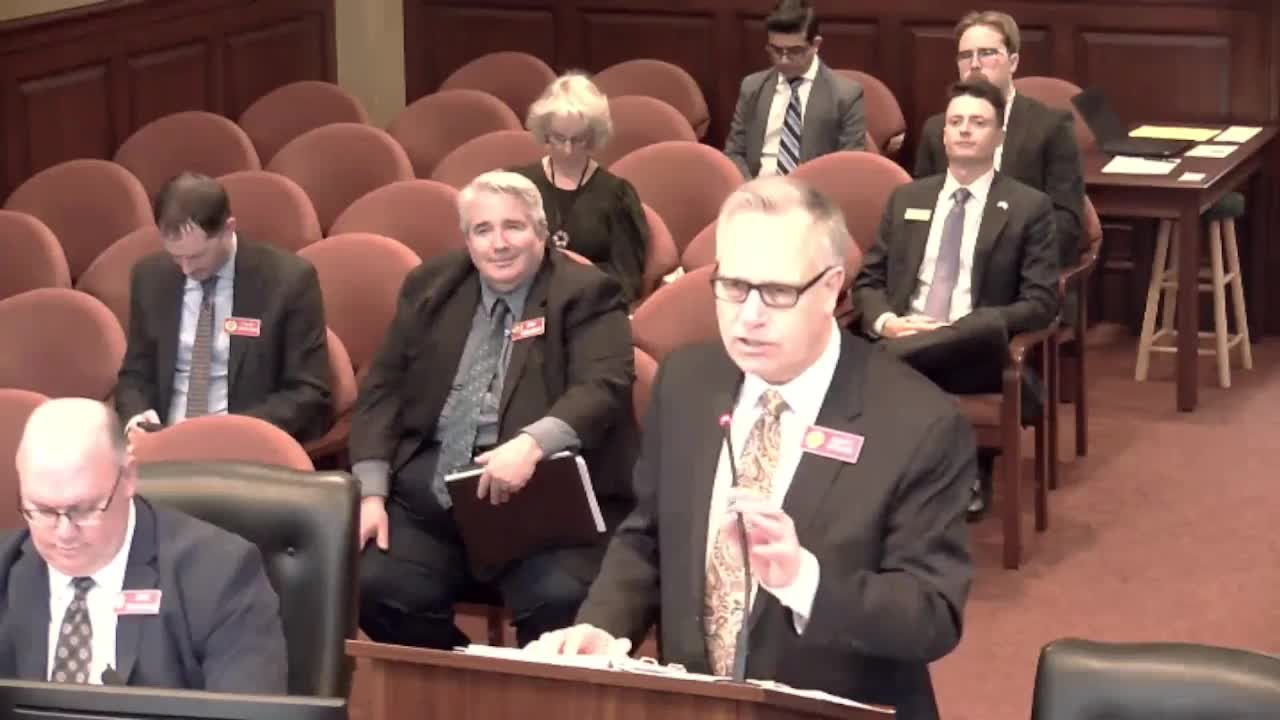
Representative Palmer, sponsor of the House version, told the Senate Transportation Committee on the opening item of the meeting that House Bill 13 would modify Idaho’s helmet rule as it applies to utility terrain vehicles, or UTVs. “What this is is in the UTV set in the motorcycle section of code, it also refers to UTVs and ATVs,” Representative Palmer said, adding that the bill would exempt UTVs that “have seat belts and a roll cage, which most UTVs do, which makes them much more safe.”
The bill, as presented, would remove the helmet requirement for occupants of UTVs that are equipped with seat belts and a roll cage; current Idaho law requires helmets for riders under age 18 on motorcycles and ATVs and, as the bill’s sponsors say, in the UTV section of code. Palmer said similar language had been added previously to a different section of code when new three-wheeled vehicles were folded into statute.
Sheriff Andy Creech testified for the Idaho Sheriffs Association in favor of the bill’s intent but urged an amendment to require seat-belt use in UTVs. “We’ve asked for that amendment to be added to this just so that we can help address some of the injury and fatal crashes that we’re seeing in UTV crashes,” Sheriff Creech said. He and Representative Palmer described a specific draft amendment the sheriffs’ group provided that would make belt use a primary enforceable offense and apply to younger passengers.
Representative Palmer said the sheriffs’ language would make failure to buckle a primary offense carrying a $50 fine and that the policy would apply to those under age 16 as proposed by the sheriffs’ group. “It does have it. It does have it, the ticket,” Palmer said when asked whether the proposed amendment included a penalty. He added, “And it actually makes it a primary. So, our current seat belt laws for cars across the state are not a primary, but this will be a primary. And I think it's $50.”
Committee members asked whether the statutory language would require a car seat for toddlers in a UTV; Representative Palmer said car-seat law is in a different section of statute and that the bill as drafted requires only that occupants be belted. Senator Sessions asked whether the bill would require younger children to be belted; Palmer responded that the proposed sheriff amendment would target younger passengers but that the car-seat question would rely on existing child-restraint law.
After discussion, Senator Adams moved to send House Bill 13 to the 14th order of business for possible amendment; Senator Kaiser seconded. The committee approved the motion by voice vote. A senator on the record said they would support the committee motion while reserving the right to vote differently on the Senate floor depending on amendment language and additional input from medical professionals and the sheriffs’ association.
The committee did not adopt a final statutory text at the meeting; members directed that the bill be considered in the 14th order, where amendment language — including the sheriffs’ draft requiring seat-belt use for younger occupants and a $50 primary enforcement penalty — can be added and debated further.