Get Full Government Meeting Transcripts, Videos, & Alerts Forever!
Get email alerts on the Irrigation Laterals topic
No spam. Unsubscribe anytime.
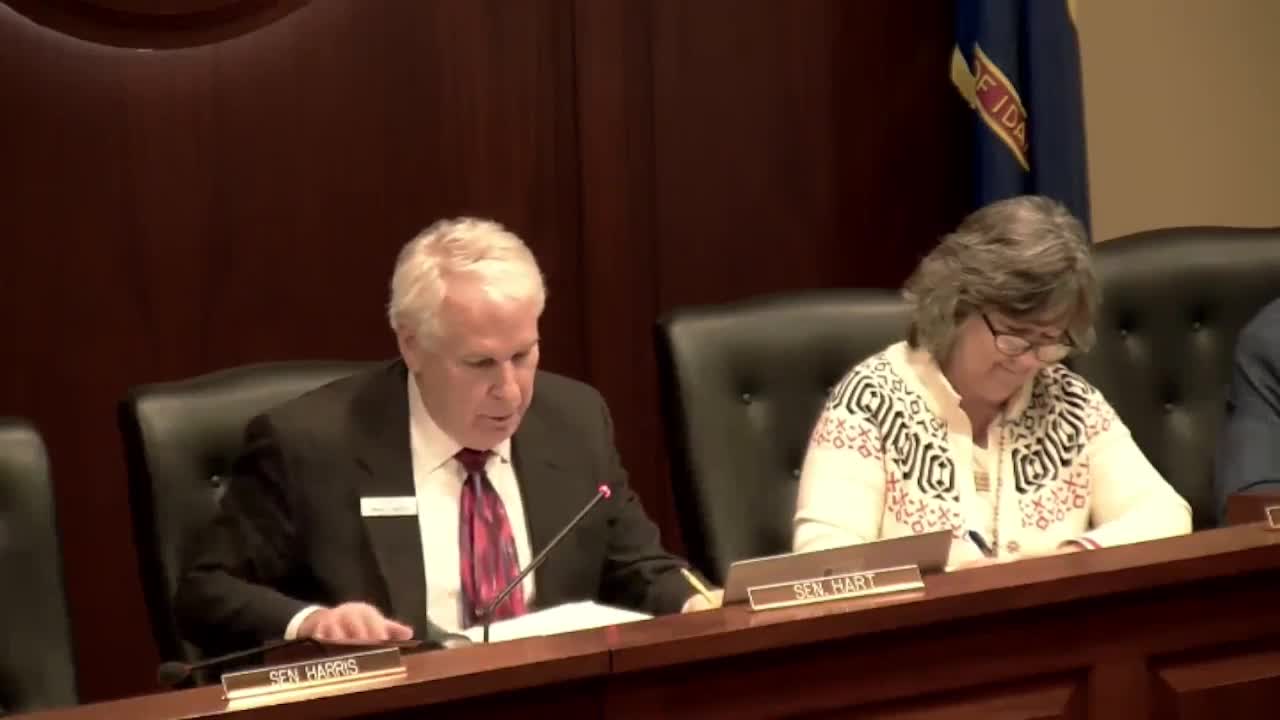
Senate committee backs printing of RS 31978 to extend lateral dispute authority to canal companies
Summary
The committee voted to print RS 31978, which would amend state law so canal companies and other irrigation entities can accept petitions from users on laterals (private branches off main canals) seeking help appointing managers or resolving disputes.
The Senate Resources & Environment Committee voted to print RS 31978, a proposed amendment that would let canal companies and other irrigation entities receive petitions from users on laterals and help resolve disputes over lateral management.
Paul Arrington of the Idaho Water Users Association told the committee that current Idaho code allows irrigation districts to receive petitions and appoint managers for disputed laterals but does not explicitly give that authority to canal companies. "The main substantive change is allowing canal companies and other irrigation entities who manage the main canals to also receive those petitions," Arrington said, noting the change stemmed from complaints by water users in the Wood River Valley.
Senator Guthrie asked whether the amendment would disrupt local administrative arrangements where canal companies and laterals are run as a single unit; Arrington replied it would not, saying the change would not affect existing local agreements on billing or maintenance. Senator Guthrie then moved to introduce RS 31978; Senator Taylor seconded. The motion to send the request to print was approved by voice vote with no recorded opposition in the transcript.
If printed and formally introduced, RS 31978 would allow canal companies that operate main canals to help appoint managers for troubled laterals, and add updated terminology such as "conduit" to reflect piped laterals. Arrington said the change is intended to reflect modern infrastructure and address disputes where canal companies are already being asked by lateral users for assistance.