Get Full Government Meeting Transcripts, Videos, & Alerts Forever!
Get email alerts on the Public Health Budget topic
No spam. Unsubscribe anytime.
Joint finance committee reviews Public Health Services budget, restoration requests and data-modernization priorities
Summary
The Joint Finance Corporation Committee heard a briefing on the Department of Health and Welfare's Division of Public Health Services budget, including requests to restore ongoing programs, one-time ARPA-related enhancements for data modernization and a governor's rural physician incentive initiative.
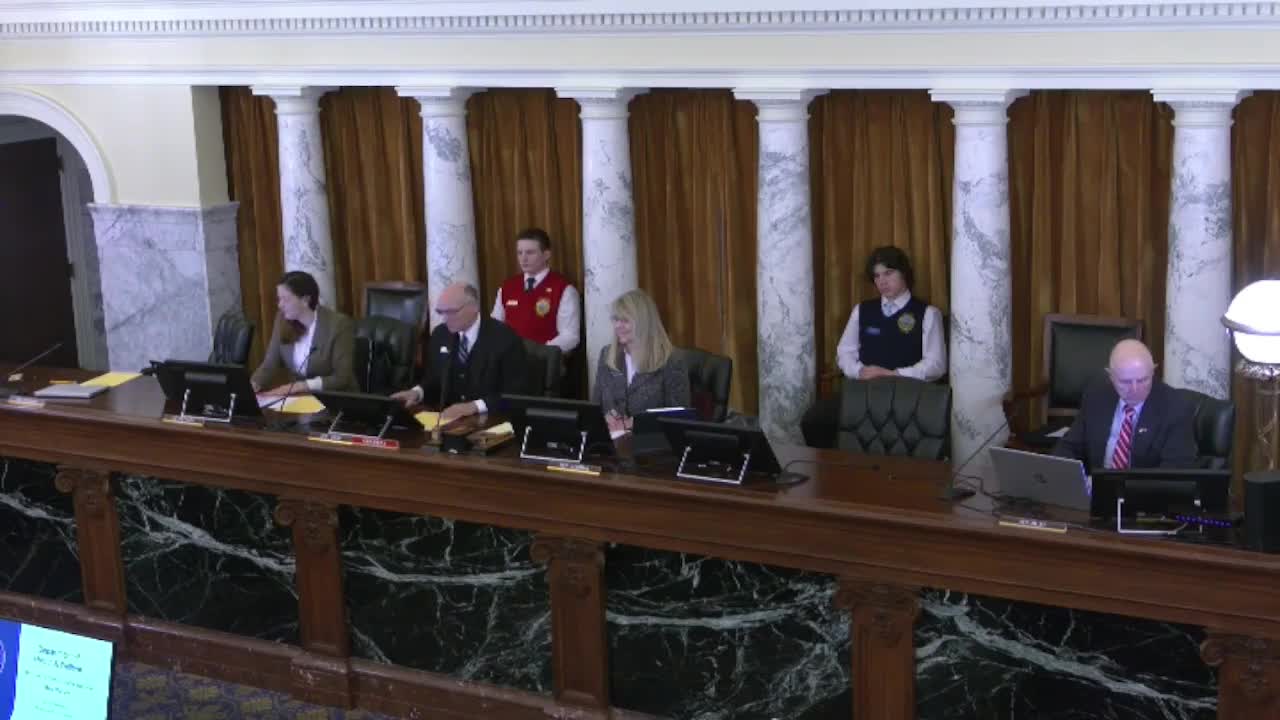
The Joint Finance Corporation Committee on an unspecified snowy Monday reviewed the Department of Health and Welfare's Division of Public Health Services budget, hearing presentations from Legislative staff and department leaders about program restorations, one-time federally funded enhancements and IT modernization needs.
Keith Bybee, division manager of budget policy analysis, told the committee that "public health services is a big 1," and walked members through the division's five program areas and where to find the materials in the legislative budget book.
The Division of Public Health Services covers physical health services (immunizations, chronic and communicable disease prevention, food safety and vital records), emergency medical services (EMS) and preparedness, the state public health laboratory, the legislatively established suicide prevention program (created in 2016), and a health care policy initiatives program that houses the State Healthcare Innovation Plan (SHIP). Director Alex Adams said the department used a 0-based review to reassess each program and that the overall public health appropriation fell from about $164 million in 2025 to a requested $154 million in the governor's recommendation for 2026.
Why it matters: committee members were focused on the mix of one-time federal ARPA and CARES funds rolled into the division in previous years, the restoration of programs moved from ongoing to one-time funding, and the need to modernize multiple legacy data systems that handle vital records, WIC and lab data.
Committee discussion and key budget items - One-time enhancements: The department identified roughly $8.75 million in one-time ARPA and federal grants for public health workforce and data modernization programs including a public health infrastructure grant, medical education loan repayment, vital statistics data modernization (CDC Data Modernization II), WIC system modernization, and a multiyear communicable disease prevention grant to support limited-service positions. - Ongoing restorations: The division asked to restore a number of previously ongoing programs to baseline funding, including suicide prevention (requested $1,807,700 general fund and $195,000 federal), a Drug Overdose Prevention Program (restore 4 FTE and $2,820,200), refugee health screening (1.5 FTE and $991,000), Alzheimer's and dementia coordination ($275,200), Fit and Fall Proof ($140,000), diabetes and chronic disease programs ($1,063,700), HIV prevention ($957,300), oral health workforce supports ($379,600), hepatitis surveillance and prevention ($599,200), and restoration of the WIC supplemental nutrition grant ($6,944,600 ongoing). - Dedicated funds and fees: The division requested a $2,250,000 ongoing increase to the immunization assessment fund to support vaccines for Idaho children under 19, and $150,000 ongoing to the Vital Records Receipt Authority to help process more than 100,000 records annually. - Home visiting and rural physician incentives: The budget seeks $725,900 ongoing in federal funds to expand home visiting services in counties identified by a needs assessment, and the governor proposed $500,000 ongoing from the general fund to expand the rural physician loan repayment program for physicians serving in federally designated Health Professional Shortage Areas.
Committee members pressed for detail and follow-up materials. Senator Cook asked for a report on what prior ARPA and system modernization dollars accomplished before approving new funding; Director Adams said the department would provide a "3-pager" summarizing work on Vital Records modernization, WIC upgrades and other system changes. Representative Price and others asked whether certain programs (Alzheimer's, Fit and Fall, overdose prevention) might better sit in other agencies; Adams and Division Administrator Elke Shaw Tullock said the department focuses on prevention and program fit but is open to statutory or organizational changes where appropriate.
Department comments and performance points - Alex Adams, Director, said the 0-based review yielded about a 6% year-over-year reduction in the division's requested appropriation and that some base reductions reflected the department's efforts to narrow focus to core priorities. - Elke Shaw Tullock, Division Administrator for Public Health, said the loan repayment programs have strong retention: "Almost 91% of the providers that receive these loan repayments stay in the state and practice in the state." She and Adams emphasized the role of the laboratory, vital records and disease surveillance in responding to infectious threats.
Ending: Committee chairs said the panel would not resolve all details in the hearing and encouraged members to follow up with analysts for line-item questions. Several senators and representatives signaled the need for additional written materials on data modernization outcomes, and the committee reserved further review as it prepares deliberations on the division's appropriation.