Get Full Government Meeting Transcripts, Videos, & Alerts Forever!
Get email alerts on the Senior Transportation And Liaison topic
No spam. Unsubscribe anytime.
Somerville’s senior taxi program moved to operating budget; councilors press for outreach and discuss senior liaison role
Summary
Director Ashley Spelliotis told the committee that Somerville’s senior taxi program now runs on city operating funds (about $10,000 per month), supports roughly 600 rides per month, and sets limits of one routine medical ride per week and two food/pharmacy trips per month per rider.
Director Ashley Spelliotis presented the Council on Aging’s transportation program in response to Order 250041 and described the department’s ongoing services and constraints.
Spelliotis said Somerville’s senior taxi program provides door‑to‑door rides for Somerville residents aged 60 and over and for people under 60 with a permanent disability. The program offers rides for medical appointments and to food sources within Somerville. “Typically … 27% of our rides of the roughly 600 rides we provide a month is for food access. 65 to 70% of the rides are for routine medical care,” Spelliotis said. She said the taxi program transitioned from grant funding to the city operating budget and currently has about $10,000 per month in city operating support through the fiscal year.
Spelliotis described trip limits and eligibility: one routine medical ride per week (medical includes dentist, mental health, physical therapy) and two rides per month to a food source or pharmacy. The taxi contractor charges a flat Somerville fare (Spelliotis gave $14 as an example for in‑city trips) and higher rates for trips beyond city borders; councilors and staff discussed whether to allow occasional out‑of‑city grocery trips (for example, to a Daily Table in Cambridge) on a case‑by‑case or programmatic basis, noting costs increase with distance.
Councilors expressed concern about food cost inflation and seniors’ access to discounts and distant low‑cost grocers. Spelliotis said the Council on Aging offers other programs—community meals, social‑work assistance with SNAP and benefits, and subsidized catered meals at the centers—and that staff rely on multiple outreach channels including mail newsletters, newspapers, and social media.
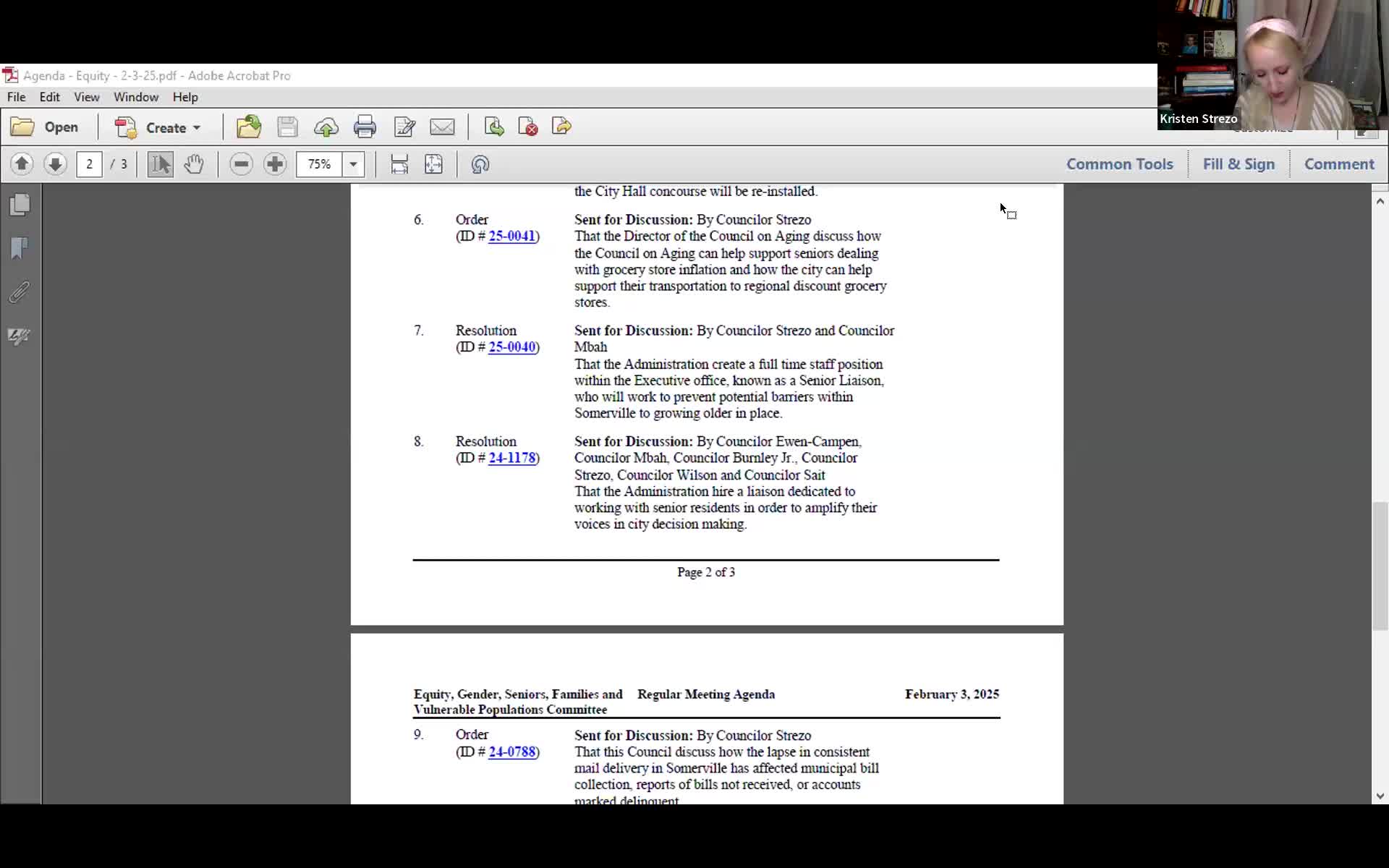
The committee also took up Resolution 250040 and Resolution 241178 (requests to create a full‑time senior liaison position). Liaison Hutter said the administration met with advocates, including Mass Senior Action, and that the mayor and departments continue to discuss next steps; at the meeting Hutter said there were no immediate plans to create a new position and that any new staff would be part of future budget conversations. Councilors described the liaison role as an internal advocate to review street design, permitting, accessibility, and interdepartmental issues that affect seniors’ ability to age in place; the administration said departments already coordinate but welcomed continued advocacy and cross‑department collaboration.
Committee members did not adopt a hiring decision at the meeting; councilors who sponsor the liaison proposals said they will continue to advance the request through the budget process and asked administration to continue interdepartmental coordination on mobility and housing issues for seniors.