Get Full Government Meeting Transcripts, Videos, & Alerts Forever!
Get email alerts on the Municipal Finance Sales Tax topic
No spam. Unsubscribe anytime.
City finance staff: 1% sales tax collections above budget after one-time use-tax payment
Summary
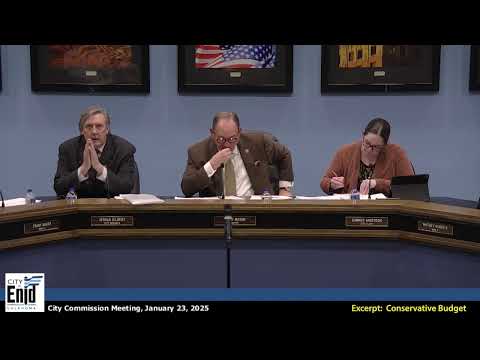
Staff members told the Mayor and Board Commissioners that the city’s 1% sales tax—effective since FY 2017—has outperformed conservative budgets and that a recent roughly 20% year-over-year jump is largely driven by a one-time use-tax payment from a local manufacturer.
Staff members reported at a Mayor and Board Commissioners meeting that the city’s 1% sales tax—established in fiscal year 2017—has consistently outperformed conservative budget projections and that a recent short-term jump in collections is largely the result of a one-time use-tax payment from a manufacturing company.
Staff member 1, Staff member, told the board that the 1% sales tax “started in FY ’17” and that the city has “been conservative in how we budgeted that and have exceeded our budget each year.” He said the city budgeted “just over $5,000,000” to collect for the July–December portion of the current fiscal year and that actual collections exceeded that figure. He added that a large manufacturing plant “did not timely file for their exemption with the state of Oklahoma,” and that “the State of Oklahoma does not retroactively apply that,” so the company’s late filing resulted in a one-time use-tax payment that inflated the year-over-year increase.
“...we were gifted a 1 time, use tax fee by that manufacturing company, that is why it's causing that skew of 20% increase,” Staff member 1 said. He also offered an adjusted view: removing that one-time payment, the collections for the first six months would show a smaller increase over the prior year and more modest over-budget performance.
A second staff speaker emphasized the city’s conservative budgeting approach. Staff member 2, Staff member, said the city’s trend line—where actual revenues typically exceed budget in most periods—reflects “good budgeting practices” and a conservative approach that helps avoid midyear cuts. “Being conservative on revenues helps us... not overspend or not be in a position where we have to... be cutting the budget before the end of the budget year,” Staff member 2 said.
Discussion focused on explaining the drivers behind the headline increase rather than on any proposed policy changes. No formal motions, votes, or budget actions were recorded on this topic during the segment in the transcript.
Nut graf: The presentation framed the stronger-than-budgeted sales-tax receipts as primarily the product of routine conservative forecasting combined with an unusual, one-time use-tax payment tied to a manufacturer’s late exemption filing with the State of Oklahoma; staff said removing that payment narrows the year-over-year gain and the over-budget amount.
Details and context: Staff repeatedly described the city’s budgeting stance as intentionally conservative—actual receipts outpacing budget in recent years—so the city can avoid cutting departmental budgets midyear. The speaker noted the city’s internal controls and staffing capacity as factors that support that approach. The transcript quotes include exact statements about the fiscal year the tax began (FY 2017), the July–December budgeting frame for the current year, and the explanation about the State of Oklahoma’s refusal to apply exemptions retroactively.
Ending: The board heard the revenue update and explanation; no formal action on spending or budget amendments tied to this report appears in the provided transcript excerpt. Staff indicated they may reference the revenue chart again when future budget or spending questions arise.