Get Full Government Meeting Transcripts, Videos, & Alerts Forever!
Get email alerts on the Transportation Funding Debt topic
No spam. Unsubscribe anytime.
MDOT presents $21.2 billion six‑year plan; DLS highlights revenue assumptions and debt limits as transit riders press for repairs
Summary
DLS and MDOT officials told lawmakers the six‑year capital plan programs about $21.2 billion and that the FY26 request relies on proposed new state revenues of $420 million annually to leverage federal funds and meet debt coverage and capital priorities.
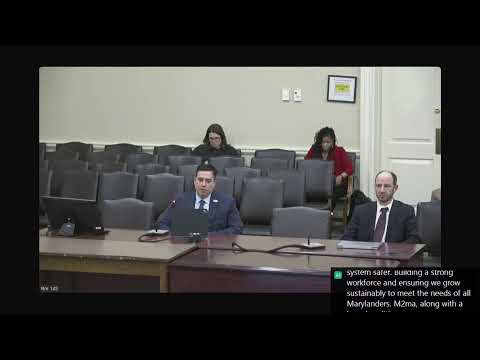
The Transportation and the Environment Subcommittee received a detailed overview of the Maryland Department of Transportation’s proposed fiscal 2026 plan, the Transportation Trust Fund forecast and a separate debt service analysis that examined capacity for new bond issuances and the proposed use of grant anticipation revenue vehicle (GARVEE) bonds.
Department of Legislative Services analysts opened with headline figures: MDOT’s total operating and capital budget across the plan is roughly $6.7 billion for the year under review and approximately $21,200,000,000 is programmed in the six‑year capital program. DLS noted the Transportation Trust Fund closed fiscal 2024 with a $631,000,000 balance, which the forecast projects will decline to about $400,000,000 in FY26 absent additional action. The department derives about 20% of TTF revenue from motor fuel taxes; titling, registration and federal support are other major revenue sources.
DLS and the department discussed new revenues proposed in the BRFAA and the Governor’s budget that would add roughly $420,000,000 in ongoing state transportation revenue annually; MDOT officials said those dollars would allow the state to leverage federal funding and financing to generate about $695,000,000 in new annual resources when federal matches and financing are included. Secretary Paul Wiedefeld told the committee the additional revenue is “critical to fully leverage all available federal funding and financing opportunities,” and that without new revenues the department would face further cuts.
On debt, DLS analyst Steve McCullough explained that Maryland uses 15‑year consolidated transportation bonds (CTBs) and noted that the department maintains a practice of targeting at least a 2.5-times debt service coverage ratio though bond resolutions set a 2.0 minimum. The CTB statutory cap remains $4,500,000,000; CTB debt outstanding was roughly $2,900,000,000 at the end of FY25. DLS included the proposed $420,000,000 in its debt models and found coverage ratios remain above MDOT’s 2.5 target through the forecast; however, DLS cautioned that if the proposed revenues were not adopted and the state attempted to replace the same level of capital spending with additional bond issuances it could press ratios toward the 2.0 floor and constrain future borrowing.
DLS also reviewed GARVEE bonds, debt backed by anticipated federal formula aid; the CTP includes GARVEE use for light rail modernization and shows an expected $27,000,000 of annual GARVEE debt service beginning with a tranche issued in 2027 and a later tranche in 2031. DLS highlighted that GARVEE issuances commit future federal aid to debt service, reducing the federal funds available to pay as‑you‑go capital in later years.
Secretary Wiedefeld described CTP priorities as safety, system preservation and economic competitiveness and pointed to projects in the plan including system preservation work, the Baltimore Light Rail overhaul, port investments and airport state‑of‑good‑repair needs. Wiedefeld also noted MDTA’s separate role and reported preconstruction for the Francis Scott Key Bridge rebuild had begun under MDTA; he said federal funding commitments were in place and the state would pursue recovery from responsible parties for the bridge collapse costs.
Transit stakeholders urged the committee to protect and expand state investments. John Laria, chair of the Baltimore Regional Transit Commission, said the light rail system is “fragile” and at risk of total failure without investment in traction power substations and replacement vehicles, and he urged support for the final CTP figures. Brian O’Malley of the Central Maryland Transportation Alliance and James (Jimmy) Rouse of Transit Choices also endorsed the governor’s transit investments and warned that postponing state of good repair work increases long‑term costs and hurts reliability.
The Department of Legislative Services recommended annual budget language requiring early notice to budget committees of substantial changes to the transportation capital program and two routine debt‑reporting recommendations for nontraditional debt. The department and DLS agreed to follow up on detailed project listings and to provide the committee additional comparisons showing projects that were cut, restored or delayed between draft and final CTP releases.
No formal votes were taken during the hearing; the subcommittee heard public testimony from transit advocates and industry representatives and pressed MDOT for follow‑up materials on revenue assumptions, GARVEE uses and the list of projects restored or delayed by the final plan.