Get Full Government Meeting Transcripts, Videos, & Alerts Forever!
Get email alerts on the Telecommunications Tower topic
No spam. Unsubscribe anytime.
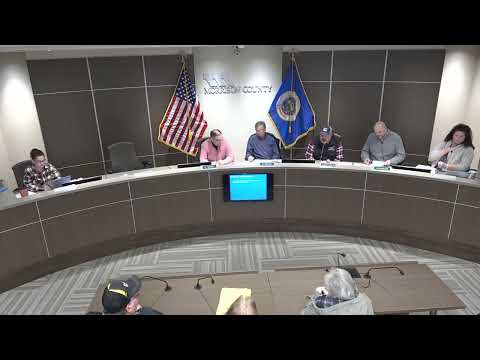
Planning commission backs 199‑foot telecommunications tower in Little Falls Township
Summary
Morrison County Planning Commission recommended approval of a conditional use permit for a self‑supporting 195‑foot tower (199 feet with lightning rod) proposed by Towers LLC/Vertical Bridge for Verizon; FAA issued a no‑hazard determination and MnDOT approved proposed access.
The Morrison County Planning Commission voted unanimously to recommend approval of a conditional use permit (CUP) for a telecommunications tower proposed by Towers LLC (doing business as Vertical Bridge) for a 7.2‑acre parcel in Little Falls Township.
Amy (Land Services staff) described the application as a request under county ordinance section 604.6 (communication towers) and section 1222 (performance standards). Applicant Alex Truman, representing Towers LLC and Vertical Bridge, said the proposal responds to demand for improved network coverage and capacity and that the site would serve Verizon initially.
The proposal calls for a 195‑foot self‑supporting tower with a 4‑foot lightning rod for an overall height of 199 feet, located roughly a half‑mile east of Little Falls city limits and sited near an existing tree buffer to minimize visibility. The lease compound would be a 100‑by‑100 rock pad, fenced with a gate, and would occupy about one quarter of an acre. The FAA issued a determination of no hazard to air navigation, and MnDOT authorized a driveway approach from Highway 27; the site is within the Little Falls Municipal Airport conical airspace but the FAA process found no hazard.
Alex Truman said, “This project is being driven primarily just by demand in the network coverage and capacity,” and described increases in residential expansion, work‑from‑home and emergency calls that the applicant says justify the site. The tower is engineered to collapse onto itself; applicant materials show a designed collapsed zone of about 97.5 feet.
Commissioners asked about county costs, decommissioning, potential health effects, impacts on property values, and carrier co‑location. Truman and Amy said there would be no direct cost to the county for construction, that industry practice and the applicant plan for decommissioning if a site becomes obsolete, and that they were not aware of studies demonstrating long‑term health impacts. Amy said the presence of a tower alone does not change assessed market value; assessed values reflect sales data and any change would require market evidence.
Public commenter Jeremy Rose raised questions about a nearby wetland, potential tax impacts and whether Camp Ripley had been contacted. Amy said she had not heard concerns from Camp Ripley and that the FAA review typically addresses known flight patterns; she also said communications towers typically do not trigger an environmental assessment worksheet or environmental impact statement.
Staff reported 116 notices were sent and no written comments were received prior to the hearing. The planning commission answered the conditional use criteria affirmatively on five questions (road/utilities burden; detriment to neighboring property; environmental impacts; consistency with zoning; consistency with comprehensive plan/water plan) and then voted to recommend approval to the County Board. The commission's recommendation will be considered by the County Board on Jan. 28.