Get Full Government Meeting Transcripts, Videos, & Alerts Forever!
Get email alerts on the Social Services topic
No spam. Unsubscribe anytime.
Morrison County highlights early results from new embedded social‑worker pilot called REACH
Summary
County Health & Human Services and Adult Services presented two months of early activity for an embedded social‑worker pilot (REACH) that has responded to more than 55 contacts and aims to reduce repeat law‑enforcement calls for welfare checks, mental‑health and homelessness incidents.
The Morrison County Board of Commissioners heard an update on a new embedded social‑worker pilot program that has worked with local law enforcement on crisis and follow‑up calls since early December.
Health and Human Services staff said the program — branded REACH (Response Embedded Assistance Community Help) — is intended to help individuals connect to services so they require fewer law‑enforcement responses.
Nathan Bertram, Health and Human Services, said the county and law enforcement created the program to ‘‘assist individuals to fill in the gaps, to provide assistance so they are no longer needing to have law enforcement response needed,’’ and that the pilot also aims to reduce repeat calls.
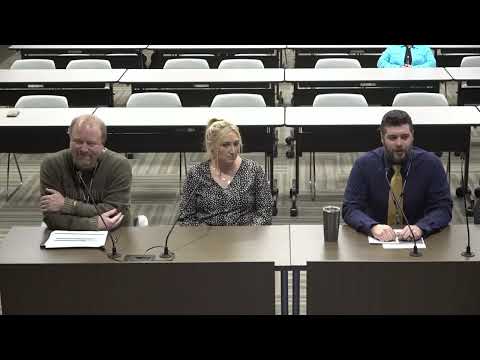
The program launched with Ashley Muevic, the embedded social worker, assigned to accompany or follow up on appropriate calls with multiple law‑enforcement agencies in the county. Jeff Bowman, Morrison County Adult Services supervisor, introduced Muevic and said the position started Dec. 2.
In the first 36 days of the pilot, staff reported Muevic met with more than 55 individuals and made roughly 40 call‑outs in January alone. Bertram said the county treats the 55 figure as contacts and counts 42 distinct individuals; he said roughly a dozen people had been seen more than once. The program is tracking whether repeat responses decline over six months but officials said it is too early to draw that conclusion.
Muevic described her background in outreach and shelters and said her previous work has included outreach to homeless youth and adult mental‑health case management. She said, "I graduated from Iowa State University. From there, worked with homeless youth ... I did child protection in Detroit, Michigan. And then from there, I came back to Minnesota and I worked for a county in Southern Minnesota. And I did adult mental health." (Ashley Muevic, embedded social worker)
Commissioners asked how Muevic coordinates with 24‑hour services and other social‑work staff. Bertram said the county already has clinic and hospital social workers and that response depends on who is best suited; Muevic works core daytime hours (roughly eight hours per weekday) and follows up on calls outside that window when needed.
Officials said Muevic has accompanied officers on scene for welfare checks, mental‑health calls and homelessness contacts; she has assisted with crisis interventions and with placing individuals in hospitals when clinically appropriate. Staff also said the pilot has leveraged Mobile Crisis Outreach when needed and is tracking whether the co‑response model reduces emergency‑room visits and repeat police contacts.
No formal action was taken; commissioners welcomed the update and urged continued tracking and periodic reporting so the board can evaluate outcomes and funding needs.
Ending: The county described REACH as a pilot and invited future reports after a longer measurement period; staff said they will return with six‑month data comparing repeat‑call frequency and service outcomes.