Get Full Government Meeting Transcripts, Videos, & Alerts Forever!
Get email alerts on the Solid Waste Transfer Station topic
No spam. Unsubscribe anytime.
Cook County weighs building design, funding and timeline for new transfer station
Summary
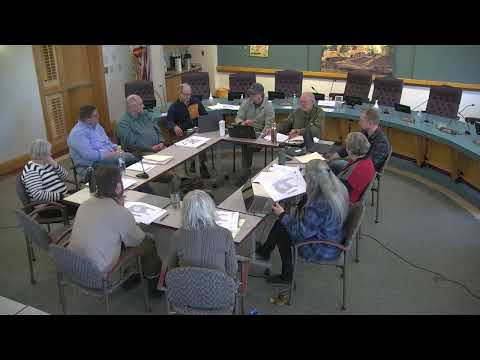
Cook County commissioners on Jan. 21 heard operators and designers outline two design options for a new enclosed transfer station, reviewed roughly $3.4 million already committed in state and local grants, and asked staff for a concise pros-and-cons and funding scenarios before making a financing decision.
Cook County commissioners on Jan. 21 heard operators, designers and county staff press for a decision on a planned solid-waste transfer station — a move commissioners and presenters said is time-sensitive because several public funding sources carry construction timelines.
The presentation by Dustin (North Shore Waste), county staff and the design team laid out two primary building approaches: a precast-concrete structure the design team said is consistent with a 100-year lifespan, and a pre-engineered metal building with an estimated 50-year lifecycle. The architect said the full building would be about 23,500 square feet and that building-code limits require dividing the facility so no single fire area exceeds 12,000 square feet without sprinklers. Presenters said the precast option is costlier up front but more durable; the metal option is cheaper initially but likely to cost more in maintenance over time. The architect estimated a roughly $500,000 material-and-labor difference between the two approaches; presenters said final erected costs could widen that gap toward $750,000–$1,000,000 depending on labor, prevailing wage and other site factors.
Why it matters: county staff and the transfer-station operators told the board they have already assembled about $3.4 million in public funding but need to finalize plans and permitting to access those dollars and to meet grant timelines. If the county does not proceed, presenters warned, some funds may have to be returned.
Nut graf: The discussion focused on design trade-offs, regulatory limits and how to pay for construction and ongoing operation. Presenters pressed for a near-term decision so plans can be completed and permits applied for in time to bid and build in this construction season; commissioners asked for a concise pros-and-cons packet and for clearer financing scenarios before committing to bonding or assessments.
Most of the meeting traced the project’s history: North Shore Waste operators said waste volumes rose more than 25% from 2019 to 2021, and that tipping (dump) fees they pay to haul material to a regional facility rose sharply. The Minnesota Pollution Control Agency (MPCA) issued a notice of violation in 2023 after the county operator exceeded the MPCA’s permit-by-rule volume limits; presenters said the MPCA has granted time for the county and operator to work toward a larger enclosed facility while the project advances.
Presenters laid out the current funding package and steps taken to obtain it: $450,000 from the Iron Range Resources and Rehabilitation Board (IRRRB) infrastructure program; about $2,000,000 included in a state mineral-tax appropriation raised through the county’s legislative contacts; and an additional roughly $800,000 from a deed grant scored by the local EDA. Those sums, together with county contributions, are the basis for advancing final design, permitting and bidding.
Design details explained to commissioners included circulation for public and commercial vehicles, the building’s internal tipping floor and chutes that allow tractor-trailers to be loaded inside, a separate washing/maintenance area and stormwater and septic siting. The architect and design team recommended a precast-concrete building for heavy use because of durability, easier future expansion and lower long-term maintenance; they warned that a metal building would require additional interior liner panels, insulation and ongoing panel repair where equipment strikes walls.
County staff also described a public-private ownership and operations approach developed with state guidance: the county would own the building while the operator (North Shore Waste) would hold a management agreement. Presenters said state bonding guidance required lease terms roughly longer than the expected building life to protect public investment — for example, a building with a 50-year life would need a lease longer than that life (presenters cited a formula used in state review) and the management agreement would be limited in length (the operational agreement was described as half the building life in the current model). Presenters said the lease and operational agreement were crafted to protect public funds while allowing private operations to manage day-to-day maintenance.
Commissioners pressed on cost and funding. County staff and the county’s financial adviser (Ehlers) had modeled a parcel-based funding option that assumed a broad base of parcels so the per-parcel fee stays low; earlier modeling shown to commissioners used a notional 10,000 residential-unit base with a $25 annual fee to cover financing, but county assessment staff said that 10,000 number included duplicates and mixed building counts and that a cleaned parcel count was closer to 5,000 taxable residential parcels (vacant land and other classification questions remain). Commissioners discussed alternatives — a general obligation (GO) bond, a solid-waste bond, special assessments or a parcel-based levy — and asked staff to provide a spreadsheet showing how different parcel/zoning classifications and fee levels would map to bond payments.
The board also reviewed proposals for two smaller county-run transfer stations at Tofte and Hovland (spelled variously in the packet). Staff said those smaller sites were designed as under-one-acre, U-shaped drive-through facilities with a small intake booth, roll-offs for demolition and containers for recycling and special items; cost estimates for those smaller sites were included in the packet as options that could be added to a bond ask.
Regulatory and operational context: presenters reminded commissioners that the MPCA currently limits open-air processing under a permit-by-rule to about 125 cubic yards per day; North Shore Waste operators said summer peak operations routinely required four tractor-trailers per day — roughly 400 cubic yards — plus collection trucks. The MPCA’s 2023 enforcement action had already forced some hauling work to be contracted to Duluth haulers for specific projects, presenters said, and the transfer station would remove that pressure by providing enclosed storage and transfer capability.
Next steps and timeline: commissioners asked the design team and county staff to deliver a short pros-and-cons memo comparing the precast and metal options, to provide clearer cost tallies (including contingency), and to provide the parcel/zoning spreadsheet and updated assessment projections before the next county board business meeting. Presenters said some grant timelines and the IRRRB allocation have expiration limits and pressed the board for a timely decision so permits can be filed and construction scheduled during the upcoming season. No final funding decision or formal vote was taken at the session.
Ending: Commissioners scheduled follow-up material for the next regular board meeting and discussed the possibility of a special meeting if updated numbers arrived sooner. Staff said they would coordinate with the financial adviser and the county’s assessment and recycling staff to present options that balance administrative simplicity and fairness.