Get Full Government Meeting Transcripts, Videos, & Alerts Forever!
Get email alerts on the Mental Health Early Intervention topic
No spam. Unsubscribe anytime.
New Haven committee advances SAMHSA grant application to expand early psychosis services for youth
Summary
The Health and Human Services Committee voted to move forward an item authorizing the city to apply for a SAMHSA Children’s Mental Health Initiative grant of up to $1 million per year (renewable up to four years) to create a community-based system of care for youth at clinical high risk for psychosis in partnership with Yale's PRIME Clinic.
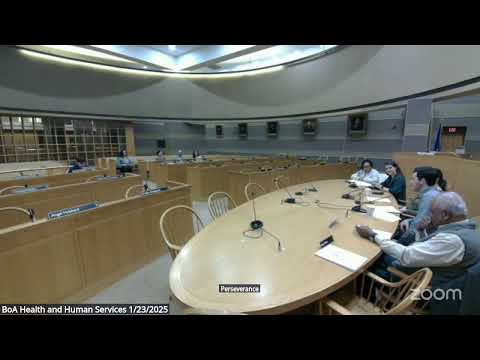
The Health and Human Services Committee of the Board of Governors on Jan. 23 moved to forward an item authorizing the city to apply for and accept funding from the U.S. Substance Abuse and Mental Health Services Administration (SAMHSA) Children’s Mental Health Initiative to build a system of care for young people at clinical high risk for psychosis.
Committee chair Eli Sabin introduced the item and presenters from the city and the PRIME Clinic at Yale described a plan to use grant funds to expand screening, clinician training and community outreach so that youth can be identified and treated in local clinics rather than traveling to a specialty center.
“We are here tonight to seek approval to apply for grant funding,” Le'Ron Mitchell, coordinator for mental health initiatives for the city of New Haven, told the committee. Mitchell said the application would be submitted by the City of New Haven because SAMHSA limits eligibility to government entities.
Emily Farina, a clinical psychologist at the PRIME Clinic at Yale School of Medicine, said the PRIME Clinic would help lead clinical components of the project, including training, consultation and evidence-informed treatments. “At the clinic, we provide specialized evaluation, treatment, and support to youth at clinical high risk for psychosis,” Farina said.
Why it matters: presenters said intervening before the onset of full psychosis reduces long-term disability and can improve life outcomes. The project emphasizes reaching groups that national and local data show are more likely to enter care through coercive or punitive pathsfor example, forced hospitalization, the criminal legal system or school disciplinary actionand aims to provide lower-barrier options in community clinics and through nonclinical partners.
Project components described to the committee include a community needs assessment, creation of a community advisory board including youth and family members, screening at intake in partner clinics, evidence-informed treatment offered at participating clinic sites, clinician training and an ongoing consultation model (a monthly ECHO-style consultation call). Presenters said they anticipate partnering with seven community mental health clinics and named Clifford Beers and BH Care among organizations already involved in screening efforts.
Budget and staffing: the notice of funding opportunity allows awards up to $1,000,000 per year for up to four years. Presenters said the project budget currently is estimated “a little bit over” $900,000 per year and that the city would create a temporary project director position funded by the grant to manage activities. Grant funds would also support a lead family coordinator, a person with lived experience who has a close family member with psychosis, to help guide planning and outreach.
Scope and reach: presenters cited an estimated population of youth in the Greater New Haven area who may meet criteria for clinical high risk for psychosis; the presentation reported an estimate of "25to100 young people ages 10 to 21" (as stated in the presentation) as a group that could benefit, while noting that not all who meet screening criteria will be help-seeking. Presenters also said screening at intake has produced positive screens in the range of about 25to30% at sites using the screener, which would then prompt a specialized evaluation and offers of treatment.
Schools and nonclinical outreach: the presenters said they are working with school-based mental health providers (Clifford Beers was listed as a school-based partner) and the New Haven prevention council to coordinate outreach and presentations to school staff and parents. They described engagement with faith-based organizations and youth programs to reach young people and families who are not already help-seeking.
Timing and contingencies: presenters told the committee the SAMHSA notice of funding opportunity was being reissued and that a new opportunity number was expected on Feb. 18; they said they would follow up with the committee if substantive changes to the opportunity required additional local approvals. The presenters said the project assumes federal award decisions could occur by the federal fiscal year end (Sept. 30) if the opportunity proceeds on schedule.
Committee action: after questions and discussion the committee moved and seconded the item and voted to move it to the full board for consideration. The public portion of the hearing was closed with no members of the public testifying.
What remains: the city must complete the SAMHSA application; if awarded, contracts and subcontracts with partner clinics would follow and staff positions funded by the grant would be hired on a limited-term basis to manage and implement the program.