Get Full Government Meeting Transcripts, Videos, & Alerts Forever!
Get email alerts on the Transit Oriented Development topic
No spam. Unsubscribe anytime.
Mixed reaction from towns and advocates at hearing on HB 6831 ‘Work Live Ride’ transit-oriented communities bill
Summary
At a Feb. 3 public hearing, supporters said HB 6831 would unlock housing near transit and leverage state investment; opponents warned it would weaken local control and could penalize towns that do not opt in to the state program.
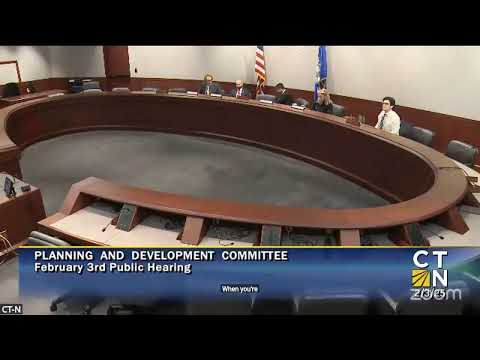
Supporters and opponents of House Bill 6831, the so-called “Work Live Ride” transit‑oriented communities (TOC) proposal, voiced sharply different views during a Feb. 3 public hearing before the Planning and Development Committee.
Proponents told the committee the bill would give municipalities tools and financial incentives to build housing near transit, help towns implement long‑standing local plans, and make better use of state transportation investments. "I think 6831 offers a better way forward," said state representative and East Lyme planning commissioner Nick Menapace, who described the bill as promoting "sustainable development, conservation, and communities" that align with local plans of conservation and development.
The bill would create a voluntary TOC designation for municipalities that meet state standards and would prioritize certain state funding for towns that opt in. Supporters argued the designation is voluntary and would reward towns that plan for walkable, transit‑served neighborhoods. "Transit oriented communities are how Connecticut was built, and they're the state's future," said Thomas Broderick, who testified in support as a resident and teacher from Trumbull.
Backers from a range of organizations said TOC districts could support housing supply, reduce car dependence, and advance climate and public‑health goals. Diane Keefe, a retired finance professional and member of sustainable streets, said concentrating development near transit could reduce air pollution and related health burdens. Douglas Hasladen, a New Haven resident involved with transit planning, pointed to projects around Union Station and said New Haven already has thousands of units in the pipeline that illustrate the effect of coordinated transit and land use planning.
Opponents urged caution, saying the bill would transfer too much discretion from local land‑use bodies to an Office of Responsible Growth and could produce coercive incentives that amount to penalties for towns that decline to opt in. "This bill, if passed, will affect a large portion of Greenwich under the control of one state zoning czar," said Dave Lancaster of Greenwich, who urged rejection on grounds of local sovereignty and preservation of open space. State representative Tina Corpus, representing parts of Greenwich and Stamford, said her constituents support affordable housing but oppose state mandates that remove local input and control over details such as parking and setbacks.
Several municipal and local government representatives, including Zach McKeown of the Connecticut Conference of Municipalities (CCM), urged clarifications about which state grant programs would be prioritized for TOC towns. CCM recommended routing additional water and sewer bond funds through the Municipal Redevelopment Authority (MURDA) rather than redirecting or deprioritizing existing clean water, STEAP, or Urban Act funds meant for other infrastructure needs.
Speakers also raised implementation questions that the committee may need to resolve if the bill advances: how TOC rules would interact with local plans of conservation and development (POCDs), whether coastal and wetlands protections are sufficiently preserved in the draft (witnesses pointed to unclear language around collaboration and inclusion), and whether the opt‑in incentives could create unintended consequences for school districts and municipal services in high‑growth areas.
No formal committee action or vote occurred during the hearing; the session consisted of public testimony and questions for clarifications. The committee received both written testimony and in‑person statements and indicated additional amendments and technical clarifications could be considered in later work sessions.
The Planning and Development Committee is continuing to gather input, and no final vote on HB 6831 was recorded during the Feb. 3 hearing.