Get Full Government Meeting Transcripts, Videos, & Alerts Forever!
Get email alerts on the Grants And Funding topic
No spam. Unsubscribe anytime.
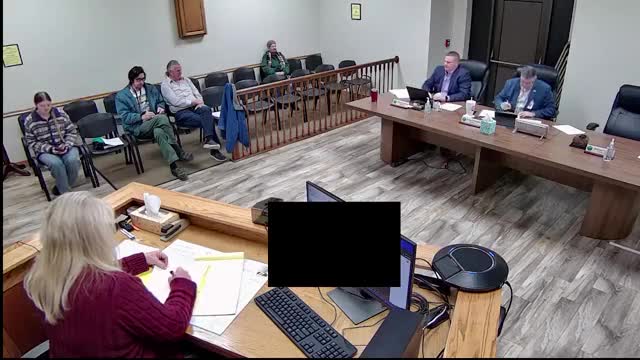
Hocking County grants coordinator outlines DOJ, CDBG, opioid and transit funding opportunities
Summary
Grants coordinator Sean Burks told the Hocking County Board of Commissioners on Jan. 23 that the county manages three active DOJ-related grants and is preparing for multiple competitive and formula grant opportunities in 2025, including the county's $150,000 CDBG allocation and a large ODOT rural and tribal transit program.
Sean Burks, Hocking County grants coordinator, told the Board of Commissioners on Jan. 23 that the county is managing three Department of Justice grants and is pursuing additional funding for economic and community development, infrastructure and opioid-response work.
Burks said one DOJ award — an improving criminal justice grant sometimes described locally as a “lethality grant” — is not yet fully functioning and that the county has been “rebuilding that,” adding that My Sister’s Place has agreed to take over part of the advocacy role previously provided by another local group. "Now we have to just work out the finer details of exactly what the other pieces of this puzzle will come into play with the sheriff's department, the prosecutor's office, and where those commitments will lie," Burks said.
He told commissioners the other two active grants are closer to completion: a school-violence prevention grant that paid for radios for the school bus fleet and can be closed out by September 2025, and a COGSAP opioid-response grant that places a health advocate in local schools. Burks said routine reporting deadlines remain and that he expects those grants to be closed according to schedule.
Burks also reviewed upcoming funding the county should consider in 2025. He said the county’s annual Community Development Block Grant (CDBG) allocation is $150,000; Hocking-Athens-Bellevue Community Action currently administers that allocation and takes an administrative fee (Burks said roughly $30,000). He described eligible uses as projects that meet national low-and-moderate-income (LMI) objectives, neighborhood revitalization, single-component critical infrastructure awards (roughly $500,000 per project), and urgent limited-clientele needs such as ADA access work.
On competitive opportunities, Burks highlighted an Oregon Department of Transportation rural and tribal transit program (approximately $27 million statewide), which he said has a $200,000 minimum and $750,000 maximum per request and opens March 4 with a short application window. He also described the Ohio Recovery Fund (opioid settlement dollars), which provides larger grants for treatment, facility enhancement and recovery services, and noted Surface Transportation Block Grant opportunities that could fit larger highway work in cooperation with Buckeye Hills.
Burks said he is actively scanning federal, state and private grant lists and participates in webinars and mailing lists to identify matches for county priorities. He also asked for permission to attend Appalachian Regional Commission (ARC) grant training in Charleston, West Virginia, next Thursday; the board approved his course attendance and use of a county vehicle to attend.
Why it matters: these grants and allocations provide a mix of small guaranteed funds and competitive opportunities that can support infrastructure, public safety, recovery services and neighborhood projects across Hocking County. Burks said some applications require quick turnaround and environmental review timelines that can extend a year or more.
Burks concluded by asking commissioners to signal any priorities so he can target applications and bring funding proposals back for formal board action.