Get Full Government Meeting Transcripts, Videos, & Alerts Forever!
Get email alerts on the Short Term Rentals topic
No spam. Unsubscribe anytime.
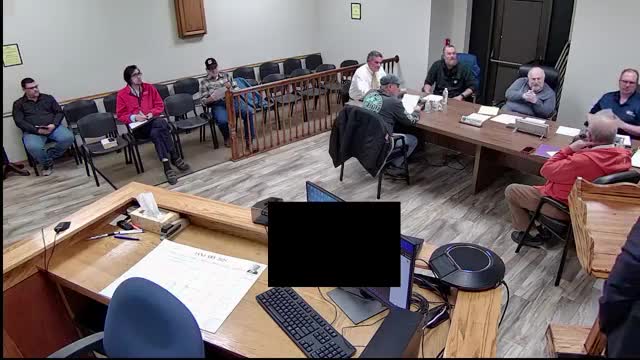
Hocking County planners present non‑zoning options after short‑term rental survey, schedule township meetings
Summary
Consultants and county staff reviewed a survey showing public concern about short‑term rentals, discussed registration and enforcement gaps, and proposed non‑zoning regulatory tools; township public meetings are tentatively set for the week of March 24 for further input.
Consultants working with Hocking County presented survey results and stakeholder feedback on short‑term rentals and zoning options and proposed a series of regulatory steps the county could take short of formal zoning.
David Beard, a consultant with American Construction Point, told the county zoning commission that the county’s online survey drew “over 400 responses” and that “68% of the respondents want zoning to slow the growth of short term rentals.” Beard said the responses were concentrated in the county’s most populous areas and that some concerns voiced by residents — for example, bright exterior lighting or driveway access — may be solvable through targeted standards rather than a full zoning code.
Beard said the project team is recommending several near‑term regulatory tools that do not require the legal process for zoning under Ohio law, including a mandatory 24‑hour contact for each short‑term rental, a more robust registration or permit process, special‑event permits, clearer site‑standards for ingress/egress and lighting, defined property‑maintenance enforcement, and consideration of impact fees tied to infrastructure costs. He described the current short‑term rental registration as “a good start” but said it lacks some contact, safety and site information present in other jurisdictions.
Why it matters: County officials said tourism is the county’s primary revenue generator but also the source of many residents’ complaints; the commission said it wants to balance local economic benefits with public‑safety and neighborhood impacts. Beard warned that implementing new rules will require staff capacity and legal review.
Key numbers and enforcement status: Beard reported the county’s bed‑tax/registration data show about 607 registered short‑term rental businesses representing about 1,900 total units; 30–35 accounts were described as delinquent on tax payments and about 13 properties were under review with the county assistant prosecutor for potential legal action. The Logan Fire Department’s annual runs rose from roughly 676–700 per year to 897 in the most recent year, Beard said, citing the county’s emergency response burden as part of the discussion about regulatory needs.
Public‑safety and enforcement questions dominated stakeholder sessions, Beard said. Several short‑term rental owners told the consultants they need a reliable, reachable local contact that can respond 24 hours a day when renters are disruptive. Beard said owners also described incidents where they asked unruly guests to leave but felt the sheriff’s office declined involvement when the issue was framed as a private contract dispute. “If the behavior is above and beyond, we don't want to put people in harm's way,” Beard said, adding that he recommended the county attorney and the sheriff coordinate to clarify when deputies should intervene.
Tax compliance and registration: The county’s bed‑tax administrator briefed the consultants and commissioners on compliance practices. Beard said the county’s tax‑tracking software scans major hosting websites and generates real‑time reports, which he described as producing a relatively high compliance rate compared with other jurisdictions he has worked in. He recommended asking a few additional questions at registration — notably a 24‑hour contact phone number and clearer site information — and said the county should decide whether to keep the current registration model or convert to a permit with review standards.
Regulatory alternatives to zoning: Beard told the commission that Ohio law treats outright prohibition of a use as zoning, but the county can achieve many goals by adopting site standards, property‑maintenance codes, special‑event permits, emergency‑access requirements and impact fees. Those measures, he said, are typically quicker to adopt than a full zoning code but will require legal review to ensure fees or assessments are tied correctly to costs and locations.
Public engagement and next steps: The consultant team and county staff outlined planned township meetings to collect more detailed problem descriptions from residents. Beard said the project team is tentatively scheduling township meetings for the week of March 24 and recommended evening sessions to increase attendance. Ashley Noonan, identified as a staff planner, will be a primary county contact for those sessions. Commissioners and staff also agreed to coordinate with the LEPC and the bed‑tax administrator to avoid duplicating work on a special‑event permit draft already under development.
No formal zoning action or ordinance was adopted at the meeting. The discussion produced direction to pursue additional public engagement, refine registration/permit options, clarify enforcement protocols with the county attorney and sheriff, and return with more detailed recommendations after the township meetings.