Get Full Government Meeting Transcripts, Videos, & Alerts Forever!
Get email alerts on the Park Management topic
No spam. Unsubscribe anytime.
Jacksonville updates Huguenot Memorial Park management plan; state review, erosion fixes planned
Summary
Parks staff described a revised management plan for Huguenot Memorial Park submitted to the Florida Division of State Lands, outlined short- and long-term road and infrastructure fixes to address erosion and flooding, and described habitat protections for nesting birds, sea turtles and gopher tortoises.
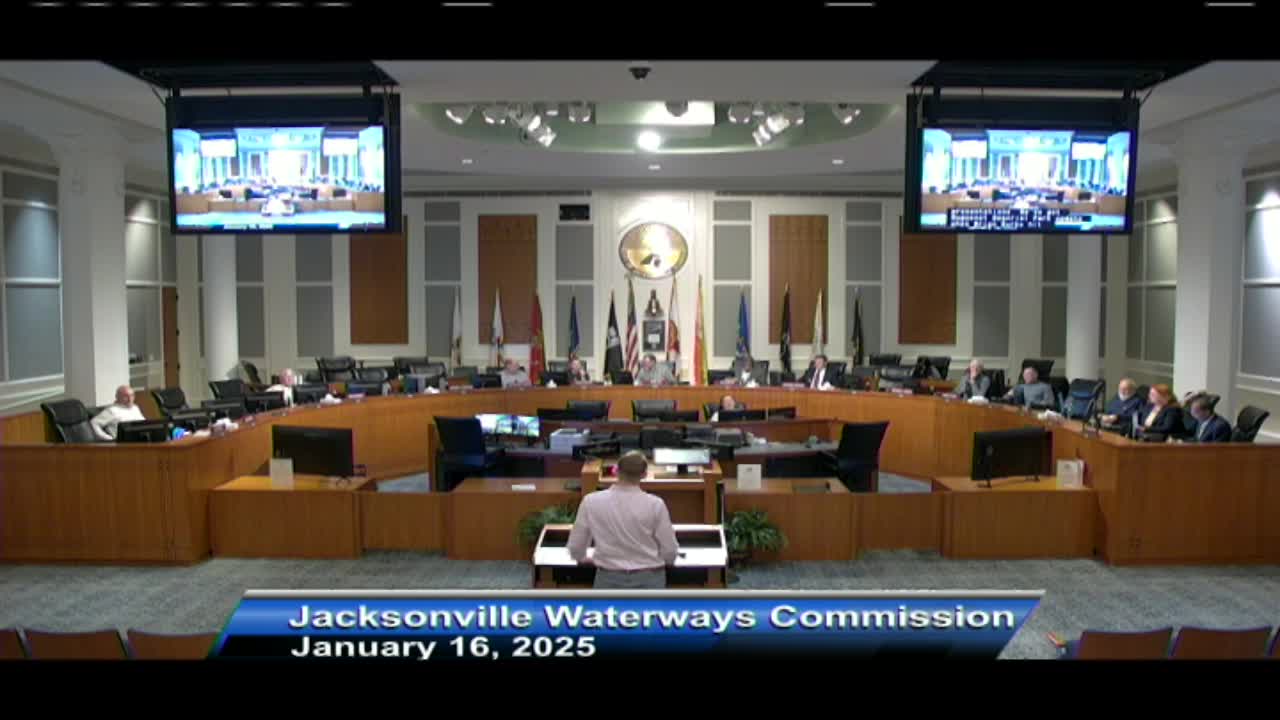
Brian Burkett, a parks department official, told the Jacksonville Waterways Commission that the city has updated the Huguenot Memorial Park management plan and submitted it to the Florida Division of State Lands for review.
The plan, Burkett said, lays out how the city will manage public access while protecting sensitive species and cultural resources on the roughly 340-acre site, most of which is state-owned and leased to the city. "This property is owned partially by the State and partially by the Federal Government. So, we're required to update a management plan for the property, talks about how we're going to manage it, how we're going to develop it for public access," Burkett said.
Why it matters: Huguenot Memorial Park combines public recreation (including the county’s only drive-on beach and a 74-site campground) with critical wildlife habitat. The park lies inside the Nassau River–St. Johns River Marshes Aquatic Preserve and within National Park Service and Timucuan Parks Foundation partnership boundaries, creating overlapping jurisdictional responsibilities and permit requirements.
Burkett and Jill Enns explained the park’s resource challenges and management tools. The park supports about 278 bird species, nesting sea turtles (April–September) and gopher tortoises; portions of the upland behind the dunes are designated critical wildlife areas and are closed during nesting season. Staff use prescribed burns, invasive-species control and seasonal closures to concentrate nesting habitat and reduce conflicts with vehicles and beachgoers. Volunteers conduct daily sea-turtle nest monitoring at sunrise, and Jacksonville Sheriff’s Office and Florida Fish and Wildlife officers assist with enforcement during peak season.
On infrastructure, Enns said the park’s main entry road and some facilities are in the 100-year floodplain and have seen repeated storm-related damage and dune loss. "We have lost about 80 feet of dune structure in front of that road in the past 4 years," Enns said. Parks staff outlined a two-stage approach: a near-term move to shore up and reroute the road slightly north to keep the park passable for the summer season, and a longer-term option to build an elevated entry road along a ridge through park property to remove critical facilities from the floodplain.
Funding and coordination: The near-term road work has state approval, Enns said, and the capital improvements are included in the city's current CIP. Burkett said the parks department also secured a $200,000 Resilient Florida grant to study erosion along the St. Johns River shoreline and to inform mitigation options. He also noted that some work (such as Fort George Inlet shoaling responses) falls to federal partners: "The Army Corps of Engineers has been looking at a solution ... the project kind of withered on the vine and is waiting for congressional appropriations," Burkett said.
Access and outreach questions followed. Council members asked whether the short-term road work waits on Tallahassee; Enns said the short-term solution already has state approval and permitting and is proceeding. Commissioners asked about public-transport access; one commissioner urged exploring JTA weekend service to improve access for residents without vehicles.
The management plan is under review by the Division of State Lands; Burkett said the Acquisition and Restoration Council in Tallahassee is scheduled to consider the plan in its meeting cycle (staff referenced an April 11 listing as the council agenda date). The city will have an opportunity to present the plan to state reviewers before final approval.
The presentation closed with a request from Burkett and Enns for continued coordination with state and federal partners and with volunteer groups. The commission did not take formal action on the management plan at the meeting. "If you have any questions about that or Brian's portion of the presentation, let us know," Enns said.
Ending: Staff continue to coordinate with state and federal agencies as they pursue short-term road repairs, a longer-term elevation option, and habitat protections; the management plan remains under Division of State Lands review and will return to the commission or to agency review as required.