Get Full Government Meeting Transcripts, Videos, & Alerts Forever!
Get email alerts on the Homeowners Associations topic
No spam. Unsubscribe anytime.
Gaithersburg introduces ordinance to exempt city from county CCOC; resident urges in‑house HOA enforcement
Summary
Council introduced an amendment to City Code §2‑6 to remove mandatory participation in Montgomery County’s CCOC; a resident representing CHARM Maryland urged the city to form an in‑house enforcement program with powers including mediation and enforcement.
The Gaithersburg City Council on Feb. 3 introduced an amendment to City Code §2‑6 to exempt the city from mandatory compliance with Montgomery County Code Chapter 10B, the county Commission on Common Ownership Communities (CCOC). The council scheduled a public hearing for March 3, 2025, with policy discussion April 7 and anticipated adoption May 5.
Assistant City Attorney Eric Perla told the council the proposed amendment "simply deletes, chapter 10 B from the list of county provisions that the city is required to abide by," and said the item was introduced to set the local legislative process in motion.
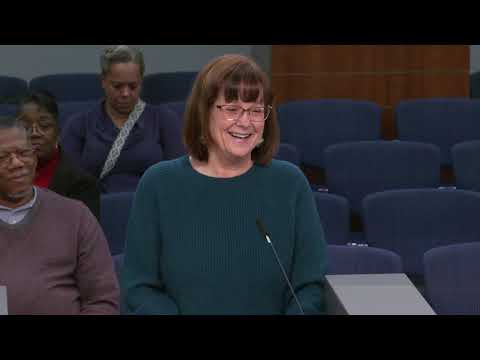
At the public‑comment portion of the meeting, Deb Wenzel, a Gaithersburg resident who said she represents CHARM Maryland (Common Homeowners Advocating for Reform Maryland), urged the council to adopt "option 4," an in‑house city program to replace the CCOC. Wenzel said CHARM Maryland is incorporated in Maryland to fight for "the rights and interests of individual homeowners who live in HOA communities" and argued that current state law favors boards and management companies over individual homeowners. She told the council that CCOC referral and jurisdiction technicalities often lead to complaints being denied for lack of jurisdiction and discourage homeowners from filing complaints.
Wenzel asked the council to "remove the CCOC's jurisdiction and consider the city in‑house program for a more effective way on how to investigation, followed by mediation and hearings, educational training for HOA boards, the creation of new ordinance and commission, and most importantly, the power of enforcement that Maryland state law currently allows to stop HOA abuse." She warned that a local program without enforcement would "serve no real purpose."
The council voted 4‑0 to introduce the amendment; the meeting record does not identify the mover or seconder. The item will return for the March 3 public hearing and the April 7 policy discussion.
Separately, the acting city attorney later reported having spoken with Maryland Attorney General Anthony Brown and noted that a smaller municipality would likely face hurdles showing sufficient harm to serve as a plaintiff in related federal litigation; the city could consider participating as an amicus in ongoing cases, staff said.