Get Full Government Meeting Transcripts, Videos, & Alerts Forever!
Get email alerts on the Immigration Sanctuary Policy topic
No spam. Unsubscribe anytime.
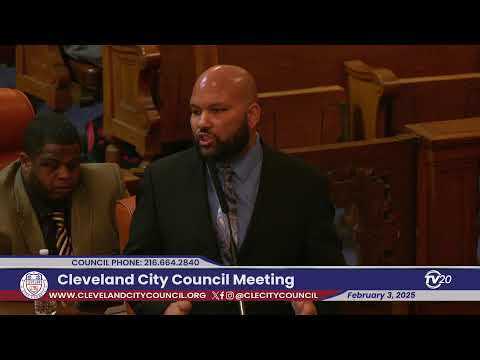
Residents urge Cleveland to adopt sanctuary protections, bar ICE from schools
Summary
Multiple residents and organizers used the public-comment period at a Cleveland City Council meeting to call for local legislation prohibiting collaboration with federal immigration enforcement and to request concrete protections for immigrants and students.
At a Cleveland City Council meeting on Feb. 3, 2025, several residents and organizers urged the council and mayor to adopt local legislation that would prohibit city police and city resources from assisting federal immigration enforcement and to bar Immigration and Customs Enforcement (ICE) from Cleveland schools.
Annie McEnany, an educator and volunteer coordinator at the Cleveland Liberation Center, told council members, “ICE has no place in our schools. We owe them nothing, so we will tell them nothing.” McEnany urged the council and the mayor to “introduce legislation to make Cleveland a true sanctuary city” and to engage the public in drafting protections for residents.
Other speakers echoed that call. Riley Petro, who said he is from Ward 17 and represents the Party for Socialism and Liberation and the Cleveland Fights Back Network, said, “It is ICE and the mandate that President Trump has given them that are the source of terror in our community,” and thanked some elected officials for public statements while urging legal prohibitions on local collaboration with federal deportation efforts. Justin Evaristo, identifying with the Democratic Socialists of America and as part of the Latino community, criticized council inaction, saying, “It is you guys that set the policies. You are the ones who have the legislative power. It is your inaction that has failed us.”
Andre Daley of Collingwood framed the issue as a moral one and warned of harms to children, saying that ICE activity in schools can “create a terrorist” by putting young people through traumatic experiences. Isabella Robert Lorenz, a volunteer coordinator at the Cleveland Liberation Center, asked directly what elected officials are doing and said, “You can make Cleveland safe by making it a real sanctuary city, Not only in name, but in reality.”
Speakers proposed specific policy measures they want the city to consider: prohibiting local law enforcement from collaborating with federal immigration authorities on arrests or detentions; preventing the use of Cleveland jails for immigration detention; requiring judicial warrants for ICE entry into jails; and prohibiting the sharing of immigrants’ information with federal agencies. Several speakers described local organizing already underway, including “know your rights” trainings and a planning meeting for community defense scheduled for Wednesday, Feb. 5, from 6 to 8 p.m. at the Cleveland Liberation Center, 9801 Denison.
Sara Fadlala, who said she does not live in Cleveland, connected calls to limit surveillance technology to immigrant protections and urged the city to “Cancel shot spotter contract and avoid further surveillance tech.” She recommended reinvesting in community programs and cited local groups such as New Era as examples of alternatives to tech-focused policing.
Terry Wong, a former community police commissioner, urged the council to consider structural reforms to the Community Police Commission and criticized the recent appointments process; her remarks tied concerns about civilian oversight and surveillance to broader calls for protections for immigrants and refugees.
Why it matters: speakers said local legislation could limit cooperation with federal immigration enforcement and protect residents and students from detention and deportation that they described as causing trauma and community harm. Organizers asked the council to convert public statements of concern into binding city policy and to coordinate public engagement in drafting any ordinance.
Meeting context: the immigration-related comments took place during the public-comment portion of the Feb. 3 meeting and included multiple speakers representing community organizations and activist groups. Speakers repeatedly urged specific policy prohibitions and promoted local organizing events.
What council members did at the meeting: the public-comment period recorded the requests and criticisms described above; the transcript does not show council voting on or introducing any immigration-related ordinance during this session.
Ending: Organizers said they will continue attending council meetings and holding community defense meetings until the city adopts binding protections. Several speakers provided event details and invited elected officials and residents to participate in local trainings and planning.