Get Full Government Meeting Transcripts, Videos, & Alerts Forever!
Get email alerts on the Budget topic
No spam. Unsubscribe anytime.
Board hears budget ‘foundations’: county funding formula, charter growth and a nearly $3 million fund‑balance gap
Summary
District finance staff outlined the fiscal 2025–26 planning framework, warning that under current local funding formulas Moore County Schools faces a projected funding gap that would require drawing further on fund balance unless county appropriation or other revenue rises
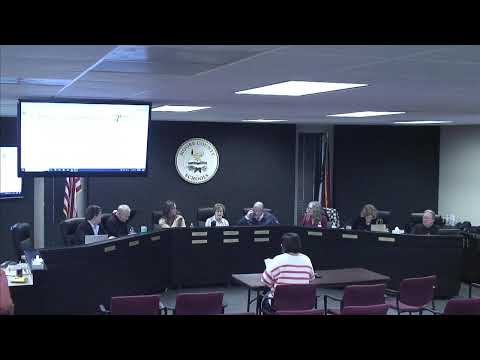
Moore County Schools staff told the board Feb. 3 that building the fiscal 2025–26 budget will begin from a “continuation” baseline but that fixed cost increases, charter school growth and the county appropriation formula together create a budget shortfall that staff estimate will require additional use of fund balance.
Tina Edmonds, assistant superintendent for budget and finance, presented scenarios that include assumed state salary increases (2–4 percent), an employer health insurance contribution rise of approximately $300 per person, and retirement rate increases. The district modeled three scenarios. Under the midline scenario (3 percent state salary increase and a conservative 3 percent increase in county funding), staff project a shortfall of roughly $716,862 that would be addressed by appropriated fund balance. Even the 2 percent state increase scenario produced a projected shortfall in excess of $500,000.
Why it matters: The presentation showed the district entering the next budget cycle with an assigned fund‑balance appropriation of about $2.9 million for the current year. Depending on final state and county decisions, projections indicate the district’s unassigned fund balance could fall below the board’s $2 million target in 2025–26.
Charter enrollment and county formula: Edmonds and Dr. Locklear reviewed charter school enrollment growth — including virtual charters now counted in the totals — and reminded the board that state law requires local current expense funding follow students to charter schools. The district used a five‑year average to project charter growth (90 students) and estimated the local transfer cost at $2,615 per pupil in the local appropriation model presented.
Board and committee response: Board members and the superintendent said they will press for clearer information about the state tier funding system and consult further with county commissioners about how the local formula should respond to the district’s cost drivers. Members of the board finance committee signaled intent to examine whether a different funding formula — one tied to cost drivers rather than county revenue growth — would better protect the district’s fiscal footing.
Next steps: Staff will continue to refine projections, present a superintendent’s preliminary proposed budget at the March 3 work session, open a public comment portal, and present a recommended budget for adoption in April. The county commission’s final decisions — typically adopted in June — will determine the district’s final local appropriation.
Ending: School finance officials urged the board and community to note the timing misalignment: state and county decisions often arrive after the district must present a working budget, leaving Moore County Schools to model scenarios and risk using fund balance to ensure staffing and services for students.