Get Full Government Meeting Transcripts, Videos, & Alerts Forever!
Get email alerts on the Tree Preservation topic
No spam. Unsubscribe anytime.
Council approves first readings to revise tree-preservation rules, adds BZA appeal route and $250 appeal fee
Summary
The council advanced two linked ordinances on first reading to update the Unified Development Ordinance's landscape and buffering rules and to repeal an older tree-preservation chapter, adding a Board of Zoning Appeals avenue for appeals and formalizing a $250 BZA appeal fee.
City planning staff presented two related ordinances on Feb. 3 to revise the city's tree-preservation requirements and to move appeal jurisdiction from circuit court to an administrative review with the Board of Zoning Appeals (BZA).
Miss Dennis, speaking for staff, said the package updates terminology and definitions, raises the size threshold for landmark trees, clarifies penalties and appeals processes, removes fines from the fee schedule, and provides "housekeeping" changes intended to streamline protected and landmark tree removal procedures. She said the tree board and planning commission recommended the changes and the items had been discussed at a prior workshop.
Council member Mr. Goldfinch asked about a $250 appeal fee for taking a tree-board decision to the BZA. Staff explained that the $250 fee is the existing charge for a BZA appeal and helps cover required posting and advertising costs. "An appeal to the BZA currently has a $250 fee because we have to post it and advertise it," staff said, adding that moving appeals from circuit court to the BZA provides an additional layer of administrative review and could spare property owners the higher cost of circuit-court litigation.
Council member Mr. Wade asked whether the change would reduce workload for the city arborist in some circumstances; staff said the arborist would still make determinations and report to the tree board but that the BZA option gives applicants a separate administrative avenue to contest decisions.
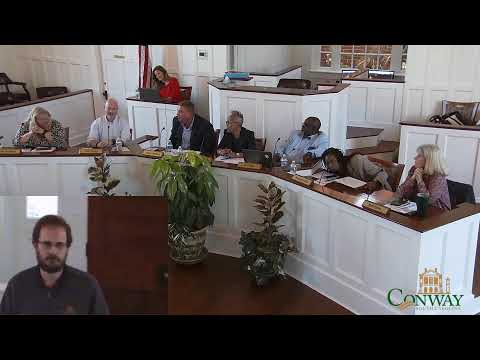
A motion to approve both items (first readings of ordinance C and ordinance D) as recommended by staff was moved and seconded; the council approved both items by unanimous voice vote.
The ordinances were advanced on first reading; additional readings or final adoption will follow the council's standard ordinance process.