Get Full Government Meeting Transcripts, Videos, & Alerts Forever!
Get email alerts on the Mcas Competency Determination topic
No spam. Unsubscribe anytime.
State change to MCAS competency leads Hanover schools to review graduation rules
Summary
After voters removed MCAS as the state’s sole competency determination, Hanover Public Schools told the committee it will rely on district-certified coursework, watch state guidance over the summer, and may consider modest changes to local graduation requirements.
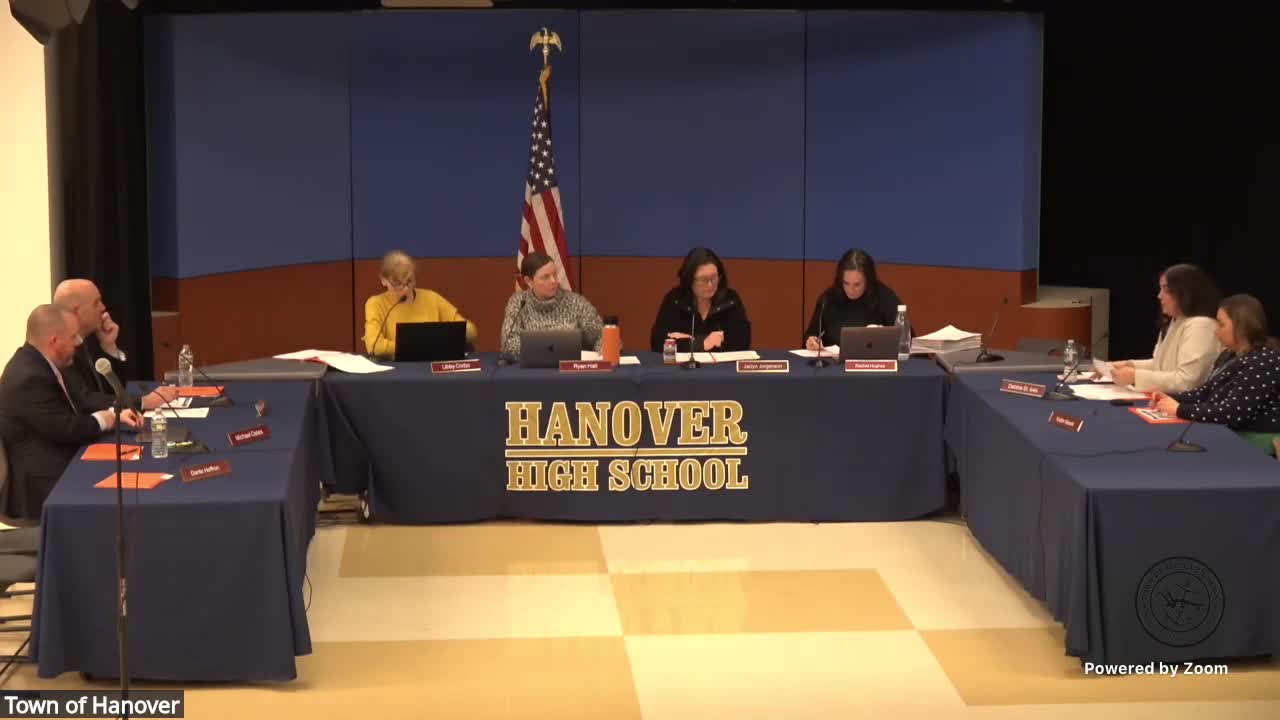
Hanover school administrators told the school committee they are monitoring state guidance after a statewide ballot measure removed the Massachusetts Comprehensive Assessment System (MCAS) as the state’s mechanism for awarding a competency determination (CD). The change requires districts to certify that students have completed coursework aligned with state standards for graduation-related competencies.
At the meeting, the district’s director of teaching and learning and principals summarized key points: the CD is distinct from local graduation requirements, and districts now may certify students’ competency by confirming successful completion of specified coursework rather than MCAS scores. The district’s presenters said the courses that had been tied to MCAS-based CDs — 10th-grade English, Algebra I/Geometry, and biology/physics — remain central because they align with the Education Proficiency Plan (EPP) historically assigned to students who did not meet MCAS proficiency.
Schools officials said current seniors (class of 2025) were “in great shape” under the new rule, and staff will review transcripts and the district’s credit requirements (120 credits to graduate at Hanover High School) to confirm diplomas for any students who request review. The committee’s teaching-and-learning lead asked the administration to “watch through the summer” for state guidance and for ideas from other districts before proposing any local changes.
Administrators discussed the possibility of using the newfound flexibility to add required coursework in areas such as wellness or personal finance, noting that local graduation requirements are set by the district and could be adjusted if the committee chooses to do so. Multiple presenters urged caution and patience, saying many districts and state task forces were still defining implementation details and that “we should wait and watch” to see best practices before making local policy changes.
The committee did not adopt any rule changes at the meeting; members were briefed on the state-level change, asked for continued updates, and directed staff to prepare recommendations only if needed after statewide guidance is finalized.