Get Full Government Meeting Transcripts, Videos, & Alerts Forever!
Get email alerts on the Special Education topic
No spam. Unsubscribe anytime.
Wayland plans in-district 18–22 life-skills program and special-education reallocations as circuit-breaker relief looms
Summary
District student-services leaders presented a detailed FY26 review to the School Committee on Jan. 30, covering special-education placements, program alignment and plans to start a local 18–22 life-skills program.
District student-services leaders presented a detailed FY26 review to the School Committee on Jan. 30, 2025, covering special-education placements, program alignment K–12, and plans to launch an in-district life-skills program for ages 18–22.
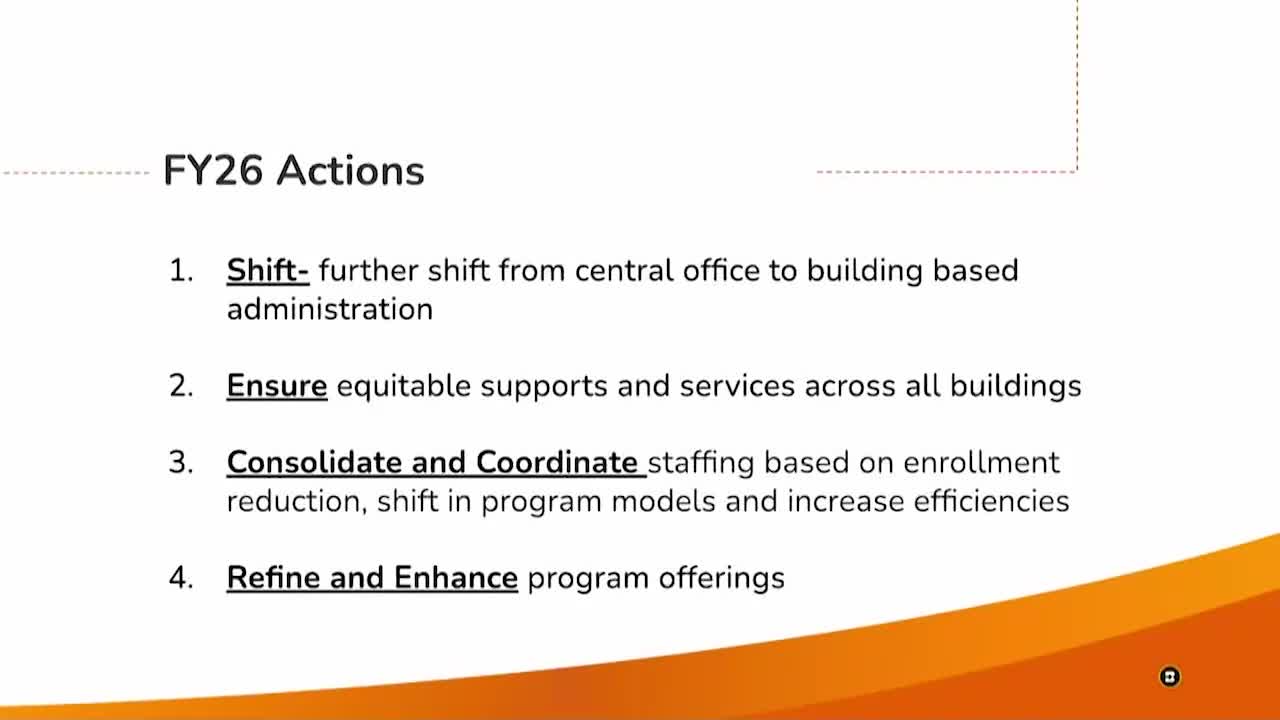
Ronnie Kessler and Susan Botan described a multi-part approach: (1) shift some central-office responsibilities into building-based student-services administrator roles to strengthen local oversight; (2) reallocate existing language-based teachers so the district can expand language-based programming to the high school without adding net new FTEs; and (3) start an in-district 18–22 life-skills/transition program so students can receive transition-to-adult services in Wayland rather than traveling to out-of-district sites.
Administrators said the life-skills program will use existing staff and already-supplied space (kitchen, washer/dryer and an on-site coffee cart used as a vocational teaching tool). They argued an in-district program will lower out-of-district tuition costs, increase alignment with local job sites and travel training, and keep students’ learning tied to their home community.
On funding, administrators walked the committee through the state’s special-education reimbursement system (the so-called “circuit breaker”), noting the FY25 claims and FY26 estimates can materially affect the district’s net special-education costs. They also said the district intends to apply for state extraordinary relief in FY26 for unusually large special-education cost growth and that town finance staff are discussing raising the town’s special-education reserve to $500,000 to buffer pendings and possible out-of-district placements.
Administrators presented an analysis showing elementary special-education IEP numbers are declining in some schools and that this decline, plus two retirements at the elementary level, create the capacity to reallocate one elementary special-education teacher to the high school language-based program. Administrators emphasized that some retirements and reallocations are enrollment-driven and that final staffing will depend on spring course sign-ups and caseload shifts.
Committee members asked for periodic reporting on outcomes and urged continued communication with CPAC (the parent advisory council) and town finance staff. Administrators agreed to provide follow-up Q&A material and to revisit pending out-of-district placements as the school year progresses.