Get Full Government Meeting Transcripts, Videos, & Alerts Forever!
Get email alerts on the K 12 Education topic
No spam. Unsubscribe anytime.
Wayland elementary budget keeps core supports but trims summer Boost program amid low enrollment
Summary
Committee members and administrators said FY26 elementary spending is enrollment-driven. Staffing shifts and program reallocation aim to preserve reading specialists and TA levels while reducing a summer "Boost" offering with sporadic attendance.
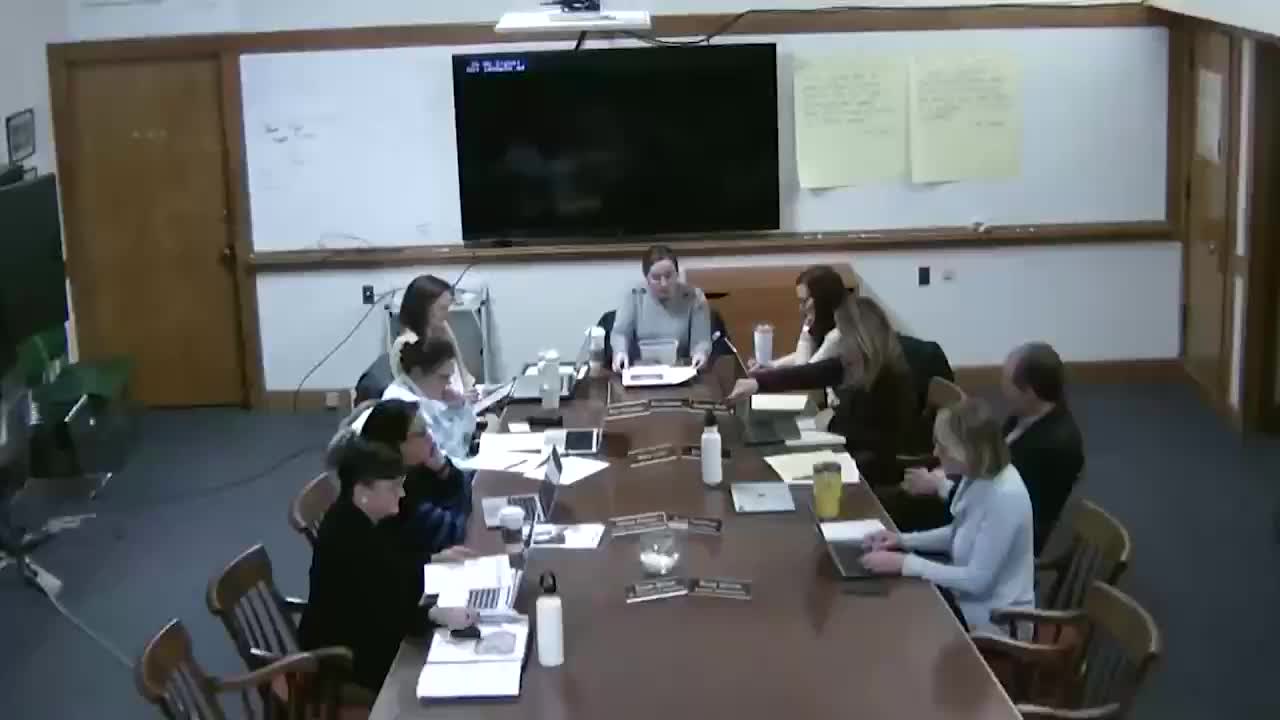
Wayland School Committee members and district administrators reviewed proposed changes to the fiscal year 2026 elementary budget on Jan. 30, 2025, saying the plan is driven by enrollment declines and aims to preserve core services.
Administrators told the committee the elementary budget reduces or reallocates some positions because overall kindergarten and early-grade enrollment is lower than in recent years. “Any changes that happen was based on enrollment,” said Susan Botan, a member of the district administrative team, noting kindergarten numbers are at levels she described as unusually low. The committee heard the district intends to protect reading specialists and maintain teaching-assistant support.
Committee members pressed for clarity on specific program lines. Brian, who presented on Wayland School Community Programs (WSCP), said the district is examining whether to propose a WSCP summer-rate increase; if adopted, he said it would affect the revenue side of the WSCP budget but not elementary spending. Administrators confirmed an ongoing review of summer rates but said any revenue changes would not alter line-item spending in the FY26 elementary budget.
The district will reduce the summer “Boost” program next year after staff and committee members reported sporadic attendance limited the program’s effectiveness. Administrators said about 100 Boost slots were available this summer but that attendance was inconsistent, reducing expected academic benefits. To address potential summer learning loss for students who would have attended Boost, administrators said they plan to strengthen Tier 2 instruction in regular classrooms, use a Title I grant at Cleveland Hill for targeted supports and rely on a reconfigured math coaching role that will include substantial intervention time.
Administrators stressed that reductions are not eliminations of support: teaching-assistant staffing levels will be maintained across elementary schools, they said, and some staff lines have been moved between district and school accounts to better reflect where staff work. Principals attending to answer committee questions described the budget as “enrollment-driven” and expressed confidence that the plan preserves essential services while acknowledging aspirations—for example, a full-time math interventionist at every school—are not currently affordable.
The committee also heard positive feedback about the first year of full-day kindergarten. Administrators said full-day kindergarten is improving instructional pacing, supporting social-emotional learning, simplifying scheduling and removing the tuition barrier that previously limited access for some families.
Committee members asked administrators to return with further enrollment and staffing detail where positions are shifted between district- and school-level budgets. Several members also suggested the district monitor the impact of the Boost reduction on student outcomes, and to report back in the fall about intervention results and student progress.
The district did not adopt new elementary staffing lines at the meeting; the discussion was part of FY26 budget review and did not itself change the budget.