Get Full Government Meeting Transcripts, Videos, & Alerts Forever!
Get email alerts on the Conservation Budget topic
No spam. Unsubscribe anytime.
Conservation board presents maintenance-level budget and repeats staffing request to Story County supervisors
Summary
Conservation staff told Story County supervisors the FY26 conservation budget is largely maintenance-level, that bond projects require a separate budget version and that the conservation board is asking again for a staffing position it considers necessary to care for county properties.
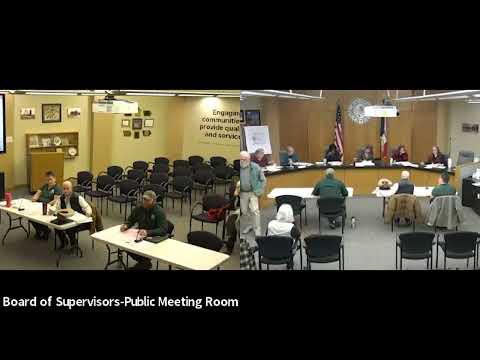
Conservation staff and board members told the Story County Board of Supervisors on Feb. 3 that the proposed FY26 conservation budget is largely maintenance level and has undergone multiple reviews by staff and the conservation board.
Mike Cox, conservation director, described the department’s budgeting process and said staff begin budget development in September and route proposals through staff supervisors and the conservation board before presenting to supervisors. Cox said a flowchart outlining those steps had been circulated to illustrate the multiple review stages.
Cox also said the department prepared two budget versions because of a bond: one that includes bond-funded projects and one without bond funding. "Both of these budgets this morning, IRVM and conservation are essentially maintenance level budgets. The bond, does represent, you know, new, something new, obviously, for the budgeting process," Cox said.
On staffing, Cox said the conservation board has raised the same position request for several years and considers it a need, not just a desire, to care for county properties. Cox said the board and staff support adding the position to better manage property maintenance and operations.
The board welcomed conservation board members Jim Pease and newly appointed Judy Levings, both introduced at the start of the discussion. Mary Anne Harrelson, conservation financial data manager, was credited by staff for coordinating the department’s budget and the many moving parts associated with the bond and other items.
Supervisors did not take formal votes during the work session; they asked staff to continue refining the budget narratives and to be prepared to discuss funding sources for specific items such as debris-site seeding when the board considers final appropriations.