Get Full Government Meeting Transcripts, Videos, & Alerts Forever!
Get email alerts on the Animal Shelter Budget topic
No spam. Unsubscribe anytime.
Story County reviews animal control budget; staff propose facility upgrades and position reclassification
Summary
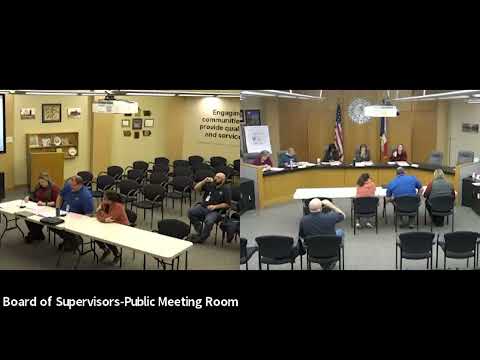
Story County supervisors and animal control staff reviewed proposed fiscal 2026 budget adjustments Monday, Feb. 3, 2025, including higher revenue estimates, equipment purchases paid partially from donations and a planned job-classification change.
Story County supervisors and animal control staff reviewed proposed changes to the department's fiscal 2026 budget Monday, Feb. 3, 2025, including higher revenue estimates, equipment purchases paid partially from donations and a planned job classification change.
The review focused on reestimated revenues and expenses for the animal shelter, with staff proposing purchases intended to reduce ongoing operating costs and improve animal care. Anna Henderson, animal control director, said she reestimated interest on investments and several revenue lines and planned to increase the donation account and veterinary-care estimates going into next fiscal year.
Henderson told the supervisors that interest on investments and ongoing donations were reestimated to support next year’s spending and that the department had a donations balance of $134,000 as of the end of December. She said local government payments were reestimated to $72,100, attributing the increase to contracting with the city of Nevada in the prior year; animal control fee revenue was reestimated at $29,000 after fee increases adopted last year. Henderson also said she planned to boost the Friends of the Animals donation account by $5,000 and separately proposed increasing the department’s special animal-care donation allocation to $40,000 to offset rising treatment costs.
Staff presented several proposed equipment purchases. Henderson said the shelter should replace single-use “paper boats” used for soft food — which cost about $850 a year — with washable metal bowls and a dedicated dishwasher to reduce staff time and disinfectant use. She also proposed purchasing a new dog-wash station with steps to assist in washing larger dogs; the station’s total cost is $6,000, with $3,000 to be paid from the donation account. Henderson said the department will also budget for periodic replacement of washing machines, which historically fail every two to three years.
Facilities management director Jovi Brogdon flagged a required firmware and hardware update for the buildings’ keyless-entry panels, saying the main boards will no longer be supported after December 2025. Brogdon confirmed the upgrade cost is $1,600. In the budget packet a line for panic button and video monitoring appeared as 61,100, which Brogdon and staff clarified was incorrect and should read $1,600 for the keyless-entry upgrade.
On personnel, Henderson said she has been working with human resources on a senior designation for one shelter position; she emphasized the item is only a notification at this stage, not a request for approval. Henderson also reestimated overtime for the current year and proposed keeping overtime budgeted at $35,100 for the next fiscal year, saying some employees are now choosing overtime pay rather than comp time.
Other line items adjusted in the packet include a proposed increase in veterinary-care spending to $35,000 to cover rising costs for vaccines and surgeries; health-and-safety expenses budgeted at $9,000 for FY26 to cover new-employee rabies vaccinations and any required revaccination after titer checks (titer checks occur every two years); and communication services reestimated to $36,100 for FY26. Staff noted that training expenditures so far this year were $125, with most conferences and training occurring in the second half of the year.
Board members asked clarifying questions about where contracts with cities are recorded in the budget and about specific line totals. At one point a supervisor asked whether the departmental total was $178,850; staff clarified that an alternate view on page 7 — after removing $45,100 — showed a bottom line of $70,430 that includes staff and overtime costs. No formal motions or votes were taken during the work session; staff said they will return with any formal requests as part of the regular budget process.
The discussion also included a note about building repairs and fencing to reduce the risk of animals escaping, routine custodial and equipment-repair costs, and modest increases in supplies such as disinfectant and microchips to reflect current market prices. Henderson said half the dog-wash station cost and other smaller equipment needs would come from the donation account to limit impact on the county’s operating budget.
Next steps: staff will continue work with human resources on the proposed senior designation and will carry the reestimates and equipment requests through the standard budget-review process; supervisors did not take formal action at the work session.