Get Full Government Meeting Transcripts, Videos, & Alerts Forever!
King County leaders, transit union and agencies press for immediate actions on operator safety after fatal attack
Summary
At a Jan. 13 special meeting, King County Council members, Amalgamated Transit Union Local 587 leaders and transit and public-safety agencies outlined short- and longer-term steps — including more officers, behavioral health outreach, enclosed operator cabins and reinstated fare enforcement — after the January murder of Metro operator Sean Yim.
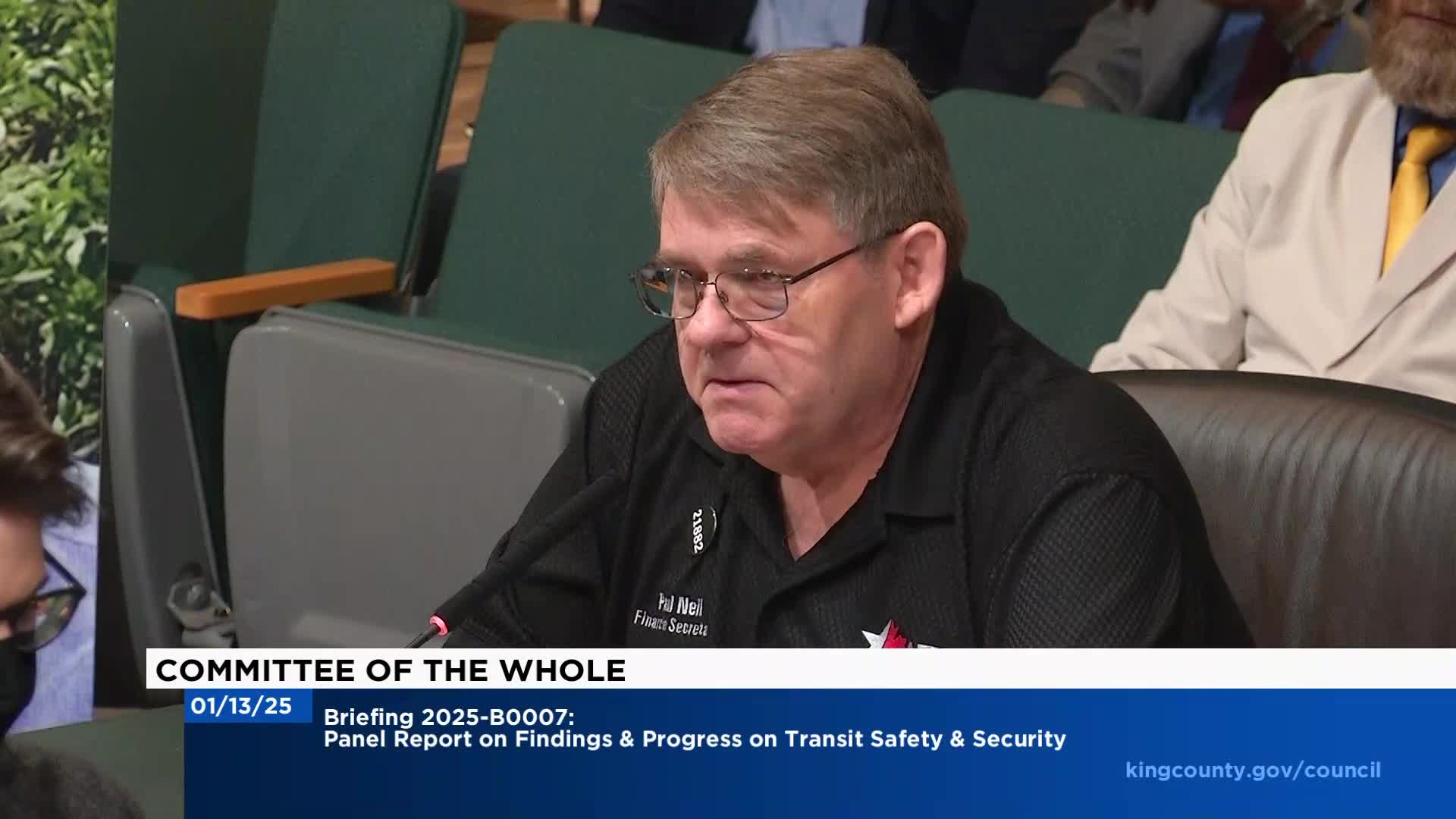
KING COUNTY, Wash. — At a special Jan. 13 meeting of the King County Council Committee of the Whole, elected officials, union leaders and transit and public-safety agencies laid out steps they say are needed to improve security for transit operators and riders following the fatal January attack on Metro operator Sean Yim.
The meeting, called by Committee Chair Claudia Balducci, opened with union and rider testimony pressing the council for quick, tangible changes. "Action take place this year," said Patrick Brady, a Metro operator and former union treasurer, summarizing calls from a January memorial that drew more than 3,000 people. "The time for action is now."
The union representing operators, ATU Local 587, told the council the county must restore expectations that disruptive passengers will be removed and face consequences, increase law-enforcement presence, and make engineering changes to protect operators. "We will not sit idly by any longer while our members and your employees are assaulted and are suffering from PTSD and anxiety," ATU President Greg Woodfield said. "Please act now."
Why it matters: County and regional officials said the problem stretches beyond transit: illegal drug use, homelessness and gaps in behavioral-health services are visible in public spaces and on vehicles, and agencies must coordinate responses. Transit officials said improvements in presence, cleanliness and response can lower incidents; union leaders and some council members said those efforts must be paired with accountability and faster law-enforcement response to change rider and operator expectations.
What agencies said they are doing now
- Metro General Manager Michelle Allison said Metro has more than doubled contracted transit security officers (TSOs) over recent years, is…
Already have an account? Log in
Subscribe to keep reading
Unlock the rest of this article — and every article on Citizen Portal.
- Unlimited articles
- AI-powered breakdowns of topics, speakers, decisions, and budgets
- Instant alerts when your location has a new meeting
- Follow topics and more locations
- 1,000 AI Insights / month, plus AI Chat