Get Full Government Meeting Transcripts, Videos, & Alerts Forever!
Get email alerts on the Comprehensive Plan Update topic
No spam. Unsubscribe anytime.
Clallam County staff outline outreach, land-capacity work for comprehensive-plan update
Summary
Planning staff told the Clallam County Planning Commission the comprehensive-plan update will include a land-capacity analysis, income-segment housing targets and a public outreach program that has already drawn more than 100 online responses.
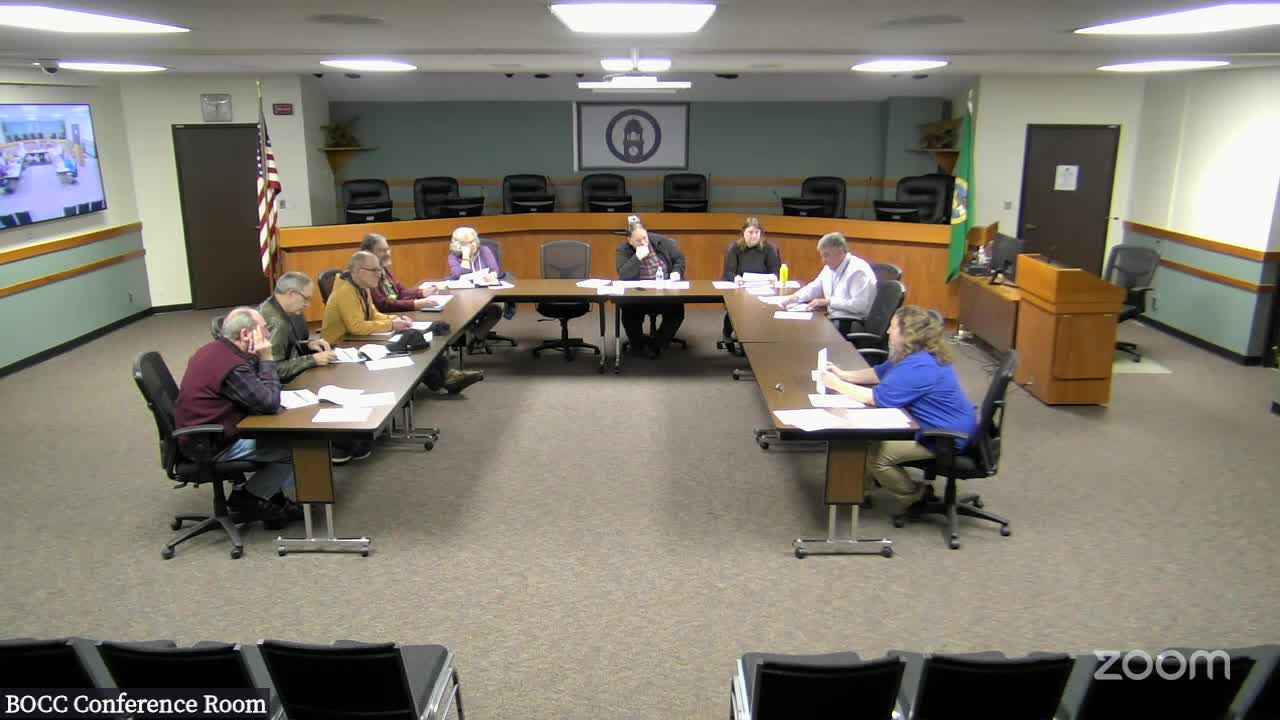
Planning staff told the Clallam County Planning Commission that the county’s comprehensive-plan update will center on a land-capacity analysis and expanded public outreach, with an emphasis on showing compliance with the Washington Growth Management Act.
The plan matters because the Growth Management Act requires the county to demonstrate that its urban growth areas can accommodate projected housing needs over the next 20 years; the analysis will determine whether the county should encourage more density or change land allocations.
Planning staff said the update will present a public outreach plan, a consultant-produced gap analysis and an outline of proposed next steps. “We want to bring to you and present to you our public outreach plan, the gap analysis that has been completed so far by the consultant team, and an outline of what we hope to accomplish in the coming months,” staff said during the meeting. The staff presentation described a delay in completing a lands-capacity analysis because the county’s GIS data required updating; staff estimated “a week or two” before the necessary extraction of parcel data could begin.
The capacity work will look at vacant lots, subdividable parcels, and the potential contribution of accessory dwelling units — now required to allow up to two in the urban growth area — together with market assumptions about build-out and subdivision. Staff emphasized the required income-segment analysis: extremely low (0–30% AMI), very low (30–50% AMI), low (50–80% AMI) and median (81–120% AMI). The analysis will report whether existing urban growth-area land is sufficient for those segments and whether the county must increase allowable density to meet housing targets.
On outreach, staff said the county has already posted a public survey and has received “over a 100 responses” with no formal announcement. The outreach plan described using the county website, QR codes, the PUD bill insert, library events, meetings at parks and granges in Forks, Joyce and Port Angeles, and press releases to reach broader audiences. Staff said the consultant team will analyze comment results and provide recommendations tied to statutory requirements.
Commissioners asked how the survey is being disseminated and whether the county tracks rural participation; staff said dissemination methods will expand if the initial results indicate gaps in representation. The meeting record shows staff will brief the commission on the consultant’s gap analysis and a recommended schedule; staff floated a target of circulating results to the board in late summer or early fall but said the schedule could shift.
Staff stressed that some parts of the update are statutory “must-do” items required by the Growth Management Act, while other elements are community choices within those legal “guardrails.” The forthcoming materials will separate legally required items from discretionary “wish-list” proposals and will report how many respondents favor particular options.
Looking ahead, staff plans a public outreach campaign including in-person listening sessions, QR-code posters, newsletter inserts and traditional press outreach; the commission will review the consultant’s gap analysis and a draft outreach schedule before the county moves to public hearings.