Get Full Government Meeting Transcripts, Videos, & Alerts Forever!
Get email alerts on the Opioid Settlements Funding topic
No spam. Unsubscribe anytime.
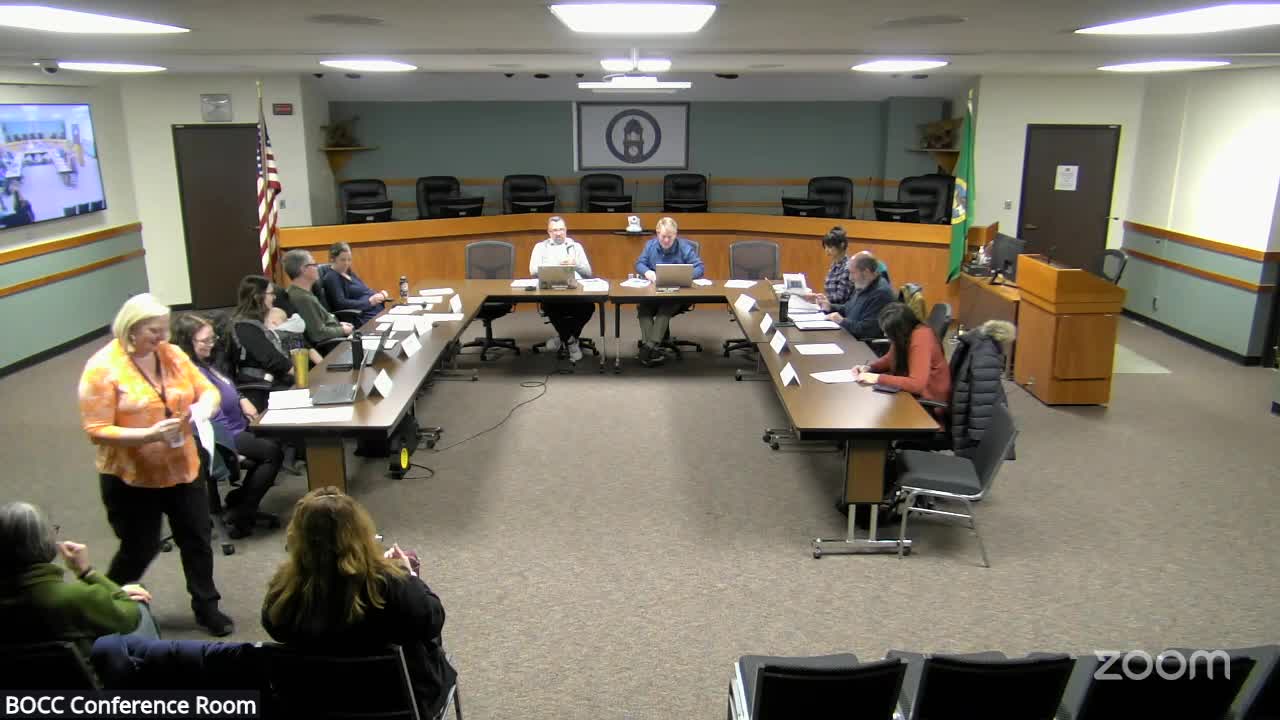
Board debates how to govern opioid settlement dollars; joint meeting with behavioral health advisory board planned
Summary
The Clallam County Board of Health discussed governance and use of opioid settlement funds—earlier recommendations had prioritized harm-reduction services—and members agreed to pursue a joint meeting with the Behavioral Health Advisory Board to refine allocation processes and review the One Washington MOU.
Board and health-department staff briefed members on the county's opioid-settlement funding and on options for governing future receipts, including whether recommendations should come from the Board of Health, the Behavioral Health Advisory Board, a new advisory body or county staff.
County staff described recent receipts: the county previously anticipated about $2.1 million paid over 17 years that had been earmarked for harm reduction services, and the county recently received a separate lump sum payment (reported in the meeting as approximately $625,000) tied to Janssen/Johnson & Johnson and certain distributor settlements. Staff cautioned that settlement payments arrive under differing schedules—some spread over many years, some in up-front lump sums—and that accounting and tracking (including amounts temporarily withheld by an ASO during review) complicate budgeting.
HHS staff and commissioners emphasized two consistent priorities: maintain funding for established harm-reduction services (the board previously recommended that the initial settlement tranche support harm reduction) and establish a transparent process in case larger future settlements arrive. Options discussed included retaining oversight with the Board of Health, delegating recommendation authority to the Behavioral Health Advisory Board (which has experience scoring community funding applications), or developing a hybrid process that includes both boards. Several county officials said they wanted community and tribal coordination when appropriate.
"We don't necessarily have to go to the full complexity of, like, a full RFP process," one county official said during the discussion, while others cautioned that any open grant process would require staff time to create applications, legal review, and criteria aligned to the One Washington Memorandum of Understanding (MOU) that enumerates allowable uses for settlement dollars.
The board agreed to pursue a joint meeting with the Behavioral Health Advisory Board in March to review the One Washington MOU and to develop a recommended process for advising the county commissioners on allocations of future settlement funds. Staff said they will prepare materials, timelines and intergovernmental coordination information (including possible tribal government engagement) for the next meeting.
Ending: No funding reallocation was decided at the Jan. 21 meeting. The board set a next step: a joint session with the Behavioral Health Advisory Board in March and a return of more detailed materials on the MOU, accounting, and recommended decision paths.