Get Full Government Meeting Transcripts, Videos, & Alerts Forever!
Get email alerts on the Committee Governance topic
No spam. Unsubscribe anytime.
Clallam MRC debates final wording for roles and responsibilities document; chair duties clarified
Summary
Clallam County Marine Resources Committee members reviewed a draft roles-and-responsibilities document, debated mandatory language for attendance and committee service, and agreed to seek county policy guidance before final approval at the next meeting.
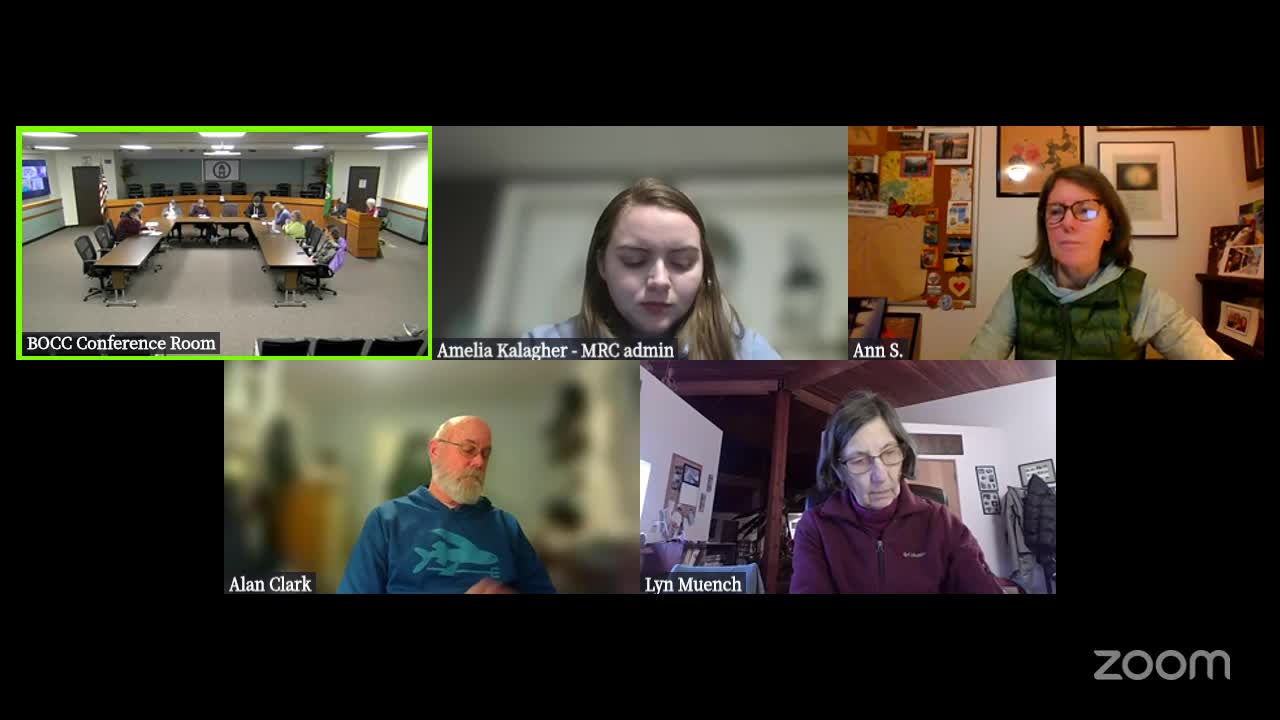
The Clallam County Marine Resources Committee discussed and revised a draft roles-and-responsibilities document at its Jan. 16 meeting, with members asking staff to check for any existing county grievance procedures before the committee votes to adopt the policy.
Committee members said the document matters because it sets expectations for attendance, project leadership, use of alternates and the chair’s authority — topics that affect how MRC projects are planned and staffed.
Chair Patricia Suggs opened the discussion and asked members to review each section. Members pressed for softer language on attendance and conference participation: several suggested changing “must” to “if possible” or “strongly encourage” so people with work or family conflicts are not excluded. Amelia (MRC staff) agreed to revise the wording to include phrases such as “if possible” or “for example.”
Members also debated the vice chair’s role in addressing complaints. Rebecca Mahan and others suggested replacing the word “complaints” with more positive phrasing — for example, “help facilitate or assist with unresolvable concerns” — and to check county policy to avoid placing vice chairs in an unexpected, confrontational role. Patricia Suggs said she will ask county staff (Lonnie) whether an existing grievance procedure can be referenced rather than inventing a procedure in this committee document.
A point of contention was whether alternates may serve as leads for MRC projects. Several members noted operational constraints: some primary members have full-time jobs and cannot lead field work. Members agreed there are three practical approaches (treat alternates as equivalent to members, prohibit alternates from leading, or leave the document silent and handle exceptions case-by-case). The group elected to leave the language flexible and resolve specific project leadership questions at the project level, with project leads encouraged to name co-leads to assure continuity if a lead must step down.
Other edits approved in discussion included adding a general expectation that “members treat each other and staff with respect and kindness” and clarifying that “lead” commonly refers to project roles rather than member status.
The committee did not adopt the document at this meeting. Members directed staff to incorporate the agreed wording changes, confirm whether the county has an existing grievance procedure and bring a revised draft for final approval at the next regular meeting.
Notes: the committee explicitly agreed to avoid mandatory language where possible and to provide examples rather than requirements; staff will return with a revised draft and any relevant county policy for the next meeting.