Get Full Government Meeting Transcripts, Videos, & Alerts Forever!
Get email alerts on the Public Health Infectious Disease topic
No spam. Unsubscribe anytime.
Clallam County health officer reports first local influenza deaths; RSV, pertussis and avian flu updates
Summary
Clallam County Health Officer Allison Berry reported two influenza-associated deaths and described local trends for influenza, RSV, pertussis and avian influenza, urging vaccination and targeted precautions for people who work with animals.
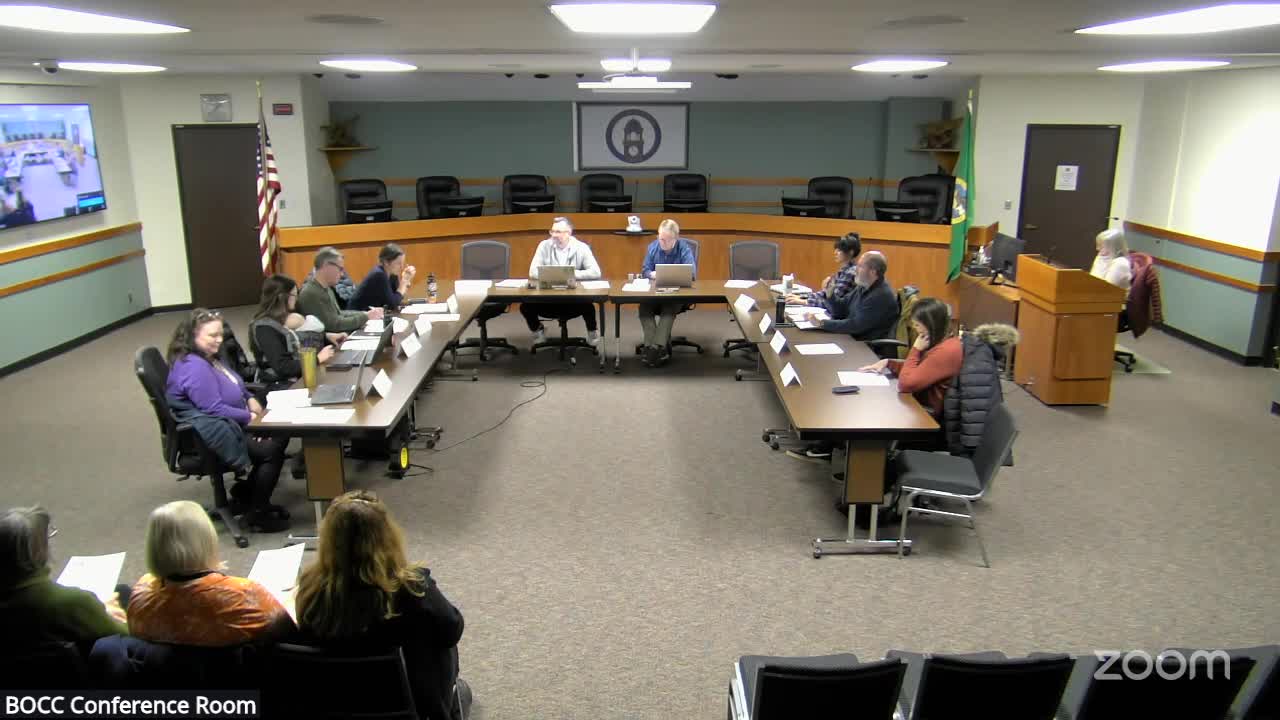
Clallam County Health Officer Dr. Allison Berry told the county Board of Health on Jan. 21, 2025, that the county has recorded its first two deaths associated with seasonal influenza and that influenza rates are beginning to decline.
The update outlined current activity for multiple respiratory and zoonotic infections and why residents and providers should care. Berry said influenza remains in the community, COVID-19 activity is low, RSV activity is elevated across the state but less severe locally—likely because pediatric RSV vaccines are now available—and pertussis continues to appear sporadically. She also described recent animal outbreaks of highly pathogenic avian influenza and precautions for people who keep or care for animals.
"The best thing that any of us can do to reduce that risk in ourselves and others is to get this year's flu vaccine, and to consider masking in those crowded indoor spaces," Berry said during the meeting.
Berry said the two influenza deaths were elders in the community. She said influenza vaccination and staying home when sick remain the primary public-health protections. On COVID-19 she said local activity has been relatively mild this season, and that older adults may still be advised to follow updated COVID vaccination guidance depending on evolving recommendations.
On RSV, Berry said the county has begun receiving shipments of monoclonal or vaccine products and that any infant entering its first RSV season (up to 8 months of age) is eligible for preventive therapy; there is also a one-time RSV vaccine recommended for older adults (70+, or 65+ with underlying conditions) who were not vaccinated last year.
Berry described two recent pertussis cases in the region and reminded clinicians and the public that pertussis (whooping cough) can start like a cold before becoming severe, especially in infants. "Make sure you've got the P in your Tdap/DTaP," she said, referring to pertussis protection in the vaccine series.
On avian influenza (H5N1 and related strains), Berry said there have been no confirmed human cases in Clallam County. The county has seen the virus in wild birds and sporadic poultry outbreaks elsewhere; locally there were none at the time of the meeting. She said health authorities have observed avian-flu illness and deaths in domestic and wild cats and in cougars in Olympic National Park; sequencing linked those cougar infections to infected wild birds. Berry advised that people avoid feeding raw poultry to cats and consider limiting outdoor access for cats while outbreaks circulate among wildlife.
Berry described state testing efforts for dairy—monthly milk testing in Washington following outbreaks elsewhere—and said Clallam County dairies had not tested positive. She emphasized that PPE and proper handling on farms prevent human infection: people working with infected poultry or milking infected cattle can be exposed through aerosols or contaminated milk unless they use appropriate masks, gloves and other protections.
The health officer answered questions about bird surveillance (wild-bird testing is done when birds are reported to Washington Department of Fish and Wildlife), animal-to-animal transmission dynamics (cattle outbreaks have, in reported clusters, traced to a common lineage), and the high mortality the virus causes in birds.
Berry closed by urging vaccination (flu, COVID where indicated, pertussis/Tdap for caretakers and pregnancy) and sensible precautions for people handling animals. "If your poultry is sick, you should wear an N95 and gloves when you're taking care of them or the spaces where they live," she said.
Ending: The board did not take formal action on the update; Dr. Berry and staff said they would continue surveillance and outreach and return with additional data as needed.