Get Full Government Meeting Transcripts, Videos, & Alerts Forever!
Okanogan County leaders press for faster crisis response, direct staff to pursue opioid‑funded core program; approve tribal transportation support
Summary
County officials and law enforcement heard sustained concerns about gaps in crisis response by OBHC, discussed using county opioid and other funds to expand co‑responder capacity and diversion services, and approved a letter of support for a tribal transportation planning grant.
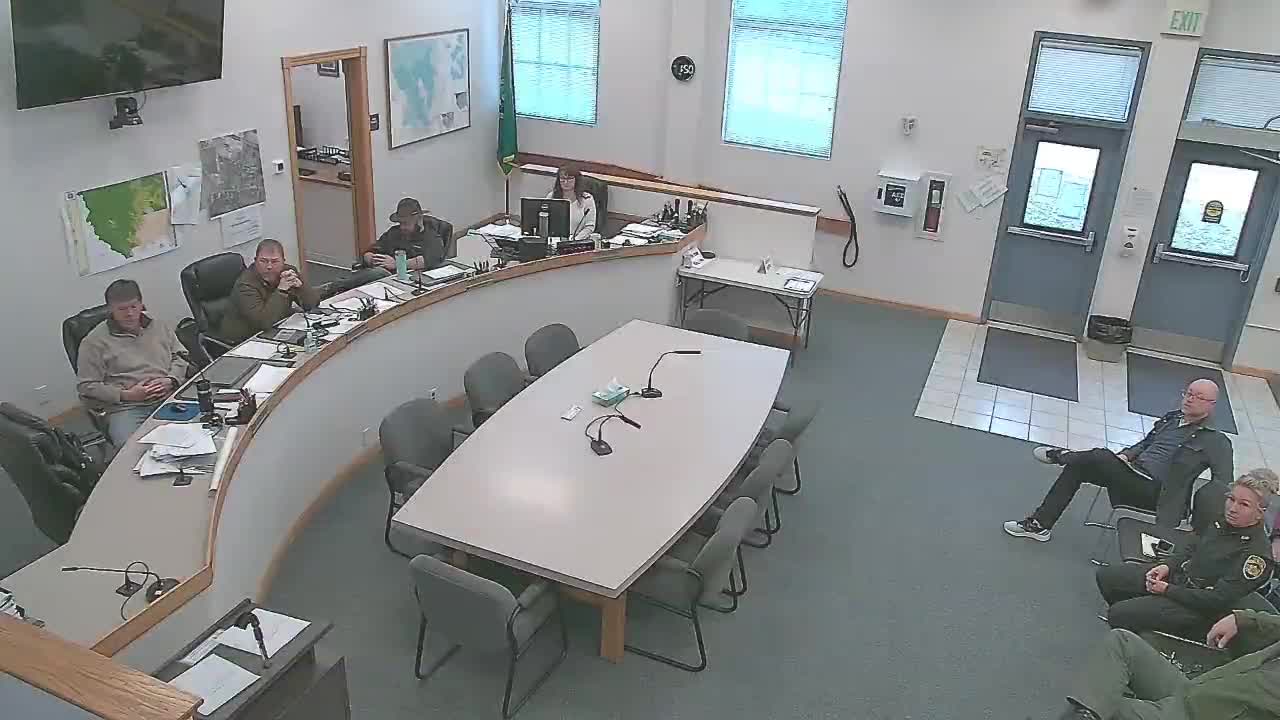
Okanogan County commissioners, the sheriff's office and court representatives met to discuss shortfalls in how the county’s behavioral‑health contractor (identified in the meeting by the initials OBHC/OVHC/ODHC) responds to mental‑health and substance‑use crises and directed staff to develop proposals to use opioid‑abatement and county funds to expand local crisis response.
County leaders said the current arrangement — in which the county pays OBHC for a range of behavioral‑health services but OBHC is not consistently available to respond to on‑scene crises — is producing “no response” calls, heavy reliance on hospital and jail beds, and liability risks for deputies and jail staff. Law enforcement participants urged clearer contract deliverables, faster field response, and better communication about when clients are released from treatment so deputies and probation officers can anticipate follow‑up needs.
The discussion centered on several operational gaps the sheriff’s office described: crisis mobile teams that do not come to scene calls even during business hours; limited hours for co‑responder or crisis staff; poor handoff or notification when a person is released from an out‑of‑county facility; and inconsistent sharing of post‑release or aftercare information with law‑enforcement and probation. County participants framed those gaps as driving repeat contacts, longer hospital stays with deputies waiting on‑site, and repeated arrests for people who have cycled out of treatment without reliable follow‑up.
Why this matters: County officials said the shortfalls bring financial and legal risk to the county and operational strain to deputies, and that improving immediate field response could reduce repeated jail and hospital encounters. Commissioners also identified a near‑term funding opportunity: county…
Already have an account? Log in
Subscribe to keep reading
Unlock the rest of this article — and every article on Citizen Portal.
- Unlimited articles
- AI-powered breakdowns of topics, speakers, decisions, and budgets
- Instant alerts when your location has a new meeting
- Follow topics and more locations
- 1,000 AI Insights / month, plus AI Chat