Get Full Government Meeting Transcripts, Videos, & Alerts Forever!
Get email alerts on the Housing Rent Stabilization topic
No spam. Unsubscribe anytime.
Committee hears substitute bill to limit rent and fee increases to 7% and ban increases in first year of tenancy
Summary
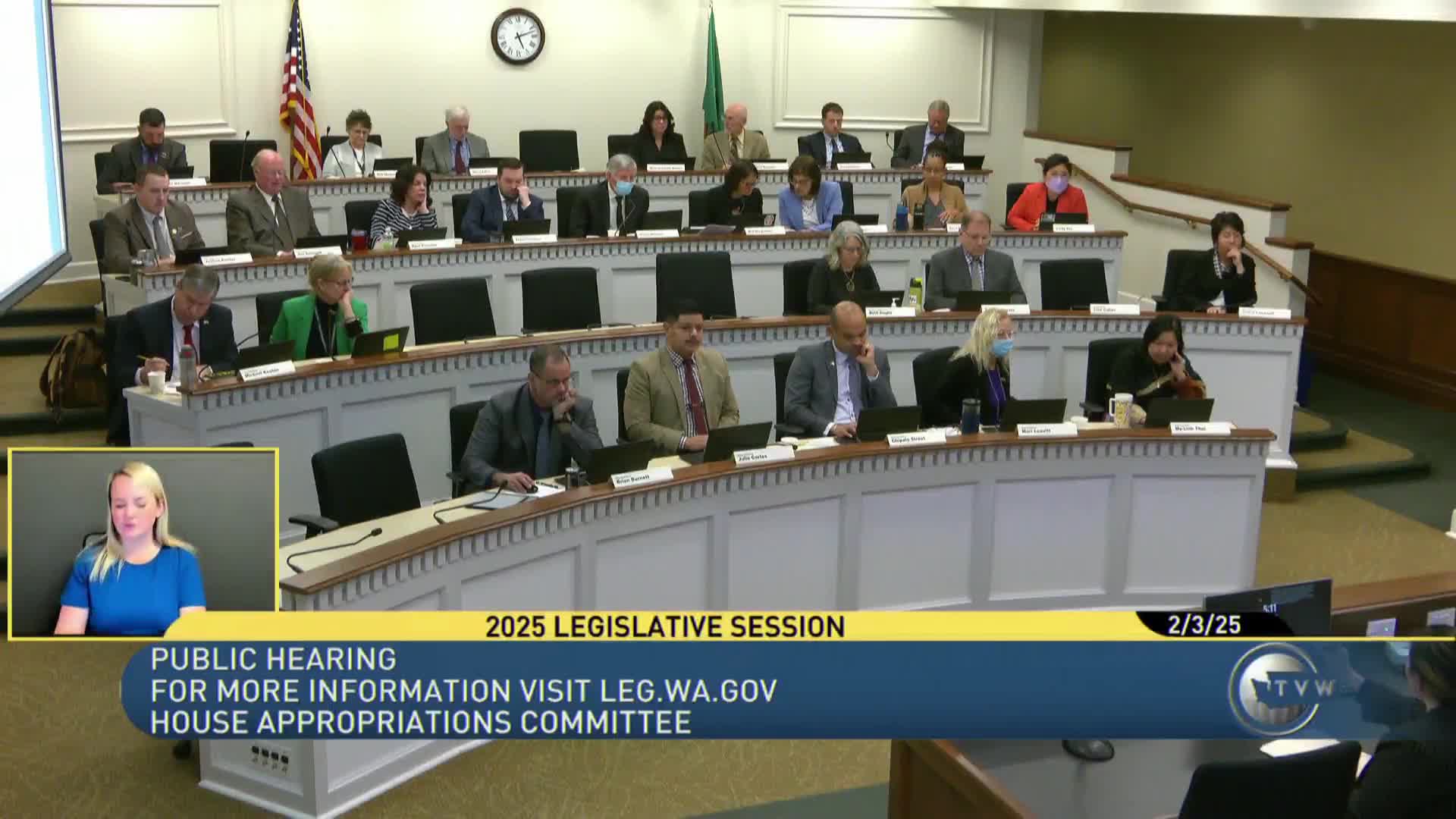
The Appropriations Committee received staff briefings and public testimony on substitute House Bill 1217, which would cap rent and fee increases at 7% in any 12‑month period, bar increases during the first year of a tenancy, and establish notice, fee and enforcement requirements with multiple exemptions.
Committee staff briefed the Appropriations Committee on substitute House Bill 1217, a tenant protection and rent‑stabilization bill that would limit rent and fee increases to 7% during any 12‑month period, prohibit rent and fee increases during the first 12 months of a tenancy, and create notice and fee limits for security deposits, move‑in fees and late fees.
Scope, exemptions and enforcement Audrey Vasek and Jessica Van Horn summarized the bill’s scope: it would apply to tenants covered by the Residential Landlord‑Tenant Act and the Manufactured/Mobile Home Landlord‑Tenant Act with a series of statutory exemptions, including units built in the past 10 years, units operated by public housing authorities or certain nonprofits, certain qualified low‑income housing developments, owner‑occupied rentals, and transitional exemptions tied to qualified sales of manufactured home communities. The bill directs the Department of Commerce to create an online landlord resource center, requires the attorney general’s office to publish model lease provisions and to provide translations, and requires Commerce to contract for a social vulnerability assessment of the bill’s impacts.
Fiscal notes and enforcement costs Jessica Van Horn summarized draft fiscal estimates based on previous similar legislation and partial fiscal notes: a combined estimate of roughly $1.9 million general fund state in the 2025–27 biennium, about $480,000 in 2027–29, and roughly $170,000 in 2029–31. The attorney general’s office enforcement activities would be the largest cost driver; staff said their estimates assume enforcement would ramp down over three years as compliance increased. Local governments could adopt ordinances to enforce the law, producing variable costs that staff said were indeterminate.
Public testimony: broad split and key themes Public testimony was strongly divided. Tenants, tenant advocates, municipal leaders and local elected officials urged the committee to pass the bill as a critical stabilization tool. Vanessa Kritzer, Redmond city council president, told the committee the measure “is the most cost effective action that you can take to address the housing affordability crisis” and urged statewide consistency. Local elected officials and human‑services commissioners described steep rent pressures for families and seniors.
Manufactured‑home and mobile‑home testimony emphasized unique vulnerabilities: multiple witnesses representing residents of manufactured home communities and senior mobile‑home parks said homeowners in those parks own their homes but rent the land, pay taxes and perform maintenance, and face disproportionate displacement risk. “We all own our own homes, but we rent the land underneath,” Chris Walker of the Parkwood Manufactured Home Community said. Witnesses asked for stronger protections for mobile and manufactured home residents, including a lower cap for that sector.
Industry opposition and concerns about supply Builders, multifamily associations, landlords and developer groups opposed the bill or urged major amendments. They argued the proposal would reduce investment and new construction, risking fewer new units and lower property values. Tim Eyman and representatives of the Building Industry Association said rent stabilization harms development incentives and cited research and experience drawing opposite conclusions on policy effectiveness. Several lenders and developers warned about potential impacts on property valuations and state tax revenue.
Next steps The committee concluded its public hearing and staff briefings. No committee vote or amendment was recorded in the transcript. Staff provided fiscal estimates and implementation tasks (AGO model lease provisions, Commerce landlord portal and social‑vulnerability assessment) that lawmakers will weigh as the bill moves forward.