Get Full Government Meeting Transcripts, Videos, & Alerts Forever!
Get email alerts on the Sepa Procedure topic
No spam. Unsubscribe anytime.
Hearing examiner faces procedural dispute over post‑hearing exhibits and late submissions in Meadowview SEPA appeal
Summary
Parties debated whether public comment period notices allowed late written reports on SEPA and preliminary plat criteria. Applicant and county said evidentiary lists constrain late exhibits; appellants sought to submit expert reports after the plat hearing. Examiner allowed comments but said cross‑examination rights would apply.
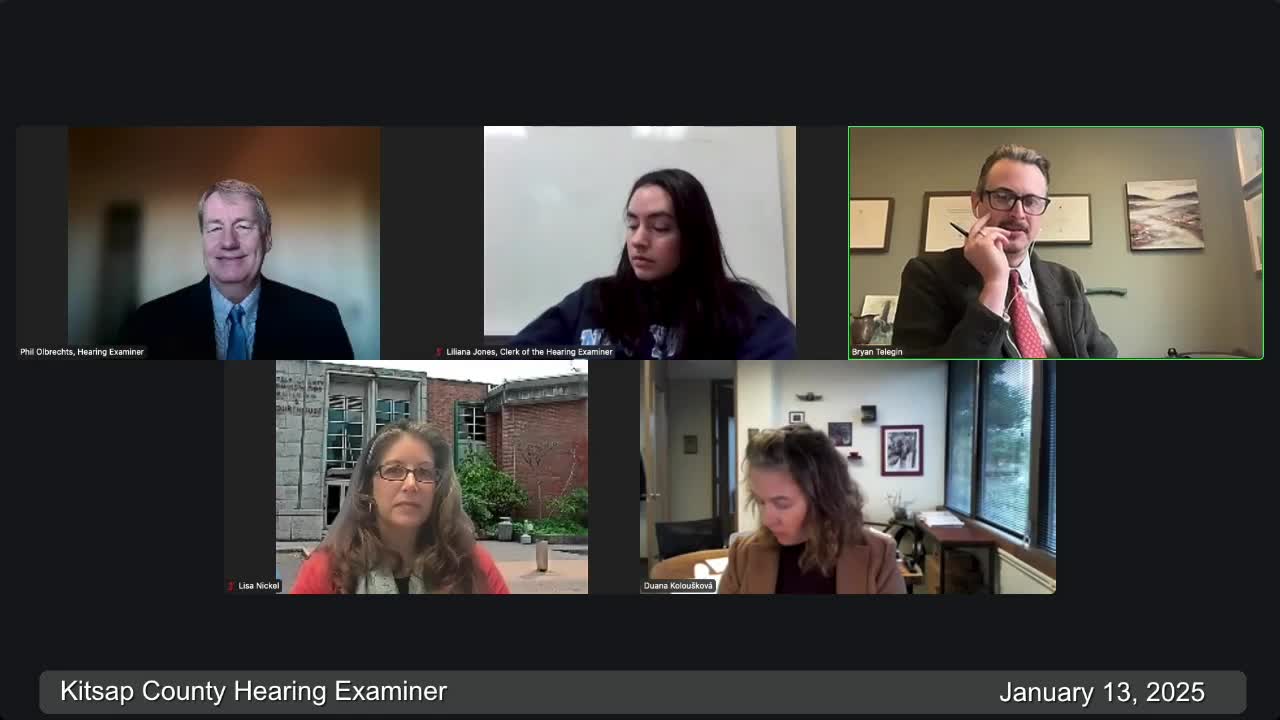
A procedural fight over late written materials, expert attachments and the scope of post‑hearing public comment took center stage at the Jan. 13 Kitsap County hearing for the Meadowview appeals (24‑04549/24‑04555).
At issue was a notice provision that left a 7‑day public comment window after a related plat hearing. Appellants’ counsel said the notice language mirrored practices used in other counties and allowed qualified experts to submit reports within seven days after the hearing; the appellants said they planned to submit written materials from two experts (Dr. Rosin and Mr. Lubisher) and others. County counsel and the applicant objected to using the post‑hearing public comment window to file new expert reports addressing SEPA issues, arguing the SEPA schedule and prehearing orders had set earlier deadlines for submitting exhibits and that late expert reports would prejudice the applicant and deprive it of cross‑examination rights.
The hearing examiner heard competing legal views. County counsel said the SEPA appeal and preliminary plat sections of the record are intended to be a single record but that parties must follow hearing deadlines and exhibit lists; county counsel warned that using the post‑hearing comment window to file extensive expert analysis would be a misuse of the comment period because SEPA appellants already had a prior opportunity and deadlines to submit expert reports. Appellants’ counsel responded that the hearing notice left an explicit 7‑day window for comments and that similar procedures are routine elsewhere, giving late evidence in related proceedings. The applicants argued late expert submissions without a showing of good cause would prejudice them.
The examiner ruled he would accept the written comment submissions but warned that experts producing late written materials must be made available for cross‑examination if the opposing side requested it. The examiner also instructed counsel to work out a schedule during the break; parties agreed to continue the hearing and schedule follow‑up days (the panel settled on continuing the hearing on Friday with targeted witnesses). The examiner emphasized his interest in preserving both public participation and parties’ ability to cross‑examine late experts.
Why it matters: The dispute highlights a common SEPA tension—balancing open public input with procedural fairness and timely disclosure to opposing parties. Several appellants said technical studies filed late (hydrology reports and similar) can materially affect SEPA decisions; county counsel said late expert reports can be excluded unless good cause is shown or cross‑examination is possible. The examiner’s ruling to allow submissions but to preserve cross‑examination rights seeks a middle ground; several parties said they would take the opportunity to seek additional schedule time for cross‑examination before the record closes.
Ending: The hearing was continued to allow parties to file and respond to outstanding written materials and to accommodate cross‑examination; the examiner directed parties to offer availability and to prepare a short schedule for the next hearing dates.