Get Full Government Meeting Transcripts, Videos, & Alerts Forever!
Get email alerts on the Infrastructure Sidewalks topic
No spam. Unsubscribe anytime.
Raymore staff to draft ordinance to adopt sidewalks into city transportation network
Summary
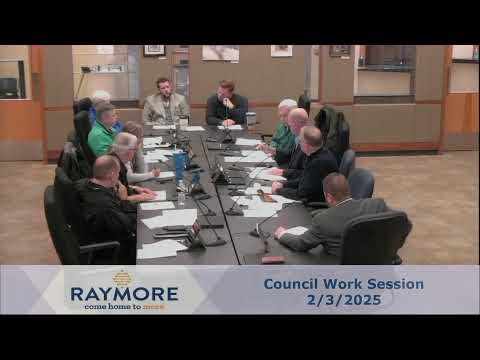
After staff review showed a mismatch between code and practice on sidewalk repairs and liability, council members directed staff to prepare an ordinance to make the city responsible for sidewalks as part of the transportation network and to return with implementation options.
City staff told the Raymore City Council that the city’s written property maintenance code assigns sidewalk maintenance responsibilities to property owners, but the city’s long‑standing practice has been to perform mudjacking and, in some cases, replace panels without billing property owners.
Public Works and code enforcement staff outlined three approaches other municipalities use: cost share or reimbursement (city constructs and bills owner), contracted service rates (city bids and charges owners a lower rate), and special assessment financing (cost repaid through tax bill over time). Staff reported most peer cities pass repair responsibility or cost to property owners rather than absorbing it.
Staff also recited the code definition of a hazardous condition: a vertical offset of one‑half inch or greater between sidewalk panels and obstructions such as tree roots and overgrowth. The city currently notifies property owners and historically has undertaken repairs rather than strictly enforcing the owner‑abatement process. The city manager and legal counsel warned that continuing to absorb repairs increases the city’s liability exposure; conversely shifting all responsibility to property owners is likely to be unpopular and may create practical enforcement challenges.
Council members asked clarifying questions about the scope and timing of any change. Staff said a common practical approach is to apply a new ordinance to applications or phases filed after its effective date, and to work with the county assessor or use assessment/repayment options when appropriate. Staff noted exceptions and complexities for older, historic sidewalks (e.g., stone sidewalks in Original Town) and for properties under existing development agreements.
Council consensus at the meeting was to have staff bring forward an ordinance that adopts the city’s sidewalks (residential and arterial) as part of the transportation network and outlines responsibilities, exceptions, and possible financing or cost‑sharing mechanisms. Council did not vote on a final ordinance at the meeting; staff will prepare draft language for future council consideration.