Get Full Government Meeting Transcripts, Videos, & Alerts Forever!
Get email alerts on the Homelessness Shelters topic
No spam. Unsubscribe anytime.
Kitsap County affirms contracts to keep emergency shelters open, add on-site behavioral health services
Summary
County commissioners affirmed funding and building-use agreements to keep the Salvation Army night shelter operating, open a 75-bed continuous-stay shelter at the former Olympic Fitness Center with Kitsap Rescue Mission, and fund on-site behavioral health services at the new shelter.
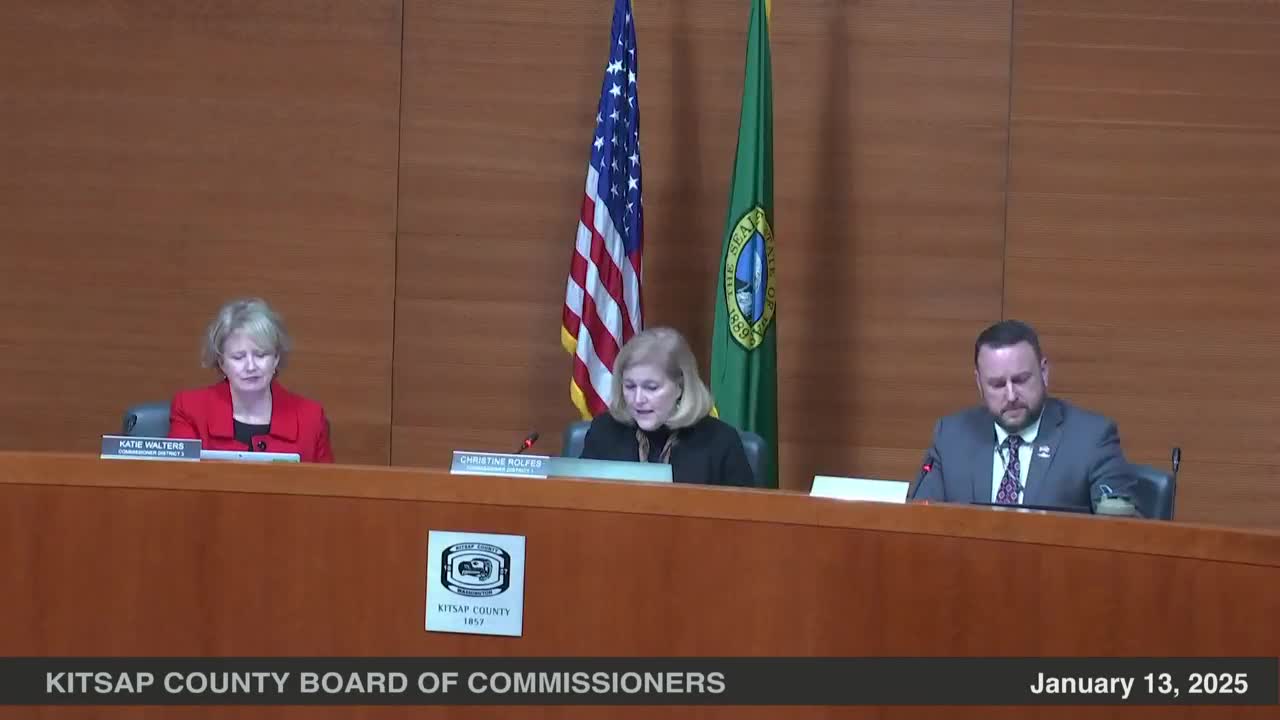
Kitsap County commissioners on Jan. 13 approved a set of contracts intended to maintain and expand emergency shelter capacity and on-site behavioral health support for people experiencing homelessness in Bremerton and surrounding areas.
The board affirmed a $1,510,000 contract to keep the Salvation Army emergency shelter operating through May 2025. The board also approved a building-use agreement with Kitsap Rescue Mission to operate the former Olympic Fitness Center in Port Orchard as a 75‑bed continuous-stay shelter, and a related contract to provide on-site behavioral-health and substance-use-disorder services to shelter guests.
Why it matters: Commissioners and county staff described the measures as short‑term and pragmatic steps to preserve shelter capacity while other long‑term options — including the county’s Pacific Building co‑sheltering project — continue to develop. County and provider speakers emphasized that on-site case management and behavioral‑health services help people move from emergency shelter into treatment and more stable housing.
Doug Washburn, director of Kitsap County Human Services, told the board the behavioral‑health contract is aimed at treatment and movement out of shelter: “The goal is ... so they can get into treatment, they can get chemical dependency treatment, mental‑health treatment, employment ... so they can get jobs, whatever the medical treatment, whatever they need to move on.” He described the shelter model as one in which residents are assigned case managers and reviewed every 90 days.
Carl Borg, Kitsap County housing and homelessness program manager, presented the Salvation Army contract and said the shelter provides a night facility, day room and three meals a day and acts as “a service hub for poverty mitigation” and referrals to other agencies.
Robin Lund of Kitsap Rescue Mission described the Port Orchard shelter project as a “collective impact project” that coordinates multiple partner agencies, and said volunteers and partners are preparing the site for occupancy.
County staff said the Rescue Mission expected a final inspection and occupancy determination the day after the meeting; staff estimated the site could begin hosting guests by the end of the week or start of the following week.
On public‑safety and animal‑policy questions raised by veterinarians and animal welfare volunteers during public comment, Washburn and others noted that Washington law (RCW 16.08.110) disfavors breed‑based bans and recommends behavior‑focused assessments and reasonable exemption processes. Washburn said the county will contract with local animal‑care experts to implement behavior screening and agreed to work with providers and insurers to accommodate animals where possible.
The board voted to affirm the contracts; formal motions were made and seconded on the record and the commissioners called the question and voted in favor. The contracts approved at the Jan. 13 meeting include:
- KC600‑24: Contract amendment with Salvation Army to operate emergency shelter (affirmed; $1,510,000 for operations through May 2025). - KC‑612‑24 (building use): Kitsap Rescue Mission building‑use agreement for the former Olympic Fitness Center to operate a 75‑bed continuous‑stay shelter (affirmed). - KC01825: Contract with Kitsap Rescue Mission to provide on‑site behavioral health and substance‑use services to shelter guests (affirmed).
Community context and concerns: Several public commenters and local veterinarians urged the board and providers to avoid lethal wildlife or animal‑control responses (a separate consent‑agenda item on wildlife management had been removed from the consent agenda earlier in the day after public comment). Veterinarians and animal‑welfare volunteers also pressed for clear operational plans to integrate animal care, veterinary triage, and behavior supports into the Pacific Building and other co‑sheltering efforts so that people with pets are not excluded.
The board and staff said they would continue working with community pet‑care volunteers and local animal‑care organizations to implement behavior‑based screening and to design on‑site animal supports that reduce the need for breed exclusions.
What’s next: County staff will finalize occupancy approvals, begin site set‑up and intake procedures for the Port Orchard shelter, and implement the behavioral‑health contract with partner providers. County staff and providers will continue community outreach on animal accommodations and share further implementation details at upcoming meetings.