Get Full Government Meeting Transcripts, Videos, & Alerts Forever!
Get email alerts on the Energy Community Power topic
No spam. Unsubscribe anytime.
Commissioners discuss Newbury pause from Merrimack Community Power after New Hampshire Electric Co-op rate cut
Summary
Merrimack County commissioners heard a detailed briefing on why the Town of Newbury paused enrollment in Merrimack Community Power after a recent rate decrease from the New Hampshire Electric Co‑op, and discussed outreach, migration mechanics and regulatory differences affecting customers’ ability to opt in or out.
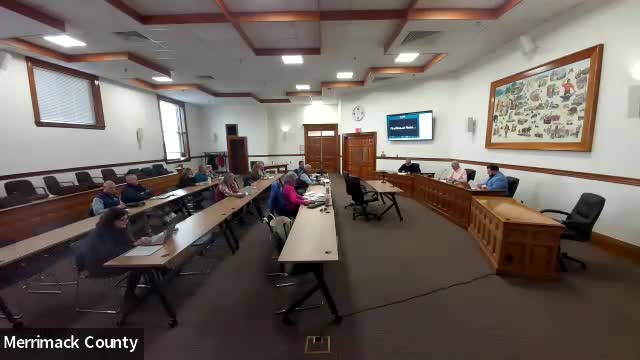
Merrimack County Board of Commissioners members spent an extended portion of their meeting discussing the Town of Newbury’s decision to pause enrollment in Merrimack Community Power after the New Hampshire Electric Co‑op announced a lower rate than Community Power.
County staff described two immediate responses: community power intends to mail or card affected customers explaining the rate change and options to switch, and staff are researching a longer-term change that would exclude co‑op customers from automatic migration so affected customers could opt back in on their own schedule.
The discussion centered on how electricity rates are set and how that interacts with enrollment flows. County staff said supplier rates generally follow six‑month cycles set through a bidding and Public Utilities Commission (PUC) process for larger utilities such as Unitil and Eversource; the New Hampshire Electric Co‑op operates outside that same timeline and may set rates independently, producing sudden divergences that prompt customer moves between suppliers. County staff said the mismatch in timelines and the co‑op’s separate pricing mechanics have produced customer confusion and “a degree of frustration.”
Commissioners and staff explored operational fixes. One option described was to remove co‑op customers from the automatic migration process so customers on the co‑op would remain with that supplier by default and could opt into Community Power on a 30‑day cycle instead of being moved automatically. County staff said that approach would be tested while Community Power continues reviewing migration and enrollment rules.
Commissioners asked about the scale of the effect in neighboring towns and whether the co‑op’s recent foray into internet service indicates cross‑subsidies or other business models that let the co‑op offer lower bundled prices in some areas. County staff noted that New Hampshire Electric Co‑op covers significant but uneven territory — including large areas on the Seacoast and parts of towns in the county — and that customers’ supplier depends on historical service territories.
The commissioners did not take a formal vote on Community Power policy at the meeting; staff said Community Power will proceed with the customer mailer and continue analyzing regulatory and operational changes to reduce churn.
County staff flagged that Community Power’s business plan could be affected if the co‑op continues to undercut rates in ways that trigger recurrent customer migration. Commissioners asked staff to keep the board informed and to share any proposed changes to migration rules or enrollment notices as they are developed.