Get Full Government Meeting Transcripts, Videos, & Alerts Forever!
Get email alerts on the Community Policing Immersion topic
No spam. Unsubscribe anytime.
Bill to make community immersion policing grants permanent draws broad support, some labor concerns
Summary
Senate Bill 5367 would make Washington’s community engagement grant program permanent and create a competitive community immersion grant to place pre‑academy recruits and new hires in community service placements for at least 45 days.
Senate Bill 5367 would eliminate the current sunset provision for Washington’s community engagement grant program administered by the Department of Commerce and create a new competitive community immersion law enforcement grant program intended to place pre‑academy recruits or new hires into community service placements before the Basic Law Enforcement Academy.
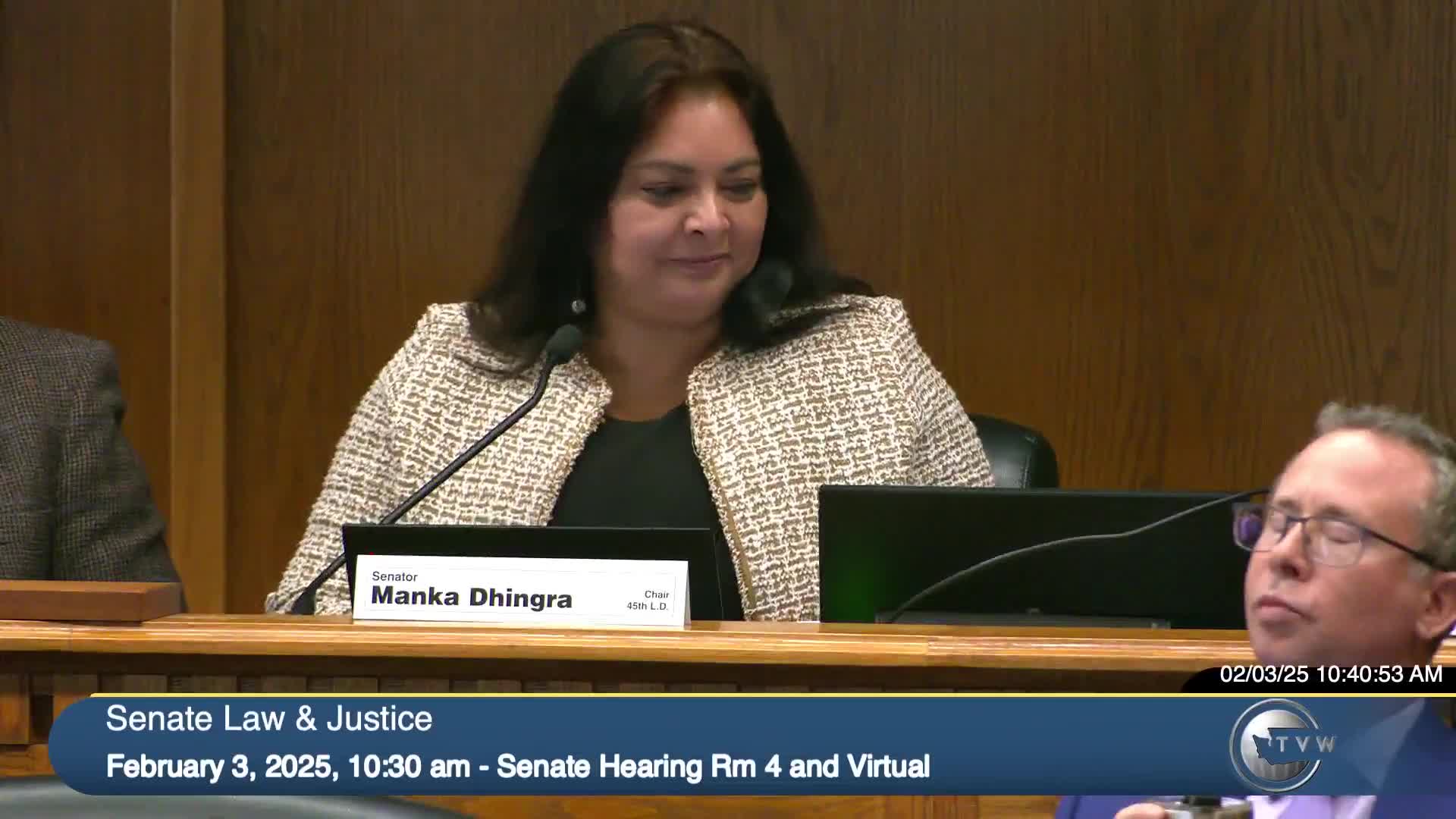
At a Feb. 3 Law & Justice Committee hearing, staff counsel summarized key grant requirements: competitive awards reviewed by a grants review committee, data reporting by grantees, a minimum 45‑day officer assignment to immersion placements, a limited allowance for overtime while newly hired officers participate in immersion, and restrictions on stipends to community hosts. The bill would also direct Commerce to create and administer the immersion grant program; a fiscal note was requested.
Kent officials, who developed the nation’s first Community Immersion Law Enforcement Program (CLIP), strongly supported the bill. Kent Mayor Dana Ralph and Police Chief Rafael Padilla testified that CLIP places recruits with community organizations such as World Relief Washington, Vine Maple Place and the YMCA to perform mentoring, tutoring, client intake and other service work that exposes recruits to the lived realities of the communities they will serve. Assistant Chief Andy Grove told the committee the department has graduated 58 recruits through the program and described recruits’ weekly reports as a measure of learning.
“Taking the tenets of contact theory, we realized we might achieve stronger cultural competency amongst our officers by providing the engagement for them through in‑person experiential learning,” Chief Padilla said. “I don’t think there’s anything else we’re doing that is more impactful in building trust and relationships in our community with police.”
Researchers from the University of Washington, Tacoma, reported short‑term outcomes for recruits in the form of increased cultural awareness, communication skills, and reduced bias. Several community‑based organizations and child‑advocacy groups told the committee that immersion placements helped them meet community needs while shaping officer understanding.
Labor representatives and some community advocates raised concerns. Theresa Taylor of the Washington Council of Police and Sheriffs said the bill’s current language appears to prioritize the immersion program over existing Community Law Enforcement Partnership (CLEP) grants and that the bill allows grant funds to be used for overtime in patrol, which she argued is not an appropriate use while new hires are in training. She recommended adding a law enforcement labor representative to the grant review team and cautioned against unintended competition between grant programs.
Senators asked about review criteria and rural access; staff explained the grants review committee would include a sheriff or police chief, a law enforcement officer of rank at or below sergeant, and a member of a community‑based organization. Testimony closed with committee acknowledgement that implementation details and fiscal impacts will be examined as the bill advances.