Get Full Government Meeting Transcripts, Videos, & Alerts Forever!
Get email alerts on the Paid Family Medical Leave topic
No spam. Unsubscribe anytime.
Bill would extend PFML grant eligibility to small school districts defined by enrollment
Summary
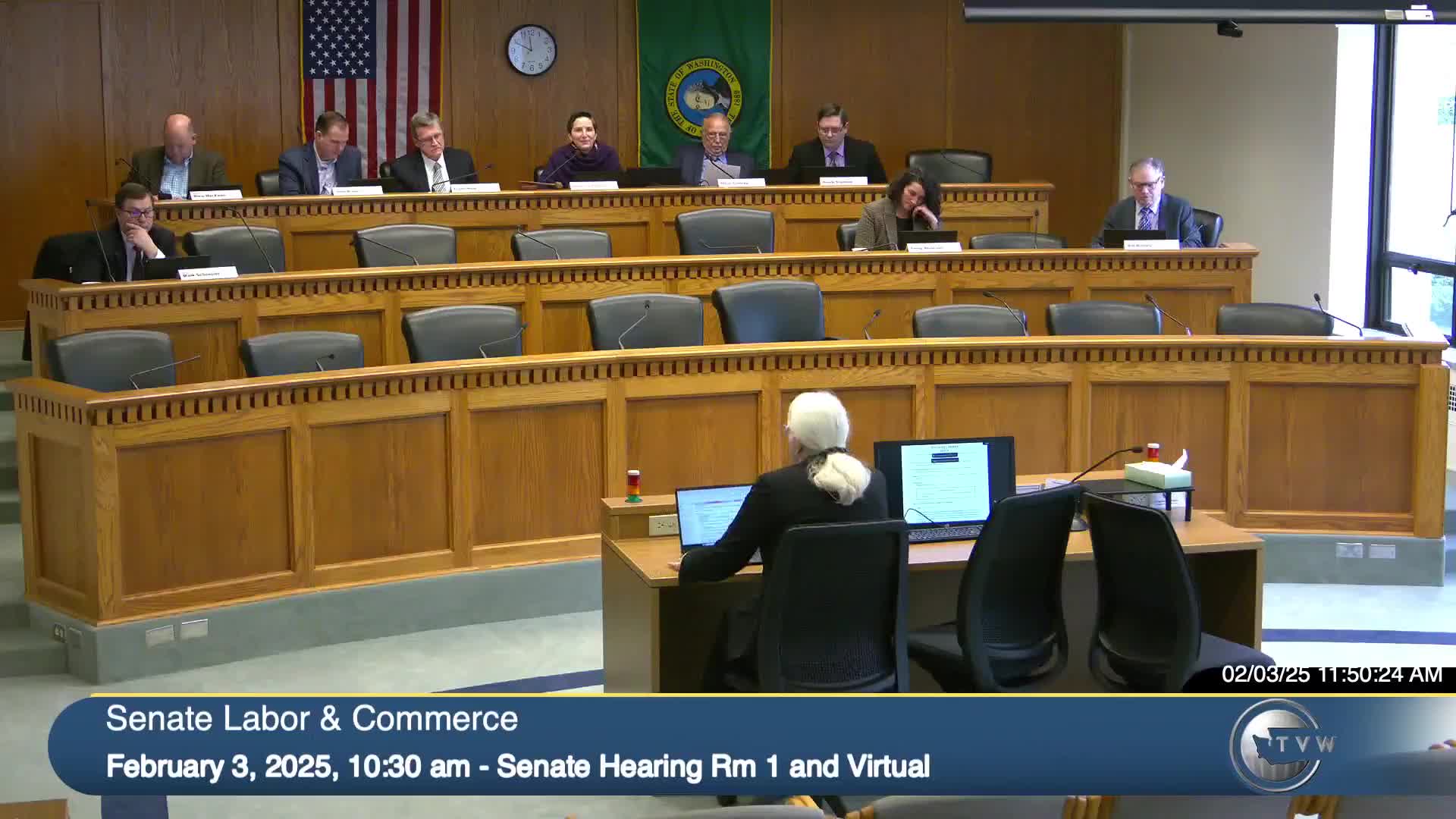
Senate Bill 5378 would allow second-class school districts (under 2,000 pupils) to apply for two PFML grants intended to help employers cover costs when an employee takes paid family or medical leave.
Senate Bill 5378 would expand eligibility for two existing Paid Family and Medical Leave (PFML) grant programs to include school districts classified as second class (those with fewer than 2,000 pupils), aligning grant eligibility with school-district classifications rather than employer headcount.
Committee staff described the current grant program and the two available grants: a $3,000 grant to hire a temporary worker to replace an employee on PFML for seven or more days, and a reimbursement grant of up to $1,000 for significant additional wage-related costs. Under current law, small employers (fewer than 50 employees) are treated differently; the bill would allow smaller school districts and others with 51–150 employees or those assessed all premiums to apply under the school‑district classification change.
Supporters including small districts emphasized substitute-teacher cost pressures. Devin Gomboski of the ESD 105 Schools Coalition said many small districts face much higher substitute needs than the four days the state currently pays, often closer to 15 days, and that PFML leave of up to 12 weeks can swiftly strain district budgets. “While the legislation does not close the funding gap, it represents a small step in the right direction,” Gomboski said.
Opponents included the Washington State Labor Council and the Association of Washington Business. Joe Kendo, speaking for the Labor Council, said expanding the small-employer grant program to school districts represents a significant program expansion and suggested general-fund approaches would be more appropriate. Lindsey Huer of the Association of Washington Business said private small businesses bear distinctive financial risks and that the PFML grant program was intended to equitably balance that risk among private-sector employers.
Committee members requested additional information from staff, including counts of school districts that would qualify and the number of employers who have previously used the grants; staff said more details could be provided.
No committee vote was taken at the hearing.