Get Full Government Meeting Transcripts, Videos, & Alerts Forever!
Get email alerts on the Public Defense Workforce topic
No spam. Unsubscribe anytime.
Senate Bill 5453 would fund statewide training, paralegal pool for public defense
Summary
Senate Bill 5453 would require the state Office of Public Defense to create training for public defense paralegals and mitigation specialists and to maintain a contracted pool of paralegals, prioritizing solo and very small firm attorneys and post‑conviction counsel.
Senate Bill 5453 would direct the Washington Office of Public Defense (OPD) to administer statewide training programs for public defense paralegals and mitigation specialists and to maintain a contracted pool of paralegals to support attorneys who contract with OPD.
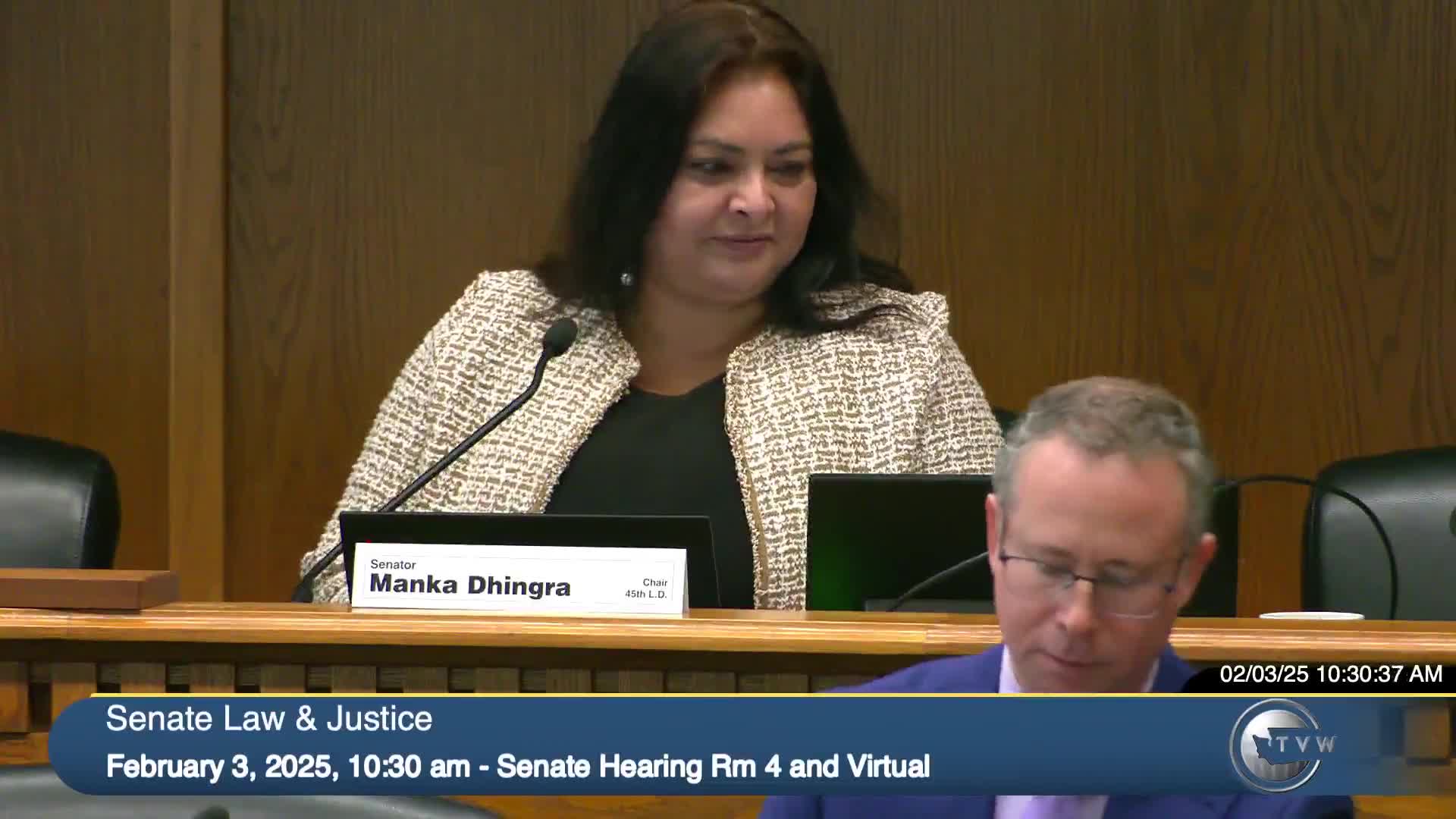
The bill, described at a Feb. 3 public hearing before the Senate Law & Justice Committee, directs OPD to prioritize paralegal support for solo practitioners, very small private law firms and attorneys who contract with OPD to provide post‑conviction representation. The measure would take effect July 1, 2026, and requires the programs to begin no later than June 30, 2027; a fiscal note has been requested but was not yet available at the hearing.
“Public defenders are overwhelmed with large caseloads and too many people are left waiting for representation,” Sen. Vandana Slatter, the bill’s prime sponsor, told the committee, saying the proposal addresses both workforce and justice concerns. Patrick Moore, committee staff counsel, summarized the bill’s requirements and the history of OPD for the committee.
Sophia Byrd McSherry of the Washington State Office of Public Defense said OPD supports the bill and framed it as a logical extension of last year’s effort to expand attorney training. “OPD is excited to implement statewide training for paralegals and mitigation specialists,” she said, and noted the agency is preparing a fiscal note. Byrd McSherry also raised timing concerns, telling the committee the bill’s training timeline is “pretty aggressive” and asked the sponsor and staff to consider modest extensions so OPD could meet the requirement.
Questions from committee members focused on implementation details. Byrd McSherry said the bill’s pool would aim to have at least 10 contracted paralegals by the end of the biennium but that the final count would depend on funding and supply of qualified candidates.
Public testimony included a system‑impacted witness who described mitigation specialists’ role in his case and urged support for the bill. After testimony, the committee closed the public hearing on SB 5453.
Implementation details still pending include the fiscal note, exact staffing and funding sources, and whether the training timeline will be adjusted; staff asked OPD to provide recommended timeline changes by email to the committee.