Get Full Government Meeting Transcripts, Videos, & Alerts Forever!
Get email alerts on the Call Center Retention topic
No spam. Unsubscribe anytime.
Proposal would bar state incentives for companies that offshore call centers and require notice before relocation
Summary
Senate Bill 5459 would require 120 days’ notice to the Employment Security Department before a Washington call center is relocated abroad and would bar affected employers from certain state incentives for five years.
Senate Bill 5459 would require employers intending to relocate call‑center operations from Washington to a foreign country to notify the Employment Security Department at least 120 days before the relocation. The bill would also make such employers ineligible for certain state incentives — including the high-technology business tax deferral and state grants or loans — for five years, and require that state contracts for call‑center services require work to be performed within the state.
Committee staff described the bill as the Washington Call Center Jobs Act and said it is intended to prevent state dollars and incentives from subsidizing offshoring of call‑center jobs. Marlon Yanez, committee staff, said the bill would require the commissioner (ESD) to publish a semi‑annual list of employers that have notified the agency of an offshoring relocation; that list would be posted on ESD’s website and distributed to state agencies.
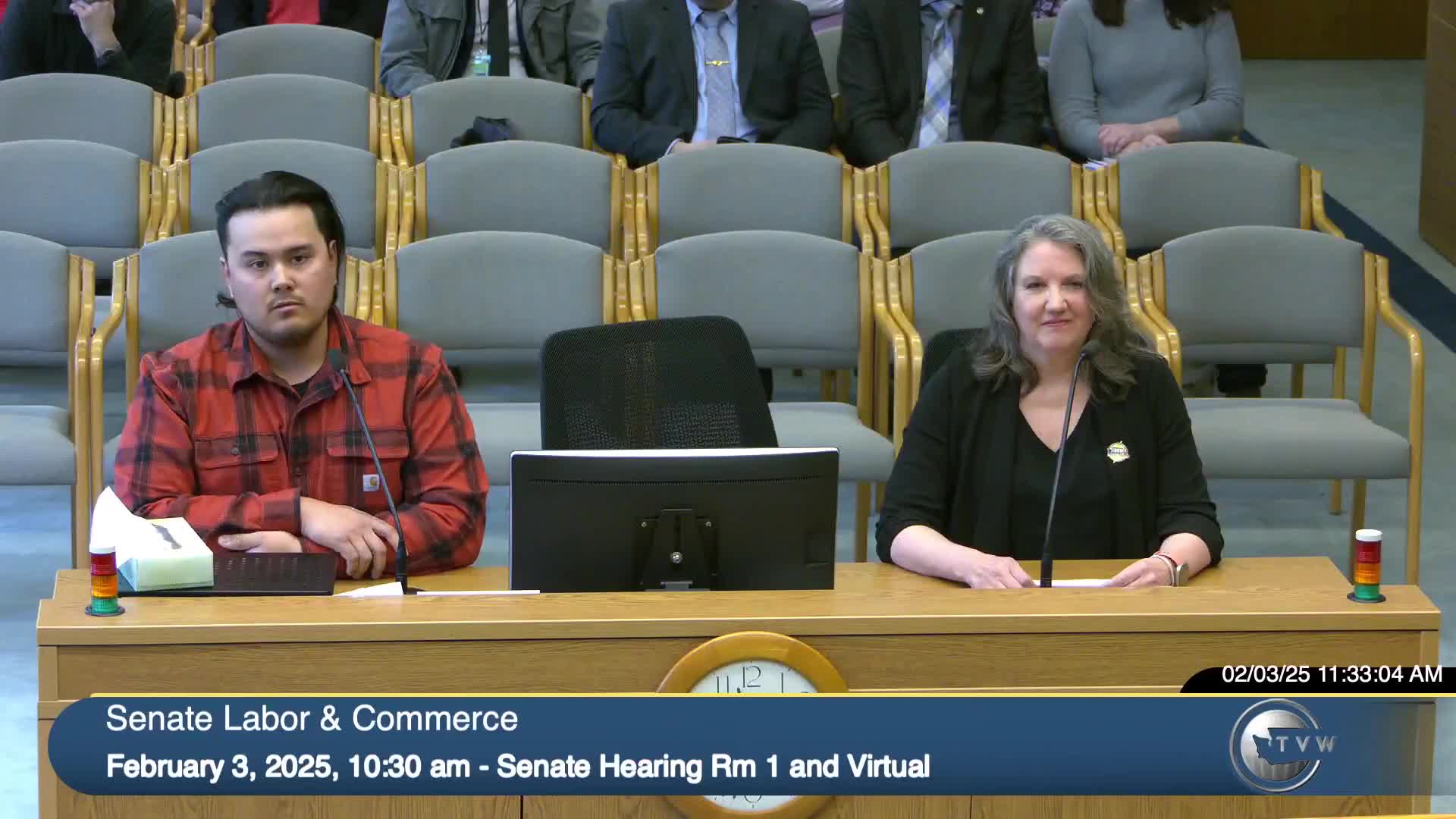
Supporters — including communications workers and local call‑center employees — stressed the economic and service impacts of offshore relocations. Crystal Rivas, a work‑from‑home AT&T Mobility customer-service agent, said companies that move call-center work abroad often leave customers with worse service and workers with lower pay and weaker labor standards. Testimony from IBEW and the Communication Workers of America emphasized local wages and community impacts.
State agencies and the Department of Labor & Industries registered concerns. Tammy Fallon of L&I said agencies need to preserve the ability to run critical services — for example interpreter services for injured workers or 2‑1‑1 networks — that sometimes rely on out‑of-state call operations. Staff and senators discussed language in sections 5 and 8 that would require work under state contracts to be performed “entirely within the state,” and asked whether that provision could be overly broad or unintentionally restrict agency operations.
Questions from senators also raised whether the bill applies only to relocations abroad (the bill’s principal provisions target foreign relocations) and whether state contractors who already operate call centers outside Washington would be affected; staff said the incentives and penalty provisions apply to Washington employers who relocate work abroad. Senators asked staff to research potential international trade (WTO) implications.
No vote was taken at the hearing; staff indicated they would work with the sponsor on narrowing definitions and agency concerns.