Lifetime Citizen Portal Access — AI Briefings, Alerts & Unlimited Follows
Panel backs cleanup to Sustainable Farms and Fields grant to prioritize fuel and energy savings
Loading...
Summary
Senate Bill 5391 would allow Sustainable Farms and Fields grants to prioritize projects that reduce emissions by improving energy efficiency or cutting fuel use, and would clarify confusing compost‑spreader language.
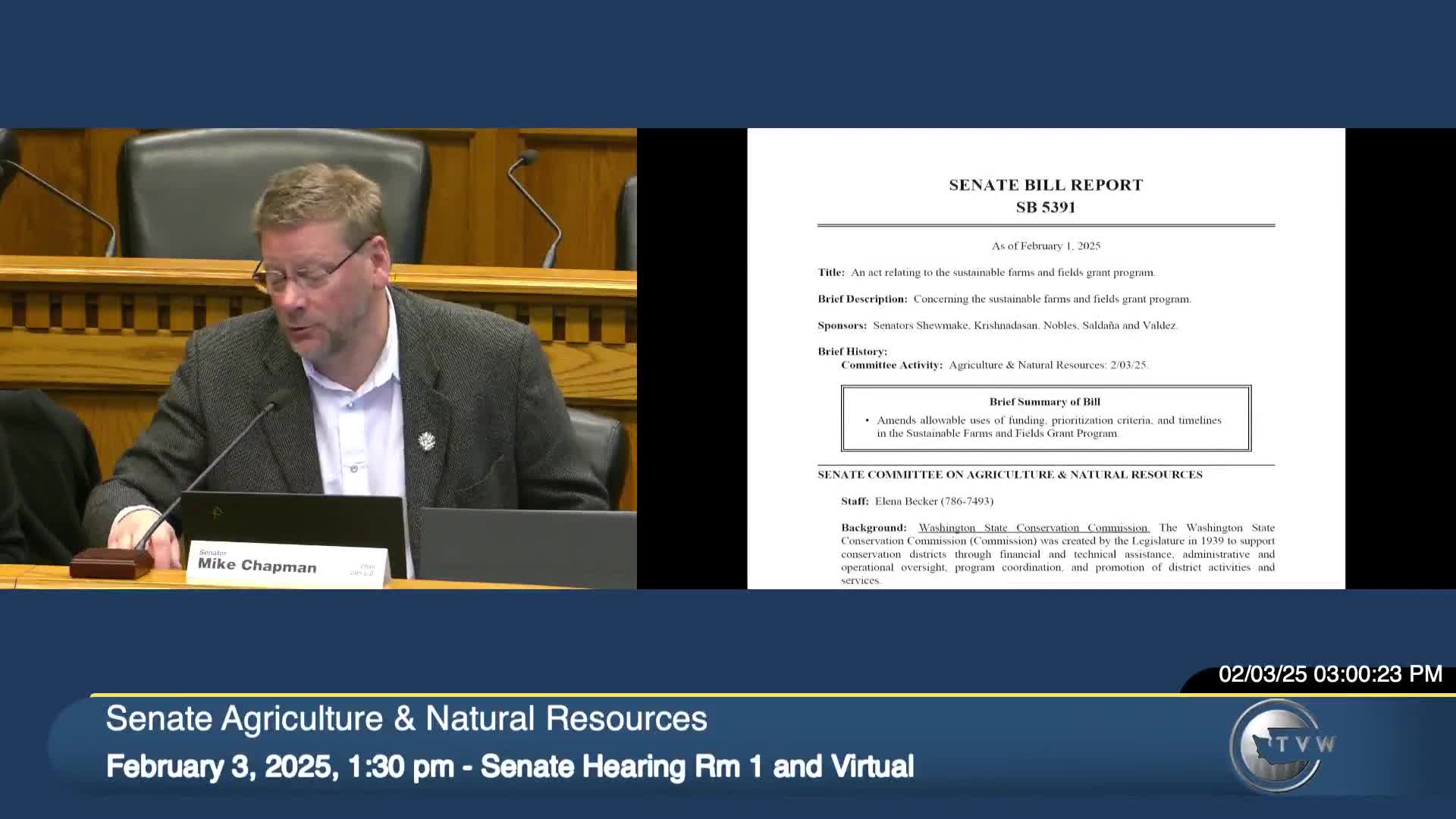
Senate Bill 5391, which would amend the Sustainable Farms and Fields grant program, received a public hearing before the Agricultural and Natural Resources Committee.
Committee staff explained three primary changes: remove a narrowly worded allowable use tied to compost spreader purchases that staff said is difficult to implement as written; add a prioritization criterion to explicitly allow consideration of projects that “reduce or avoid carbon dioxide‑equivalent emissions through increased energy efficiency or reduced fuel use;” and change the statutory deadline for developing a carbon‑equivalency metric so the commission creates that metric prior to implementing any upfront carbon‑storage payments.
Elena Becker, committee staff, said the bill removes a confusing phrase about purchasing compost spreading equipment for annual use of at least three years at significant volumes at sites not owned by the farmer; she explained that purchases of equipment remain an allowable use and compost spreaders can still be funded through the program. Dani Madrone, legislative director at the State Conservation Commission, testified the change will let conservation districts prioritize energy‑saving and fuel‑reducing projects while removing the implementation confusion around the compost‑spreader language.
Sponsor Senator Shoemaker told the committee the program is voluntary and intended to support practices that sequester carbon and reduce emissions on farms. Testimony from conservation partners and producers favored the cleanup and prioritization language. Committee staff reported the fiscal note shows no net state cost for the bill as written. The public hearing record was open to testimony; staff reported sign‑in counts for the bill during the session.
The committee closed the public hearing; no committee vote occurred at this hearing. Sponsors and agency staff indicated they will continue to work on technical clarifications and program implementation.