Get Full Government Meeting Transcripts, Videos, & Alerts Forever!
Get email alerts on the Pretrial Diversion Misdemeanor topic
No spam. Unsubscribe anytime.
Panel weighs new pretrial dismissal pathway for misdemeanors; judges and prosecutors raise separation-of-powers concerns
Summary
House Bill 1113 would authorize a court, on motion of the defense or prosecution, to continue certain misdemeanor and gross-misdemeanor cases up to 12 months and dismiss charges if defendants substantially comply with court-ordered terms; supporters said the bill creates access to diversion where prosecutors decline to offer it, while judges and
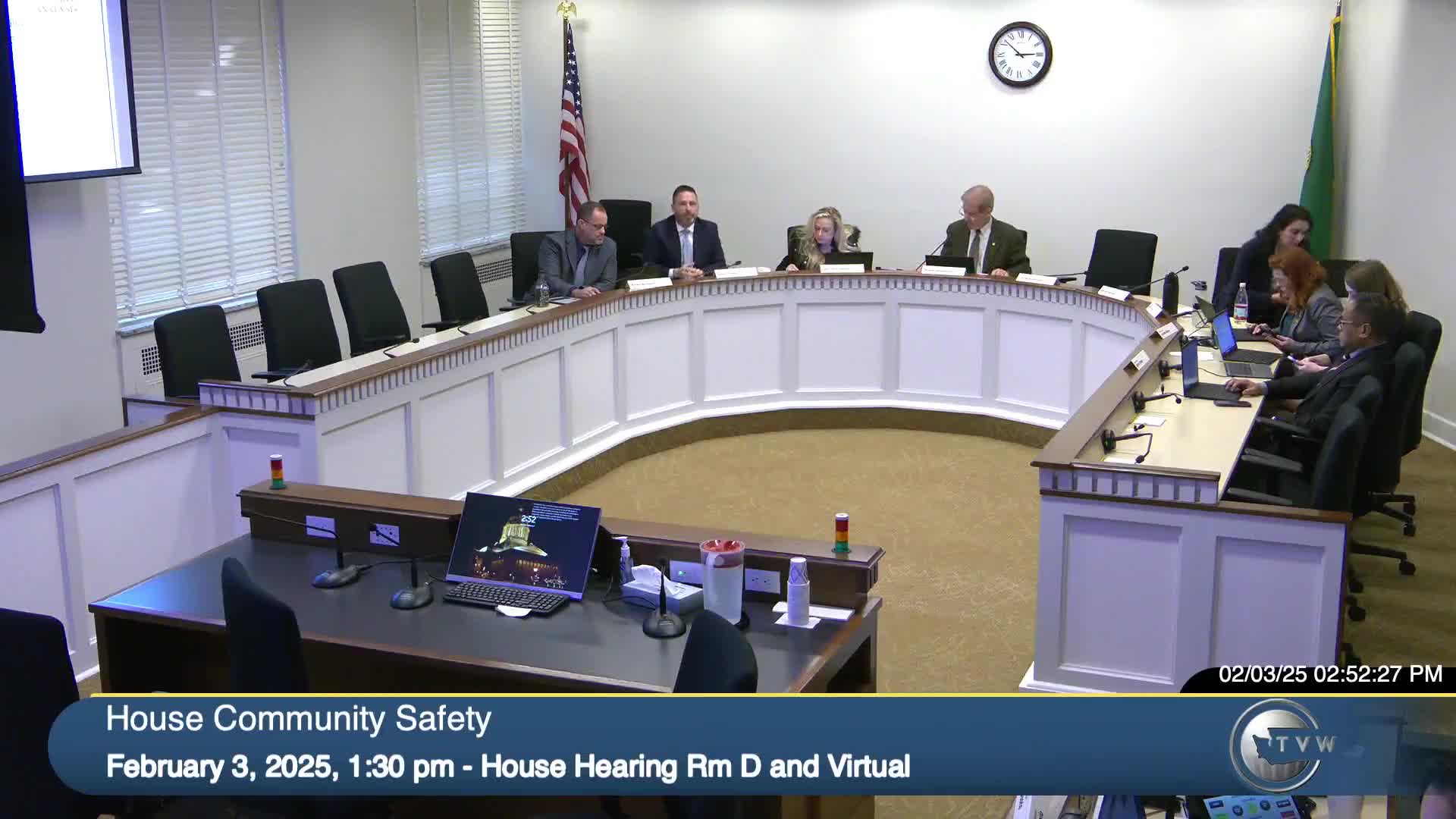
On Feb. 3 the Community Safety, Justice & Reentry Committee heard House Bill 1113, a bill to create a court-supervised pretrial disposition pathway allowing certain misdemeanor and gross-misdemeanor charges to be continued (up to 12 months) on court-ordered terms and dismissed upon substantial compliance.
Sponsor Representative Daria Farovar framed the bill as a response to a system where prosecutors often control diversion opportunities and many defendants have no pathway to treatment or accountability outside a conviction. She cited system strain: a reported 45% dismissal rate for nontraffic misdemeanor cases statewide in the last fiscal year and increases in misdemeanor competency referrals; she argued the bill offers courts a structured way to require accountability and link people to services prior to conviction.
Supporters included public defenders and community providers who described local gaps in diversion access. Holly Peterson Duffy, a contracted public defender in Wenatchee, said the city no longer operates a mental-health diversion program and that the proposed statutory pathway would give courts an option to attach rehabilitative conditions to a dismissal. Kaylee Lutz, a person with lived experience, described success in a diversion program that allowed her to avoid prison, keep custody of her children and access treatment; Catholic Charities representatives said they have capacity to handle referrals but that some city prosecutors decline to participate.
Opponents raised separation-of-powers and practical concerns. The District and Municipal Court Judges Association said judges already face ethical limits under the Code of Judicial Conduct and worried the bill would require courts to monitor compliance and impose conditions in a pretrial role that differs from existing diversion mechanisms. Judge Carolyn Jewett said other diversion programs generally require defendants to waive jury trial rights or occur post-conviction, and that the bill’s structure (waiver of speedy-trial but not jury trial) could require re-preparing cases for trial if a continuance is revoked, harming court efficiency.
Prosecutors opposed the measure, saying it would improperly shift prosecutorial charging and disposition authority to judges and defense counsel. James Kenny, deputy chief in the Seattle City Attorney’s Office, said the bill "removes the prosecutorial decision to enter into a disposition" and cuts victim input. Russell Brown of the Washington Association of Prosecuting Attorneys echoed separation-of-powers concerns and cited the 2023 Blake-era negotiations as precedent for requiring prosecutorial consent for pretrial dismissals.
Committee discussion focused on whether the judge would be acting as an advocate or strictly as a neutral arbiter, and whether the motion should require prosecutorial consent. The sponsor said the final draft allows motions from either party and the judge would rule up or down — not act as an advocate — and that some states have statutory models for similar pretrial dismissal pathways. Judges and prosecutors requested more time to address resource, constitutional and ethical issues; the committee did not vote.
Ending: The committee received extensive testimony from defense counsel, providers, people with lived experience, judges and prosecutors; members asked sponsors to continue stakeholder discussions to resolve separation-of-powers, resource, and constitutional concerns before advancing the bill.