Get Full Government Meeting Transcripts, Videos, & Alerts Forever!
Get email alerts on the Social Services Overpayments topic
No spam. Unsubscribe anytime.
Bill to waive collections on some unintentional social-services overpayments draws DSHS support
Summary
Senate Bill 5079 would authorize the Department of Social and Health Services to waive collection of unintentional overpayments for the state-funded Aged, Blind and Disabled (ABD) cash assistance program. DSHS staff and the department’s fiscal briefing described the program, prevalence of unintentional overpayments and estimated fiscal impacts.
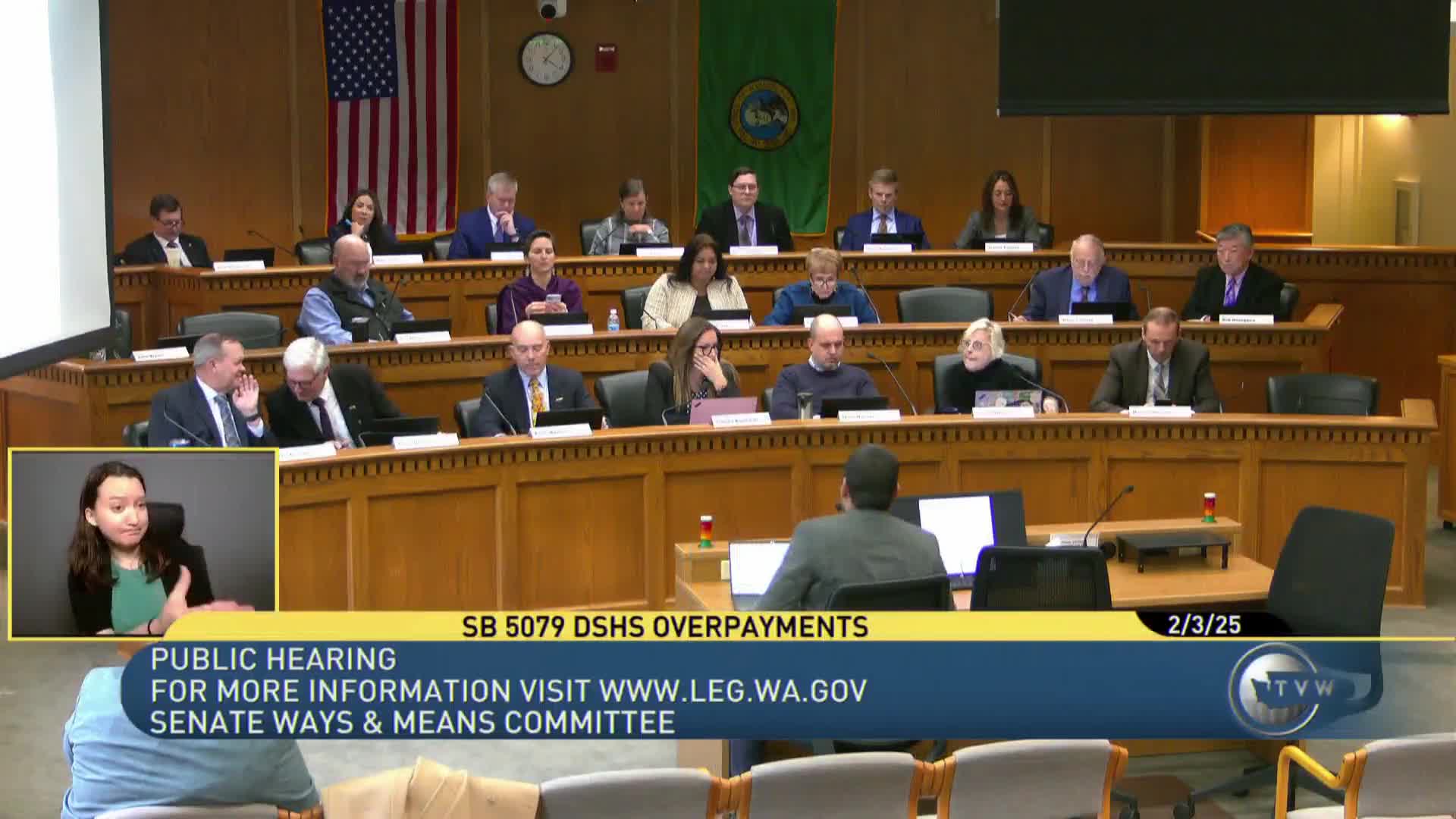
The Ways & Means Committee heard a briefing and public testimony on Senate Bill 5079 on Feb. 3. The bill would authorize the Department of Social and Health Services (DSHS) to waive collection of unintentional overpayments for the state-funded Aged, Blind and Disabled (ABD) cash assistance program and would authorize limited waivers for certain Medicaid-related caseloads where federal rules permit.
Committee staff summarized the bill and fiscal data, saying the ABD program provided cash assistance to low-income individuals 65 and older, blind people, or those otherwise determined likely to meet Supplemental Security Income criteria, and noting that federal rules currently limit waivers for some Medicaid populations. Staff said 952 ABD clients were assessed an overpayment in 2023, 875 of which were unintentional; the total assessed amount was roughly $1,008,000 with $191,000 collected, figures staff read from the fiscal note.
Bryce Montgomery, director of the Community Services Division in DSHS’s Economic Services Administration, told the committee the department requested the bill to reduce hardship when modest ABD grants are reduced for recovery. “Waiving collection of unintentional overpayments will make a difference for older adults and individuals with disabilities who need support to make ends meet,” Montgomery said, and highlighted administrative savings estimated in the department’s fiscal materials.
Jie Ta, director of finance and financial resources for the DSHS Economic Services Administration, added that the department included the proposal in the governor’s budget and explained the fiscal calculation: an estimated $154,000 per year in net fiscal impact (about $616,000 across four years), including reduced collections offset by administrative savings.
Committee members asked for operational details: when overpayments occur and how much staff time and collections effort cost. DSHS representatives said errors can result from misreported information or mail issues and that the department collects roughly 25% of assessed overpayments, with administrative costs noted in the fiscal material.
No committee vote or amendment was recorded during the hearing.