Bill would align Washington jail search rules with PREA and allow gender-identity–based options for searches
Loading...
Summary
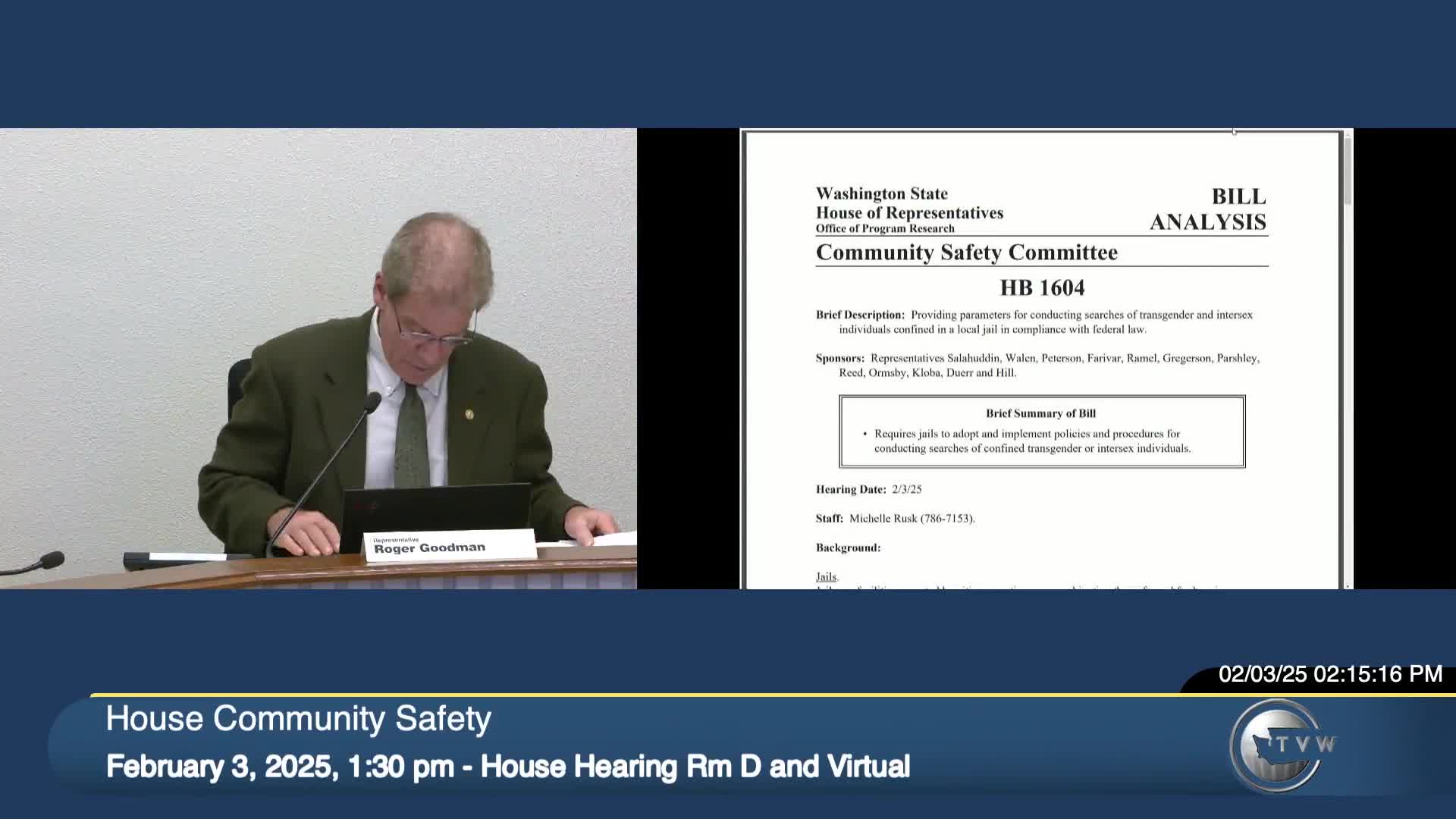
House Bill 1604 would require local jails to adopt policies for strip-searches of transgender and intersex people that comply with federal PREA standards and recognize detainees’ gender identity as a factor in who conducts searches.
The committee heard House Bill 1604, sponsored by Representative Osman Saladin, which would require local jail administrators to develop and implement policies for strip searches of transgender and intersex individuals that comply with PREA and state law and to adopt those policies by Sept. 1, 2025.
Staff described the bill’s core elements: searches may be conducted by a medical professional, by female staff, in accordance with a person's stated gender identity, or after asking the detained person which staff gender they would feel most comfortable with. The bill prohibits searches conducted solely to determine genital status and requires that detainees be able to shower, perform bodily functions and change clothing without nonmedical staff of the opposite gender viewing their bodies except in exigent circumstances.
Representative Saladin said the legislation responds to a request from the City of Kirkland and its jail director and police chief to resolve conflicts between older Washington law, which required searches be conducted by staff of the same sex, and federal PREA guidance that recognizes gender identity and provides alternate compliant options. "These once progressive policies are outdated and do not adequately consider the needs and dignity of transgender, gender nonconforming, or intersex individuals," said Penny Sweet, Kirkland council member, who testified in support.
Groups working across jails and prisons generally supported the goal but asked clarifying changes. The Association of Counties and some sheriff representatives said some bill language could unintentionally conflict with PREA or create legal risk for jails; Brad Banks of the Association of Counties said the bill’s draft term usage could raise compliance concerns and potential loss of certain federal funding if PREA compliance is jeopardized. James McMahon of the Association of Sheriffs and Police Chiefs said sheriffs want to be part of drafting a clear version and supported options such as allowing trained patrol officers to assist and including clear prohibitions to avoid confusing pat-downs with invasive searches.
Speakers urged that the bill explicitly protect corrections officers who object to conducting searches that conflict with their own gender identity; the association indicated it had discussed language to ensure officers would not be compelled to disclose their gender identity or to conduct a strip search contrary to their identity. The committee did not take action; sponsors and stakeholders agreed to continue technical discussions on language before next steps.
Ending: The committee and stakeholders agreed more drafting work was needed to ensure PREA compliance and operational clarity, including staff protections and definitions distinguishing pat-downs from strip searches.